

Watering vegetables with motor oil.
Information about growing vegetables using sewage or black, foul-smelling wastewater, watering them with used motor oil, "bathing" them in pesticides and growth stimulants, and soaking them in chemicals is becoming increasingly prevalent, sending shivers down many people's spines. What's in those fresh, vibrant bunches of vegetables we buy and eat every day?
Concerns about growing tender vegetables
A few days ago, the Food Safety Department (Ministry of Health) announced that pesticide and microbial residues on agricultural products used as raw materials for food processing remain high.
According to this agency, through proactive monitoring programs that collect tens of thousands of food samples annually across various regions, the results show that pesticide residue levels exceeding permissible limits on vegetables and fruits still account for about 3-5%, while in other countries it is only about 2%. In particular, in the first 10 months of 2015, the percentage of vegetables with pesticide residue exceeding the limit reached over 10%.
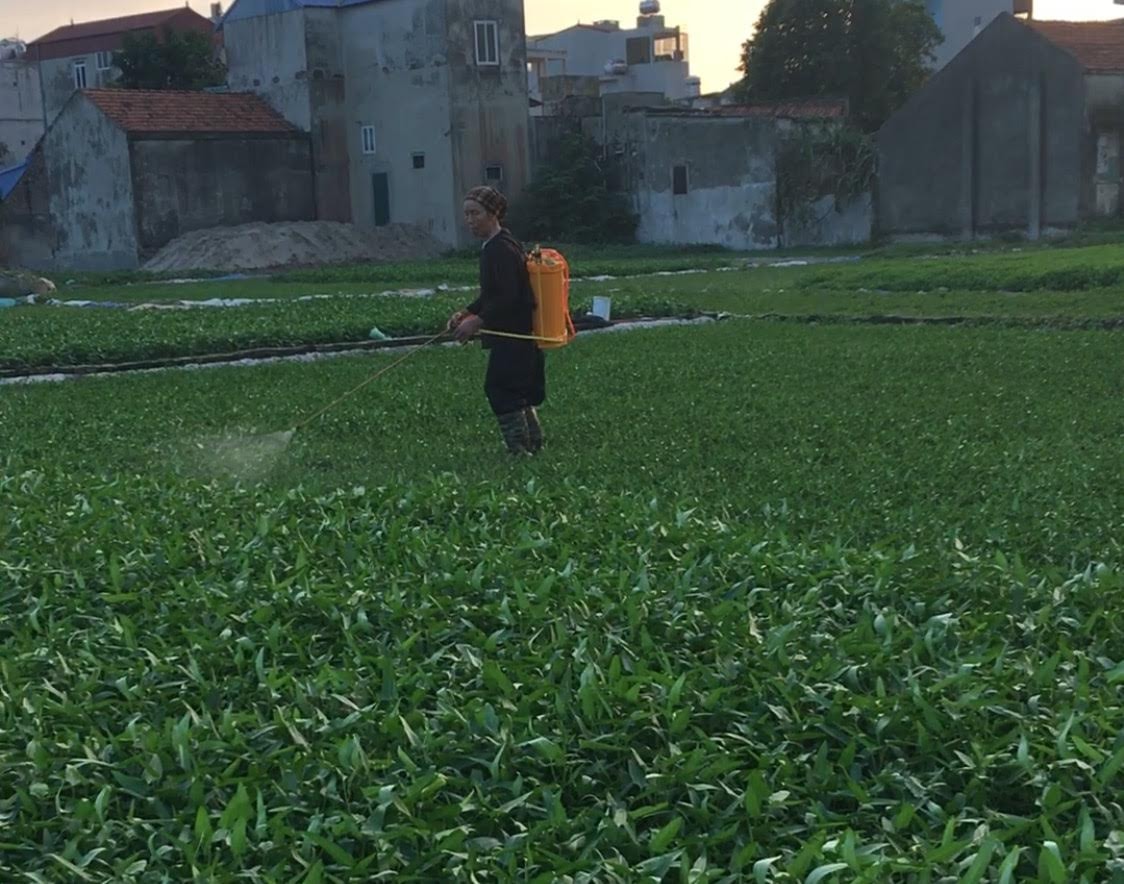 |
| The misuse of pesticides is widespread in vegetable farms of all sizes. |
Meanwhile, the Department of Agriculture, Forestry and Fisheries Management (Ministry of Agriculture and Rural Development) also reported that in August and September 2015, the Hanoi Department of Agriculture and Rural Development collected 63 samples of fruits and vegetables for testing for multiple pesticide residues. The results showed that 14 out of 63 samples had pesticide residues exceeding Vietnam's permissible limits (accounting for 22.2%).
In the first six months of this year, authorities also discovered that nearly 4% of vegetable samples contained pesticide residues exceeding the permissible limit.
In reality, the figures mentioned above only reflect a fraction of the vegetables that were sampled. In the markets, many vendors admit that they have been selling all kinds of fruits and vegetables for decades without ever seeing any authorities come to take samples for testing to see if they are safe.
In addition to the alarming story above, the unique vegetable-growing "technology" of the farmers, which was exposed by the media, also terrified people.
Specifically, right in the heart of Hanoi, a vast vegetable field spanning tens of hectares runs along the Cau Da River (Co Nhue, Bac Tu Liem), filled with lush, vibrant green vegetables, irrigated by the black, foul-smelling river water. This is the Cau Da River, notorious for its pollution in Hanoi. The vegetables from this field are then transported to supply numerous large and small markets in the inner city.
 |
| In many places, vegetables are even watered with black, foul-smelling water, or even with used motor oil. |
Even more alarming, in early 2016, at a large water spinach growing area in Cu Chi district (Ho Chi Minh City), authorities caught local people using a dark, murky motor oil to fertilize their water spinach fields.
They bought used motor oil for 12,000 VND/liter and sprayed it on their vegetable fields at a rate of 300 ml/1,000 m2 to kill aphids.
Meanwhile, information about vegetables being "bathed" in pesticides and growth stimulants is becoming increasingly common. For example, in early April 2016, at a safe vegetable farm in Khai Thai commune (Phu Xuyen district, Hanoi) - a major supplier of celery to Hanoi - farmers used many pesticides, including the "super growth stimulant HVP-Ga3" - a type of spray applied to vegetables to make them grow extremely quickly, ready for harvest in just 3 days.
"Absorbed" enough toxins
Therefore, people have the right to ask: What's so special about the fresh, tender vegetables we buy and eat at the market every day?
According to Associate Professor Dr. Nguyen Duy Thinh from the Institute of Biotechnology and Food Technology (Hanoi University of Science and Technology), all types of pesticides are toxic; however, the level of toxicity depends on the dosage used and the length of the withdrawal period.
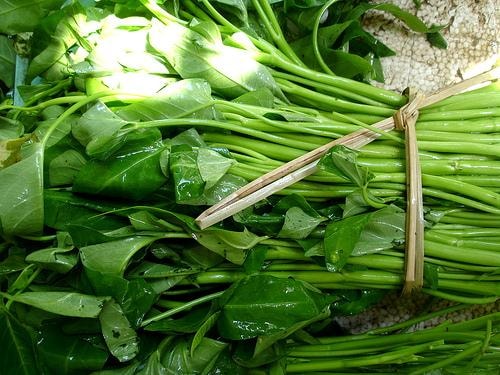 |
| Many people are uneasy about the plump, tender vegetables at the market. |
Some drugs require a quarantine period of only one week to completely break down their toxins, while others require a quarantine period of up to a month, and some cannot be broken down at all (meaning they are banned from use).
However, in reality, when using pesticides on vegetables, people often do not comply with technical requirements, and they rush to harvest and sell them before the quarantine period is over.
Consequently, vegetables often contain pesticide residues. As a result, consumers who buy and eat these vegetables face a significant threat to their health. In fact, high levels of residue and long-term consumption can even lead to kidney failure, liver damage, and cancer.
Vegetables are also sprayed with growth stimulants to accelerate their development, which is extremely dangerous and harmful to human health when consumed. In particular, vegetables harvested just three days after being sprayed with growth stimulants are harvested too quickly and are not safe. Furthermore, vegetables irrigated with used motor oil and grown in murky water are at risk of contamination with heavy metals, especially lead.
Regarding the split water spinach (used in hot pot, noodle dishes, etc.) that was soaked in chemicals in Cu Chi to keep it green and fresh for longer, a discovery made in early September this year, Dr. Tran Van Ky, from the Vietnam Association of Science and Technology for Safety, confirmed that these are industrial-grade food colorings.
Because water spinach is a popular vegetable that requires large daily production, farmers often spray it with growth stimulants and pesticides. This can easily lead to poisoning in consumers, with mild symptoms such as abdominal pain, indigestion, and itchy rashes, while more severe symptoms include dizziness, nausea, and vomiting, requiring emergency hospitalization.
According to Vietnamnet