
A new look for the highlands.
(Baonghean) - Muddy roads leading to the centers of remote highland communes have now been paved with asphalt; thatched-roof schools have been replaced with sturdy classrooms; electricity has reached many villages… These are the positive changes in the highlands of western Nghe An. Achieving this current appearance is the result of a long process of construction and investment, supported by the State, along with the efforts of local authorities and ethnic minority communities.
(Baonghean) - Muddy roads leading to the centers of remote highland communes have now been paved with asphalt; thatched-roof schools have been replaced with sturdy classrooms; electricity has reached many villages… These are the positive changes in the highlands of western Nghe An. Achieving this current appearance is the result of a long process of construction and investment, supported by the State, along with the efforts of local authorities and ethnic minority communities.
New routes
Not so long ago, those from the lowlands who came to work in the mountainous western region of Nghe An were often haunted by the roads leading to remote villages; such as the routes from the Ban Tam bridge intersection to the communes of Pha Danh, Huoi Tu, Muong Long, Bac Ly, and My Ly (Ky Son)... Sometimes, traveling by motorbike from Muong Xen town to the centers of My Ly and Bac Ly communes took almost a whole day. At that time, the western Nghe An road was still unfinished, so the mud was up to the calves. People had to wear raincoats, boots, and chains to their motorbike tires just to be able to crawl up. And since 2012, the road from Ban Tam bridge to the inland communes has been paved with asphalt, and travel now only takes a little over an hour.
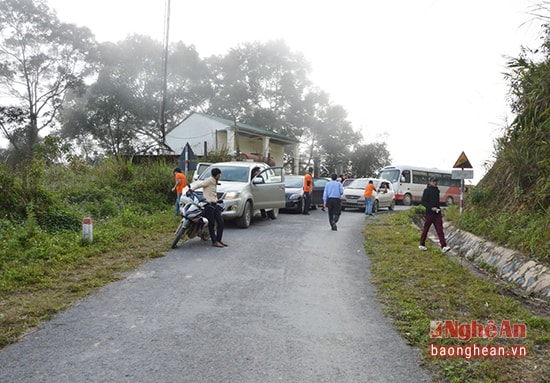 |
| The road connecting Muong Xen town via Ban Tam bridge has been paved with asphalt and extends to the centers of Pha Danh, Huoi Tu, Muong Long, Bac Ly, and My Ly communes (Ky Son district). |
For example, the roads leading to Nhon Mai and Mai Son communes (Tuong Duong district), located within the Ban Ve hydroelectric reservoir area, were difficult to access. Before 2015, reaching the centers of these communes required a 6- to 7-hour boat ride from the Ban Ve ferry terminal. Since the completion and opening of the West Nghe An road in the second half of 2015 has facilitated transportation and contributed to the socio-economic development of the western districts of the province. In addition, the government has invested in a series of transportation routes connecting remote and isolated areas. Many roads leading to commune centers have been paved, resulting in increased trade and a gradual improvement in the lives of ethnic minority communities.
Warm light in the village
Before 2010, most remote communes in the mountainous districts of Nghe An province had to use kerosene for lighting or rely on mini-hydroelectric power. Just a few years ago, the centers of communes such as Tri Le, Quang Phong (Que Phong), Huu Khuong, Nhon Mai, Mai Son (Tuong Duong), Chau Phong (Quy Chau), Huoi Tu, My Ly, and Muong Long (Ky Son) were pitch black at night. In more affluent families, light bulbs powered by mini-hydroelectric plants flickered and wavered.
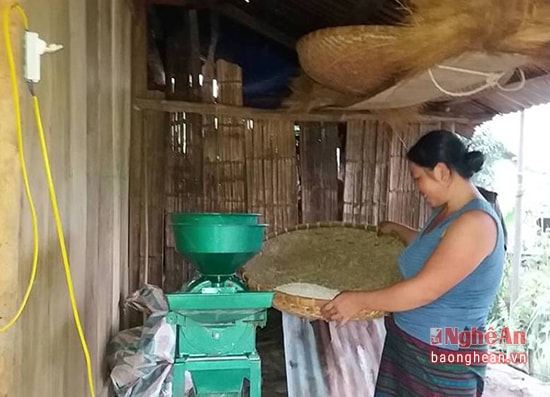 |
| Since communes in the Bản Vẽ reservoir area, such as Nhôn Mai and Mai Sơn, have been connected to the power grid, many machines, such as electric rice mills, have been used by the people for daily life. |
Since 2014, thanks to the electricity grid, the center of Tri Le commune (Que Phong district) has become bustling, and many service shops have sprung up, operating until late at night. In the communes around the Nhon Mai and Mai Son reservoirs (Tuong Duong district), by the end of 2015, with the arrival of electricity, people no longer had to use manual labor to mill rice. Instead, they used modern milling machines purchased by the people themselves to provide services. People also gradually became accustomed to following information and entertainment through modern televisions and radios…
The investment in developing telecommunications and communication systems has also played a crucial role in improving the material and spiritual lives of people in the highlands. Instead of communicating by sending handwritten letters that took days, people in many villages are now proficient in using smartphones, browsing the web, and participating in social networks. Ms. Bui Thi Lan, a statistics officer in Mai Son commune, Tuong Duong district, shared: “My family lives in the lowlands, and in the early years after moving here, the only way to contact my family was by sending letters. Now, not only is there convenient phone signal for communicating with family, but there is also 2G signal. New policies from the State and higher authorities are also quickly updated and implemented.”
Going to school every day is truly a joy.
Before 2011, in Bac Ly commune (Ky Son district), most schools were makeshift structures made of bamboo and thatch. Schools like Keo Pha Tu and Phia Kham 2 (Bac Ly commune, Ky Son district)... not only were the classrooms temporary, but even the school drum was lacking. At that time, teachers and students had to use buffalo horns as substitutes for drums; at night, students at Nam Can Secondary School (Ky Son district) had to sleep in makeshift huts in the fields. “In the past, it was very difficult to encourage students to come to school. Because the living conditions for teachers and students were so dilapidated and temporary. In the freezing winter, the children didn't have enough warm clothes, and the classrooms were drafty, so teachers had to find tree stumps to light fires in the middle of the classrooms to keep the students warm while they studied,” recalled teacher Quang Van Khuong, Deputy Principal of Bac Ly 2 Primary School (Ky Son district).
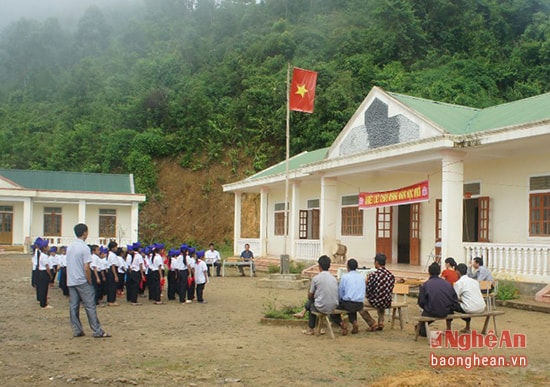 |
| The Keo Pha Tu school branch of Bac Ly 2 Primary School (Ky Son district) has been upgraded with a more solid structure. |
In light of this reality, the Party and the State have paid attention to investing in infrastructure for education in mountainous areas. The school building reinforcement program has been implemented and has yielded high results. Boarding houses for junior high school students and boarding schools have also been built.
Prospects for tomorrow
According to a report by the People's Committee of Nghe An province, as of now, 100% of mountainous, remote, and border communes have access to the national power grid and paved roads leading to the commune centers. The health stations and schools have been upgraded and are more robust. Many high-income economic models exist, such as: elephant grass cultivation and buffalo and cattle farming in Na Ngoi and Nam Can communes, and confined cattle and pig farming in Nam Can commune, Ky Son district; black chicken farming in Tam Hop (Tuong Duong); and land reclamation for two rice crops per year in Mon Son and Tri Le communes (Que Phong)... In the future, the province will continue to implement projects and attract investment capital to build and upgrade infrastructure systems to achieve better results in mountainous districts.
Thu Hieu
| RELATED NEWS |
|---|