
What can be done to make ecotourism more attractive to tourists?
(Baonghean) - People are increasingly inclined to return to nature as a way of reconnecting with their roots, and therefore have chosen ecotourism as a form of enjoyment.
(Baonghean) - People are increasingly inclined to return to nature as a way of reconnecting with their roots, and therefore have chosen ecotourism as a form of enjoyment.
In Nghe An province, especially in the mountainous districts, there are many attractive ecotourism destinations: the Hua Na hydroelectric reservoir (Que Phong), the Ban Ve hydroelectric reservoir (Tuong Duong), Khe Kem waterfall (Con Cuong), Sao Va waterfall, Bay Tang waterfall (Que Phong), Pu Hoat Nature Reserve, Sang Le forest...
Although Vietnam has great potential for ecotourism development, ecotourism development in Nghe An is still in its initial stages, with many issues needing attention and resolution, such as: the scale and forms of ecotourism activities are still monotonous and vague, and the products and target markets are still unclear, thus having little chance of attracting tourists.
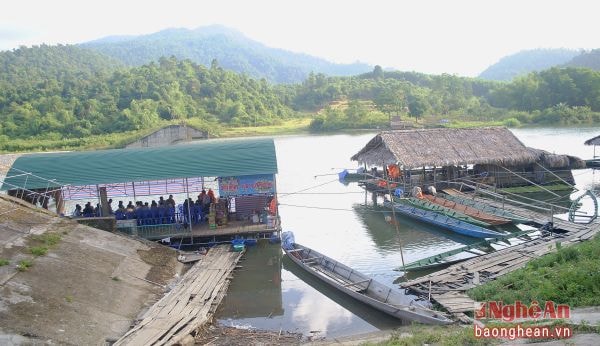 |
| The Pha Lai Dam is currently being developed by Con Cuong district to facilitate organizations and individuals in exploiting it as an attractive ecotourism tour. |
Que Phong District, bordering Laos, possesses significant potential for developing attractive natural tourism: Sao Va Waterfall, Seven-Tier Waterfall, Me Mon Cave, Hua Na hydroelectric reservoir, Pu Hoat Nature Reserve... combined with cultural tourism, such as the unique cultural identity of ethnic minorities and ancient Thai villages...
During a trip to the Hua Na hydroelectric reservoir, we were treated to the magnificent scenery of the mountains and rivers, and the grandeur of the artificial lake, spanning thousands of hectares. Several models of cage fish farming and wild duck breeding have appeared on the reservoir, along with images of fishermen harvesting natural fish...
However, Lake Hua Na has not yet truly attracted tourists for several reasons: there are no boats to transport tourists; there are no rest stops or dining areas within the lake; and related services are lacking...
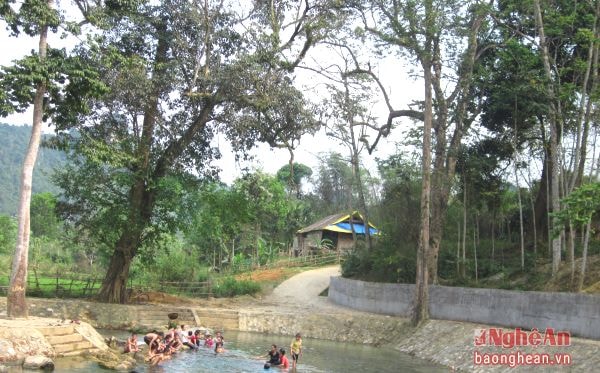 |
| The streams located in Con Cuong district have long been developed by the local authorities as a tourist destination. |
Mr. Lo Van Tien, Director of the Dong Tien Agricultural, Forestry, and Fisheries Cooperative (Dong Van commune), who also drove us around, said: “Currently, there are no service boats on the lake to transport tourists. Therefore, when tourists want to visit the lake, we have to contract with owners of large boats specializing in transporting bamboo and rattan on the lake. This is very inconvenient because the boat owners have little knowledge of the local area and many other limitations, which makes tourists dissatisfied.” Meanwhile, we learned that on the Ban Ve hydroelectric reservoir, tourist boat services have met the demand, and several farms have appeared on the lake providing food and accommodation for overnight visitors.
Ecotourism linked to overall economic development.
Mr. Le Van Giap, Chairman of the People's Committee of Que Phong district, said: Recognizing the existing potential and limitations of the people in developing ecotourism, the district has developed the Project "Preserving and promoting the cultural identity of ethnic minorities associated with tourism development in the district, giai đoạn 2016 - 2020".
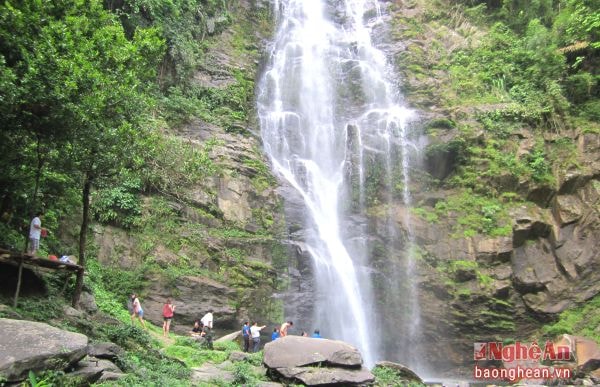 |
| Khe Kèm Waterfall has long been known to tourists as an attractive ecotourism destination in Con Cuông district. |
The project aims to conserve and develop the Pu Hoat World Biosphere Reserve, home to many pristine forests, rare and valuable timber, and abundant wildlife. It also focuses on developing tourism in conjunction with the conservation of tourism resources, the ecological environment, ethnic cultural identity, and historical sites and scenic spots. Furthermore, it aims to expand and upgrade the accommodation system, with some hotels being upgraded to star ratings.
To achieve that goal, Que Phong district has clearly identified each tourism product in the area, with Xao Va waterfall and the Hua Na hydroelectric reservoir being ecotourism destinations. The district is focusing all resources on exploiting existing potential and investing in the development of local tourism products.
There are policies to support people and organizations and individuals in preserving and promoting local cultural values; encouraging and creating conditions for economic sectors to participate in the production and business of tourism products; and investing in the construction of tourist destinations and types of tourism according to the plan.
Particularly for ecotourism destinations, the district invests in building a convenient road network. Based on the existing beauty of Sao Va waterfall, the focus is on improving the landscape, creating a spacious and airy environment, planting more trees, and constructing some auxiliary facilities, kiosks selling refreshments, etc., to serve tourists.
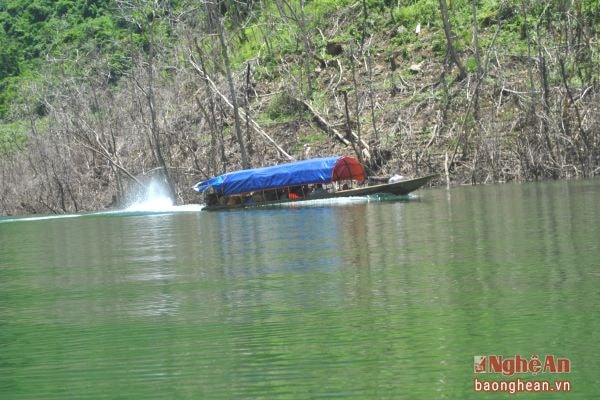 |
| Ban Ve Tuong Duong hydroelectric reservoir. |
Utilizing the Hua Na hydroelectric reservoir, organizations and individuals are encouraged to invest in boats and rafts to transport tourists who wish to visit and sightsee on the reservoir. Simultaneously, organizations and individuals are encouraged to invest in cage fish farming and farms within the reservoir, creating interesting stopovers for visitors.
With its immense natural potential and the practical needs of life, the development of ecotourism is inevitable and will certainly expand in many localities. While sustainable ecotourism development is a challenging task, solutions are not impossible, provided that businesses, local communities, and management agencies at all levels are involved.
Xuan Hoang
| RELATED NEWS |
|---|