

Cigarette smoke is still rampant in the hospital.
(Baonghean)Although the Law on Prevention and Control of Tobacco Harm has been in effect for more than three years, in reality, cigarette smoke still permeates public places, especially hospital environments.
The office is now basically smoke-free.
More than three years after the Law on Prevention and Control of Tobacco Harm officially came into effect, awareness of the harmful effects of tobacco on health and the environment among workers has been raised, leading to noticeable changes in behavior. Provincial agencies and units have developed workplace culture regulations, including a ban on smoking in offices; they have also displayed "no smoking" signs and banners, resulting in a significant reduction in smoking in the workplace.
Mr. Nguyen Dinh Ly, Deputy Director of the Department of Internal Affairs and Head of the inspection team for Directive 17 of the Provincial Party Committee, stated: During inspections of state administrative discipline and order under Directive 17-CT/TU of the Provincial Party Committee, it was readily apparent that the number of officials and civil servants smoking during working hours and in the workplace had significantly decreased. In particular, the image of officials holding cigarettes while receiving citizens has disappeared.
In implementing the Law on Prevention and Control of Tobacco Harm, like many other provinces and cities, Nghe An has issued a plan with specific implementation contents: Organizing information and propaganda on the contents of the Law on Prevention and Control of Tobacco Harm, and educating the community about the harmful effects of tobacco.
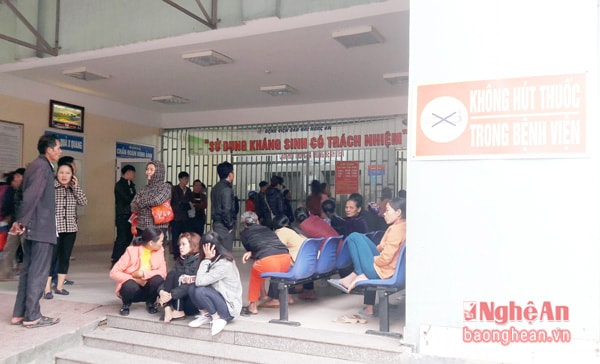 |
| The Provincial Obstetrics and Pediatrics Hospital is striving to create a smoke-free hospital environment. |
According to Dr. Dau Huy Hoan – Deputy Head of the Provincial Steering Committee for Tobacco Control and Deputy Director of the Department of Health, over the years, the Steering Committee has incorporated tobacco control measures into the annual activity plans of districts, towns, cities, communes, wards, and townships; included regulations prohibiting smoking in the workplace in internal regulations of agencies; encouraged the inclusion of regulations restricting or prohibiting smoking at weddings, funerals, and festivals; and integrated the building of cultural and health villages with the building of smoke-free communities…
It can be said that the government's enactment of laws and implementing documents on preventing and combating the harmful effects of tobacco has received widespread public support. For students, the fact that they are aware of the harmful effects of cigarette smoke is a welcome development.
Phan Van Hung, a student at Pham Hong Thai High School (Hung Nguyen district), said: "We strongly support and actively respond to the school's strict ban on smoking on school grounds. The rule is that if a student is caught smoking, they will be forced to write a self-criticism report, their parents will be notified, and their conduct grade may even be lowered if they repeatedly violate the rule."
However, in reality, although many agencies, units, and locations have signs prohibiting smoking and images warning about the harmful effects of tobacco on health, many people still do not strictly comply with the no-smoking rule... In addition, there are still many convenience stores selling cigarettes right next to schools, and the sale of cigarettes to students under 18 years old still occurs.
According to Mr. Nguyen Van Nam, from Block 12, Cua Nam Ward, Vinh City, people's awareness of not smoking in public places is still low. In many places, despite "no smoking" signs, many people still pretend not to see them and freely exhale smoke, affecting those around them.
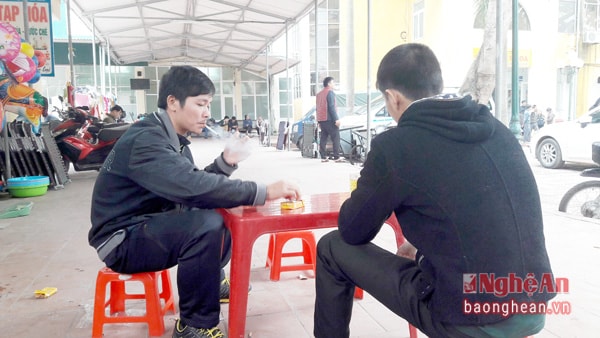 |
| Family members of patients bought and smoked cigarettes right inside the Provincial Obstetrics and Pediatrics Hospital without any intervention from security guards or hospital staff. |
Difficult to enforce penalties?
According to Government Decree No. 176/ND-CP on administrative penalties in the field of health, which includes regulations on the prevention and control of tobacco harm, individuals who smoke in public places such as theaters, cinemas, hospitals, libraries, waiting rooms at train stations, bus stations, airports, seaports, on public transport, and other public places where smoking is prohibited will be subject to a warning or a fine of 100,000 to 300,000 VND.
That's the regulation, but in reality, many people still freely smoke in prohibited areas. At bus stations, one of the public places where smoking is strictly forbidden, people still openly smoke. When asked about the law, everyone knows it's prohibited, but hardly anyone seems to care, simply because "no one gets fined." And to date, no individual has been recorded as being fined for smoking in public places.
Even in hospitals, it's not uncommon to see family members casually smoking within the hospital grounds. At the Obstetrics and Pediatrics Hospital, one can see "no smoking" signs posted in most wards, waiting rooms, and throughout the hospital grounds.
The leadership of the Obstetrics and Pediatrics Hospital stated that the hospital has created a smoke-free environment through various means, such as signing pledges of no smoking by staff and prohibiting the sale of tobacco products within the hospital grounds. However, what is needed is stronger, more thorough, and consistent administrative penalties across all hospitals in the area for the prevention and control of the harmful effects of tobacco to be truly effective.
According to relevant laws and decrees, only the chairmen of the People's Committees at all levels, inspectors, and police have the authority to impose penalties at the local level. However, penalties seem to be enforced only in government agencies, and not in public places. The lax enforcement leads to disregard for the law and a willingness to smoke anywhere.
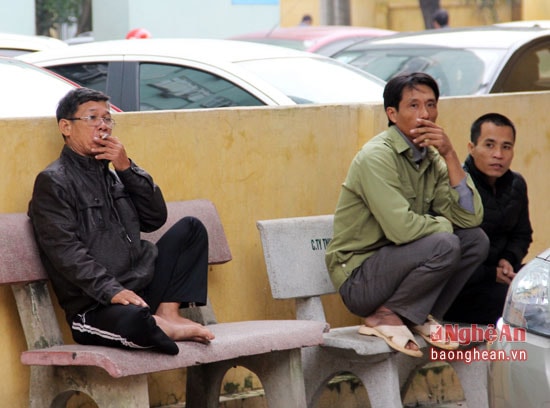 |
| Family members of patients freely smoke cigarettes within the grounds of Nghe An Obstetrics and Pediatrics Hospital. |
According to a member of the Provincial Steering Committee for Tobacco Control, the establishment of inter-agency inspection teams to monitor the implementation of the Law on Tobacco Control within their jurisdiction has not yet been implemented. Among the reasons cited are the lack of attention, and even failure to set a good example, from some heads of agencies and units in implementing the Law on Tobacco Control; and limited funding for tobacco control activities.
In reality, smoking habits are deeply ingrained in a segment of the population, including officials and civil servants. Furthermore, this group even smokes in prohibited areas. The infrastructure for enforcing the Law on Prevention and Control of Tobacco Harm is limited, lacking designated smoking rooms and cabins in public places, train stations, bus stations, restaurants, etc.
These are significant obstacles that prevent the effective implementation of the Law on Prevention and Control of Tobacco Harm. To prevent and ultimately minimize smoking, it is necessary to continue focusing on promoting communication about the harmful effects of smoking and passive smoking; about the Law on Prevention and Control of Tobacco Harm and its implementing guidelines.
In addition, strengthen inspection and monitoring of compliance with the Law on Prevention and Control of Tobacco Harm. Annually, review the internal plans and regulations of ministries, agencies, organizations, and affiliated units regarding the prevention and control of tobacco harm. Furthermore, continue to improve legal documents to increase the effectiveness of penalties and deterrence against smoking in public places.
| Smoking is the cause of 25 diseases, including many dangerous ones such as lung cancer, chronic obstructive pulmonary disease, myocardial infarction, atherosclerosis, and others. The World Health Organization estimates that approximately 40,000 people die each year in Vietnam from tobacco-related diseases, and if no timely measures are taken, this number will increase to 70,000 by 2030 (almost four times the number of deaths from road traffic accidents in our country each year). |
Nguyen Hung
| RELATED NEWS |
|---|