Despite being manufactured during the Soviet era, the Su-100 self-propelled gun in the Vietnamese Army can easily penetrate all types of armor up to 180mm thick.
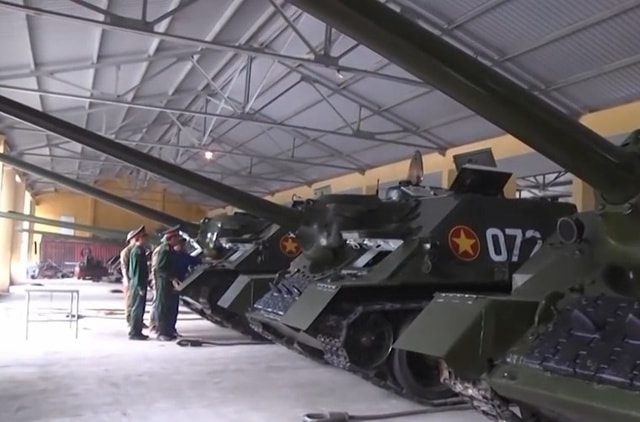 |
| The Su-100 was the best self-propelled anti-tank gun of World War II, developed by the Soviet Union in the late stages of the war based on the Su-85. The Su-100 used the T-34-85 medium tank chassis, with a maximum weight of 31.6 tons, a length of 9.45m, a width of 3m, a height of 2.25m, and a crew of four. |
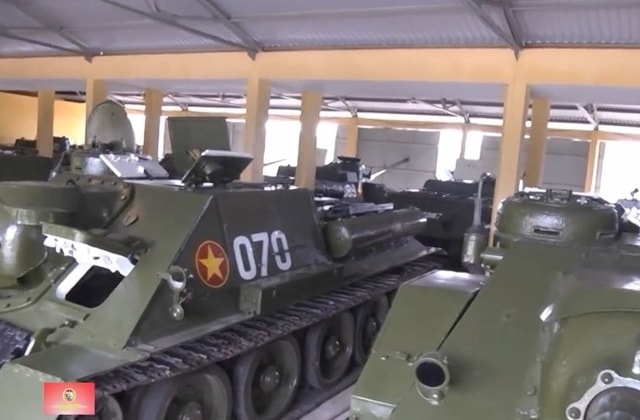 |
| The vehicle is armored with 75mm thick frontal armor, 35mm thick side armor, and a roof armor of at least 20mm. The Su-100 self-propelled gun is equipped with a powerful D-10S 100mm rifled cannon capable of penetrating 180mm thick armor at a right angle to the ground at a distance of 2km, and penetrating the 85mm inclined armor of the German Panther tank at a distance of 1.5km. |
 |
| This meant the Su-100 could neutralize any German tank at the time, earning it the nickname "Pizdets vsemu," which roughly translates to "the end of everything." |
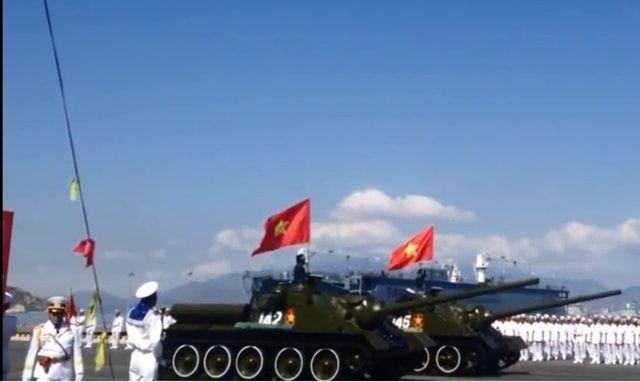 |
The Su-100 is equipped with a 12-cylinder V-2-34 diesel engine producing 500 horsepower, giving it a top speed of 48 km/h and a range of 320 km. Similar to many other weapon systems, the Su-100 was widely exported to fraternal socialist countries after World War II, including Vietnam, which used it in the resistance war against the United States. |
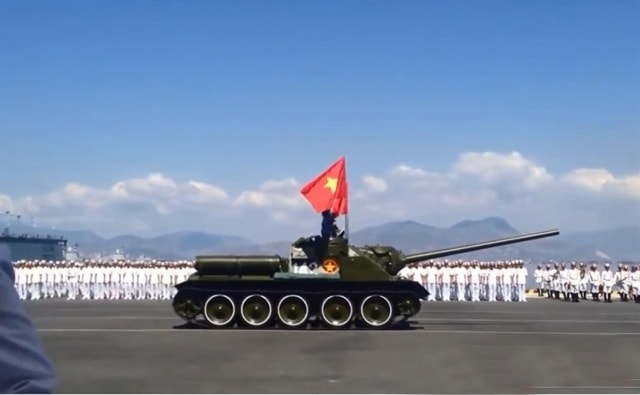 |
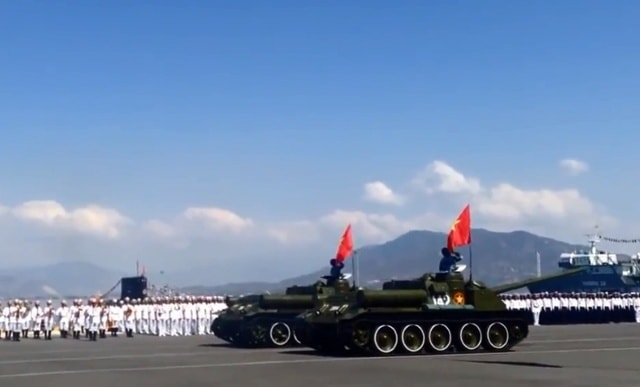
| To this day, the Su-100 remains in service with the Vietnam People's Army. |
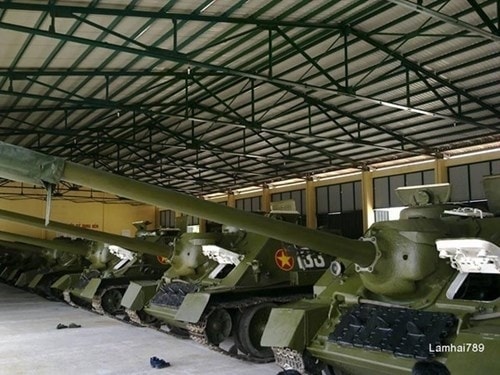 |
| Although the Su-100mm cannon is no longer effective against modern tanks, it can still penetrate the armor of light tanks, infantry fighting vehicles, armored personnel carriers, and other types of vehicles. The Su-100 self-propelled gun is very well maintained by the Vietnamese Army and is always in a state of combat readiness. |
According to Baodatviet

