

Why do we have to drink so much?
(Baonghean.vn) - Sometimes I really want to meet you, because you're a very interesting person. But I'm afraid of you, because every time I meet you, I have to drink alcohol. Why does a meeting have to involve alcohol?
Sitting and sipping coffee with a close friend who returned from abroad, we chatted happily, comfortably, sincerely, and openly. We exchanged ideas and learned a lot from each other. What was special was that whenever we met, he always refused any drinking or partying, only choosing to sit and have coffee. Over time, I realized how enjoyable and pleasant it was to be with him. It was both relaxed and intimate; it felt like we could meet anytime without worrying about anything, including the "cost"...
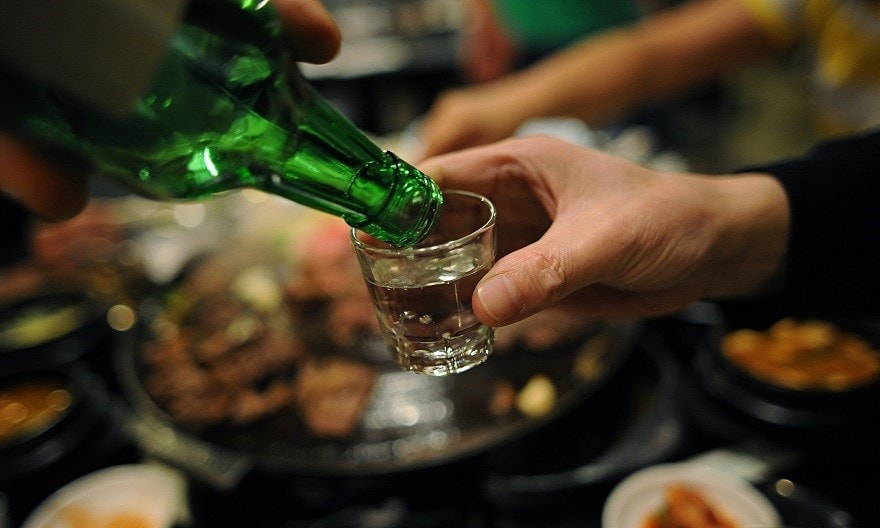 |
| In Vietnam, is drinking alcohol also considered a form of physical exertion? (Image: Internet) |
Perhaps, this pleasant feeling stems from my comparison and connection between meeting friends at the coffee shop and countless encounters with brothers, friends, and colleagues in life and work at restaurants, eateries, and drinking parties at home... Many people feel that whenever they meet, it has to happen at restaurants or bars, and even if they meet at home, there must be a glass of beer or wine, and of course, always a "driver" – the food and drinks that "paddle" the beer and wine.
For a long time, many people have implicitly believed that a gathering must involve drinking beer or wine, or socializing with friends, to be considered truly respectful. Even going to a fancy restaurant is seen as a sign of respect for the guest. Ordering expensive dishes and many different items is considered a sign of sophistication? Even at home, is it true that a lavish feast with many dishes, with plenty left over, is considered "proper"?
Knowing that drinking too much alcohol is tiring and expensive, it negatively impacts health and drains your wallet. When it comes to drinking, there's often the phenomenon of "forced drinking." While everyone knows the saying "you can't force someone to drink," the saying "you can't refuse when forced" arises. It's incredibly difficult for those with low alcohol tolerance or those with illnesses that require them to abstain. They have to endure all sorts of ridicule, scorn, and criticism. In some places, leaders or heads of departments drink heavily or are alcoholics, leaving their subordinates with poor alcohol tolerance to suffer. Sometimes, the ability to drink and withstand the effects of alcohol is even considered a kind of... ability (!).
Not to mention, after a drinking session, you still have to drive home. Sometimes, the next morning, after sobering up, you can't remember how you got home, even though you know you were the one driving. Initially, you might feel proud and think you're quite... skilled. But witnessing the increasing number of traffic accidents caused by alcohol, many mornings after sobering up, thinking back on the night before, fills you with dread and breaks out in a cold sweat.
 |
| Scene of a young man stabbing his drinking buddy to death in Binh Thuan. (Image: Internet) |
Drinking is often accompanied by eating. And eating is also an expense. Sometimes, the food itself isn't much, but you have to "feed your eyes." That is, you have to order a lot, prepare a lot, mainly for... visual appeal. Because in reality, at many drinking parties, guests only eat very little; when they get up to leave, the plates are often still untouched. That's the phenomenon of "full stomach, hungry eyes."
Nowadays, at small eateries, a drinking session rarely costs less than 500,000 VND, while at restaurants, even with careful budgeting, it's impossible to spend less than 1,000,000 VND. Therefore, drinking sessions with friends and colleagues like "Le Quyen," "Cambodia," or "Gopbachop" (donating, splitting the bill, contributing to the payment) are relatively simple and manageable. But if one person has to bear the burden alone, it's quite a heavy load. If they're a salaried civil servant or someone with a moderate to low income, every time they pay, even if they try to smile, they'll see their face contorted in frustration when they look in the mirror!
Furthermore, if we consider health as our most precious asset, then nothing destroys it more than heavy drinking. Alcohol damages the nervous system, affects memory, then the cardiovascular system, blood lipids, liver enzymes, and all internal organs are affected. Many people even suffer from psychosis. Alcohol loosens tongues. Alcohol turns people into animals. Then comes the loss of relationships, friendships, positions, jobs, and in some cases, even death. The same goes for the food consumed; gout, diabetes, and other diseases are not far off for both professional and amateur drinkers.
Strangely, despite recognizing the numerous harms of drinking, there's still a persistent feeling of needing to avoid or refuse organizing or participating in drinking sessions. I myself have thought, "How wonderful it would be if I could meet Mr. A or Mr. B without having to drink alcohol." Or, "How wonderful it would be if my boss, Mr. B, didn't drink or wasn't an alcoholic..."
I have many incredibly interesting friends, including one older brother I always want to see, but I only wish I could meet him without it being during a drinking session. Ironically, every time I meet him, he drags me to a restaurant, a bar, or at least to his house for a drink. As a result, sometimes a very contradictory situation arises: deep down I really want to see him, but I'm extremely hesitant... to meet him.
That's why, after my friend returned from afar, we only met for coffee. I kept wishing that all my friends were like that; it would be so wonderful. Thinking that, I became afraid of meetings, and even afraid of myself. Why couldn't I be strong enough to insist on only having coffee?
Chi Linh Son
| RELATED NEWS |
|---|