

Toyota's little-known technology helps reduce collisions.
While many automakers are struggling with self-driving technology to minimize accidents, a study shows that small-scale technology in Toyota vehicles has had a significant effect in reducing collisions at low speeds.
Currently, the race to develop self-driving car technology is hotter than ever. All efforts are directed towards one goal: minimizing traffic accidents. However, a study indicates that a small safety feature that Toyota has long implemented also significantly reduces low-speed collisions.
These seemingly small safety technologies have helped Toyota vehicles avoid many collisions. |
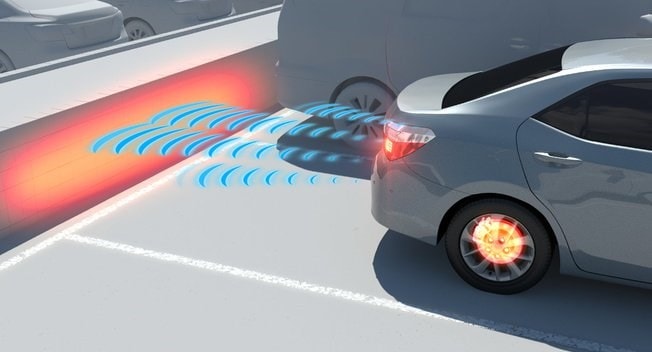
The study was conducted over 18 months on 63,000 Alphard, Vellfire, and Prius vehicles in Japan. Of these, 26,000 were equipped with Intelligent Clearance Sonar (ICS), which automatically applies the brakes when it detects an impending collision, even when the driver is pressing the accelerator.
Statistics show that reversing collisions are reduced by up to 40% in vehicles equipped with ICS (Intelligent Navigation System). Meanwhile, accidents related to mistakenly pressing the accelerator pedal are reduced by up to 70% in 2,500 collisions caused by this error. Although low-speed collisions cause less damage than high-speed collisions, it is still a promising sign of the role intelligent technology can play in reducing accidents in the future.
ICS is particularly effective when the car is traveling at low speeds or parking. |
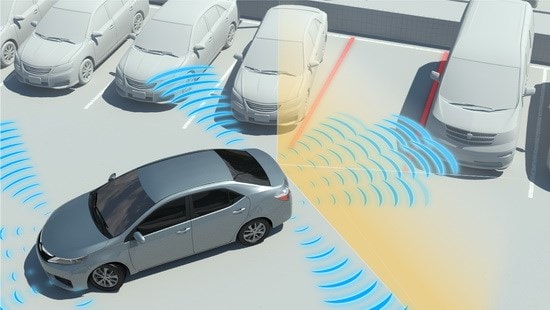
So what is the Intelligent Clearance Sonar (ICS) system? It's an intelligent feature that uses sensors to detect obstacles and calculates whether the driver is mistakenly pressing the accelerator instead of the brake, thereby activating the braking system to prevent collisions. Toyota first introduced this system in 2012 and has continuously improved it to reduce collisions at low speeds. The Japanese automaker has recently upgraded this technology to detect obstacles at even greater distances.
According to TNO
| RELATED NEWS |
|---|