

Pressure on Donald Trump's policy of rapprochement with Russia.
US President-elect Donald Trump is facing considerable pressure as he seeks to pursue a more conciliatory foreign policy toward Russia.
US President-elect Donald Trump recently appears to be caught between his desire to improve relations with Russia and pressure from Republican officials to respond strongly, after the US intelligence community concluded Moscow interfered in the recent presidential election, according to Reuters.
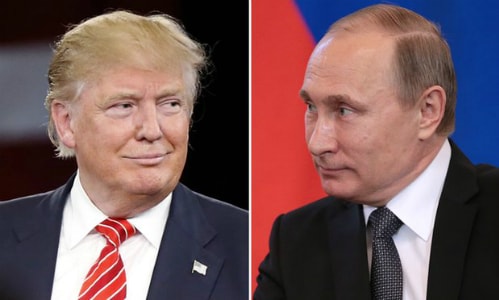 |
| US President-elect Donald Trump and Russian President Vladimir Putin. Photo: AP |
Commentator Phil Stewart noted that from the beginning, Trump was skeptical of intelligence reports suggesting that Russia attempted to influence the election to help him win, while blaming China or some "180kg" hacker.
However, following a report by US intelligence agencies on January 6th accusing Russian President Vladimir Putin of directly orchestrating the campaign, the US president-elect will face calls for a tough response in the military, diplomatic, and economic spheres after taking office.
"The new US administration needs to take a much tougher stance," stated Nile Gardiner, an expert at a think tank that has influence over Trump's transition team.
According to analysts, some Republican officials in Congress, concerned that Trump is pursuing a policy of reconciliation with Putin, may pressure the US president-elect to halt the easing of economic sanctions following Russia's annexation of Crimea and support for separatist forces in eastern Ukraine.
Republican Senator Lindsey Graham said he and Senate Armed Services Committee chairman John McCain would propose a bill calling for tougher sanctions than those currently in place.
"We will propose sanctions targeting their financial and energy sectors, which are their weak points," Graham emphasized.
According to Stewart, retired Navy Admiral James Mattis, Trump's nominee for Secretary of Defense, is believed to support a tough stance toward Russia. This would put him at odds with future National Security Advisor Michael Flynn, who previously had good relations with Putin's administration, as well as Trump's nominee for Secretary of State Rex Tillerson, who has had business ties with Moscow.
If Mattis pushes for a tougher approach toward Russia, this would lead to an increased US military presence in Europe through measures such as reinforcing US forces in the Baltic states and Poland.
"Currently, European NATO countries are concerned about Trump. Any concessions to Russia could change the direction of the bloc, causing Europe to split. However, we do not expect that. NATO is working to reassure its Baltic allies, and the US is an important part of the bloc," said an unnamed European diplomat.
Those who advocate for a strong response to Russia's cyberattack campaign argue that the U.S. could use the leaking of financial information to damage the reputation of Putin's close aides and advisers.
Currently, the Obama administration is refraining from implementing such actions, fearing they could escalate tensions and negatively impact financial and energy relations between the two countries.
Although the US President-elect has stated that America needs to strive for "greater and better" things, following US intelligence accusations of a Russian cyberattack campaign, lawmakers from both the Republican and Democratic parties seem unlikely to immediately overlook the incident.
Senator John McCain told NBC that he wants to establish a full-scale investigative committee into the Russian campaign if he can convince the Republican leaders who control the Senate.
Experts believe that close monitoring of Russia's actions will be implemented at the same time that the Trump administration begins to outline a comprehensive strategy toward Moscow.
According to VNE