
The 'gentle breeze' has begun to blow.
(Baonghean) - Just days after officially taking office, the new US President Donald Trump had a phone call with the Israeli Prime Minister and extended an invitation to Benjamin Netanyahu to visit the US in early February. This move is seen as Trump's latest effort to mend relations with Israel, which had deteriorated during the term of his predecessor Barack Obama.
(Baonghean) - Just days after officially taking office, the new US President Donald Trump had a phone call with the Israeli Prime Minister and extended an invitation to Benjamin Netanyahu to visit the US in early February. This move is seen as Trump's latest effort to mend relations with Israel, which had deteriorated during the term of his predecessor Barack Obama.
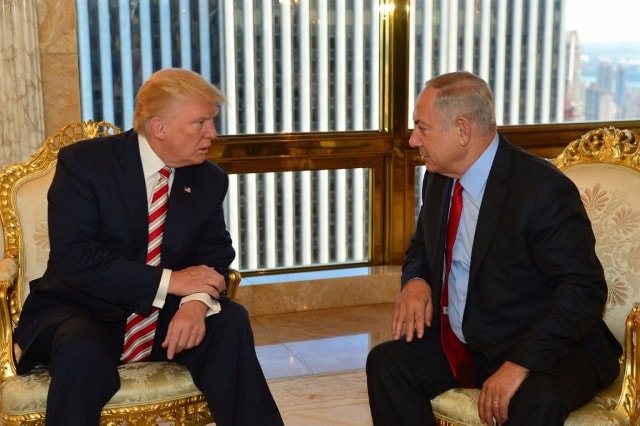 |
| The future of US-Israel relations is predicted to be warmer under US President Donald Trump (Source: Times of Israel). |
A brighter future
"Very interesting," and "warm" are the words that newly elected US President Donald Trump used to describe his recent phone call with Israeli Prime Minister Benjamin Netanyahu. Taking place just two days after officially taking office, it is believed that both Trump and Netanyahu had been anticipating this call for a long time.
Given the difficulties with the Obama administration, the Israeli Prime Minister is now pinning his hopes on a better relationship with the new US administration under President Trump. Looking back, the relationship between the US and Israel was fraught with problems during Barack Obama's term. Israel was particularly angry with the Iran nuclear deal reached by the US last year.
From this point onwards, relations between the two sides began to deteriorate. Most recently, in the final days of his term, the Obama administration abstained from voting on a UN Security Council resolution for the first time, which called on Israel to stop expanding settlements on occupied Palestinian land.
However, with the new President Donald Trump, things are completely different. In numerous statements, Trump has affirmed that he will bring relations with Israel back to a warm state. Trump is also known for his tough stance on Iran and has very good relations with Jewish people. Therefore, it is not surprising that during the phone call, the two leaders agreed to emphasize the importance of the relationship between the two countries.
The new US President also reaffirmed his commitments to Israel's security. In the latest development, the White House announced it is in the early stages of discussions to fulfill President Donald Trump's commitment to move the US Embassy in Israel from Tel Aviv to Jerusalem. For its part, Israel, shortly after Trump took office, approved the construction of more than 500 settlement homes in East Jerusalem.
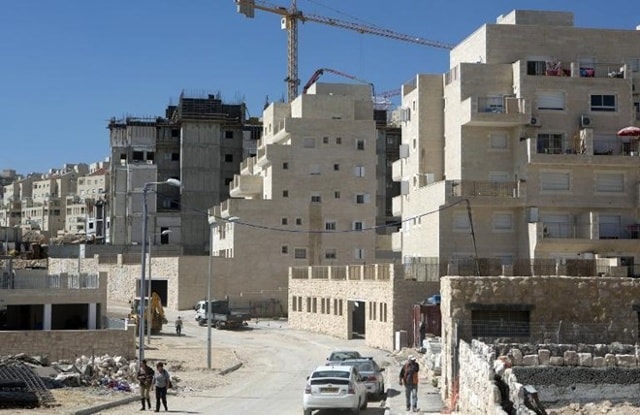 |
| A Jewish settlement in East Jerusalem. (Source: AFP) |
Walking on a tightrope
It is evident that the US-Israel relationship immediately showed positive signs after Donald Trump officially took office as President of the United States. Public opinion suggests that Trump is likely to continue the path of warming relations with Israel as he promised before the election campaign.
He may express a tough stance on Iran's nuclear program and support the construction of Jewish settlements in Jerusalem. However, Trump will certainly need to consider sensitive steps, such as moving the US Embassy from Tel Aviv to Jerusalem. In fact, the US Congress passed a law in 1995 declaring Jerusalem the capital of Israel.
However, many subsequent US presidents, both Democratic and Republican, maintained the US embassy in Tel Aviv and supported peace negotiations between Israel and Palestine regarding the status of Jerusalem. This is because successive generations of US leaders understood that they could hardly go against the long-standing position of the United Nations and many other major powers: "Not considering Jerusalem as belonging to Israel and not recognizing Israel's annexation of East Jerusalem after the 1967 war."
Furthermore, this action will undoubtedly provoke a strong reaction in the Arab world, especially from US allies such as Saudi Arabia, Jordan, and Egypt. While the Trump administration wants to mend its relationship with Israel, it also understands that the US desperately needs these allies in the fight against the Islamic State (IS).
Clearly, President-elect Donald Trump faces a huge challenge in his next four years: balancing relations between Israel and Iran, as well as with other Arab allies in the region. If he leans toward either side, the role and strategic goals of the United States in the Middle East will undoubtedly be affected. Furthermore, the already difficult regional peace process will become even more stalled.
Phuong Hoa
| RELATED NEWS |
|---|