
'A multi-speed Europe' - it's not going to be easy!
(Baonghean) - Last weekend, the European Union (EU) Spring Summit concluded in Brussels, Belgium. Taking place amidst significant divisions within Europe, the summit was expected to provide impetus for unity and solidarity within the bloc. However, strong opposition from Poland and concerns from some Eastern European countries regarding the idea of a "multi-speed Europe" are clearly revealing the major difficulties Europe is facing.
(Baonghean) - Last weekend, the European Union (EU) Spring Summit concluded in Brussels, Belgium. Taking place amidst significant divisions within Europe, the summit was expected to provide impetus for unity and solidarity within the bloc. However, strong opposition from Poland and concerns from some Eastern European countries regarding the idea of a "multi-speed Europe" are clearly revealing the major difficulties Europe is facing.
Categorizing citizens?
With a series of divisions and conflicts in recent times concerning growth, immigration, and the direction of development after the UK leaves the EU, European leaders are striving more than ever towards a unified and cohesive common home. This is demonstrated in the discussions, where EU leaders have tried to bridge the gap and find common ground based on their individual positions.
Most notably, the idea of building a "multi-speed" Europe was put forward by the European Commission in its "White Paper" on the future of Europe. Explaining this idea, European leaders acknowledged that member states of the European Union currently find it difficult to act and think alike, and that change is necessary. At the same time, the UK's departure from the EU also served as a driving force for Europe to shape a new framework.
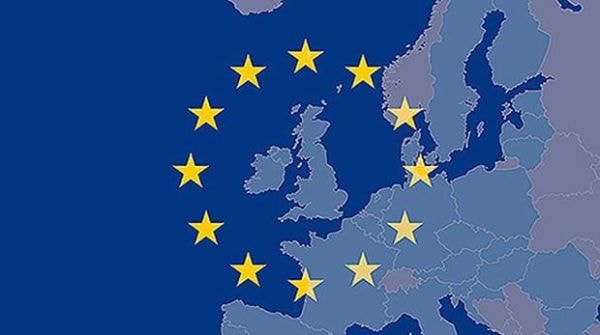 |
| A united and cohesive Europe is the greatest goal of EU leaders. Source: Telegraph |
However, this idea has met with mixed reactions. As leading European economies, countries like Germany, France, Italy, and Spain have all expressed support for the idea.
At a recent informal summit in Versailles, France, French President Francois Hollande emphasized that this is about "unity, not uniformity," and suggested that some EU member states could move faster and further in areas such as defense and tariffs.
Meanwhile, German Chancellor Angela Merkel stated that Europe needs the courage to accept that some countries are developing faster than others. According to her, this is necessary in the current process of globalization.
Conversely, some Eastern European countries, such as Poland and Hungary, have their own concerns. These countries fear that "multi-speed" is simply another interpretation of "citizen classification," and that they are likely to be marginalized in the Union's overall development cooperation plans.
At the recent conference, Polish Prime Minister Beata Szydlo did not hesitate to declare her opposition to the idea of a multi-speed Europe. She also emphasized that Poland is determined not to accept any actions that jeopardize the integrity of the single market, the Schengen free movement area, and above all, the European Union itself.
According to Beata, what the EU needs to do is strengthen its capacity for self-reform. Not only Poland, but recently Slovakia, the Czech Republic, and Hungary have also called for the EU to treat all member states equally.
It's difficult to find common ground.
In an effort to reassure all member states, European Commission President Jean Claude Juncker, in a press conference concluding the summit last weekend, emphasized that the EU has no intention of creating divisions or a new "iron wall" with a "multi-speed Europe" scenario.
Mr. Juncker also pointed out that a multi-speed Europe has long existed within the Eurozone and the Schengen Area. According to him, these are two major achievements in the path of cooperation within the EU, but not all member states participate. Nevertheless, the President of the European Commission acknowledged that the multi-speed Europe approach could disadvantage some Eastern European countries.
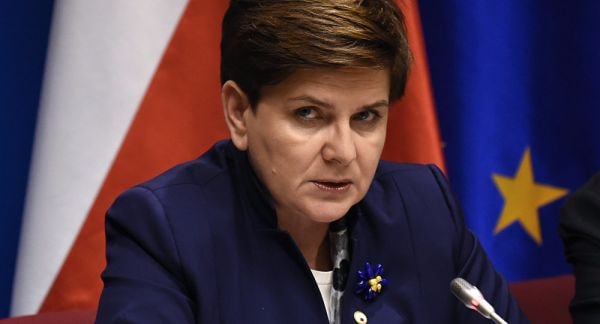 |
| Polish Prime Minister Beata Szydlo and the differing viewpoints are currently one of the EU's main concerns. Source: Telegraph |
Furthermore, analysts believe that the need to explicitly and publicly address this issue in the "White Paper on Development" indicates that the conflict between growth and development is indeed a serious problem for the European Union.
Even a joint statement on the EU's future direction, expected to be released to mark the 60th anniversary of the Treaty establishing the European Community – the predecessor of the European Union – to be held in Rome, Italy on March 25th, is predicted to face many obstacles.
Certainly, Eastern European countries, especially Poland, will again raise objections, similar to their recent refusal to support Donald Tusk's re-election as President of the European Council (EC).
Moreover, the cracks and divisions within the "multispeed Europe" strategy will be further affected by the upcoming Brexit roadmap.
It is highly likely that British Prime Minister Theresa May will trigger Article 50 of the Lisbon Treaty as early as next week, while the EU is not yet fully ready. Furthermore, a series of other domestic and foreign challenges, such as the rise of populism in member states and relations with major powers like Russia and the US, will continue to test the unity and cohesion of the European Union. Whether the idea of a "multi-speed Europe" can be realized and succeed remains a matter of time and the determination of all member states.
Khang Duy
| RELATED NEWS |
|---|