
Horrifying weight loss method using cow urine.
Women and beauty have always been two concepts that go hand in hand in any culture, country, or historical period.
Women and beauty have always been two concepts that go hand in hand in any culture, country, or historical period.
"Father Nguyen Dinh Thuc incites parishioners."
Archaeologists have found makeup tools buried in ancient tombs and documented beauty manuals that reveal a beauty "industry" that was just as vibrant as it is today.
 |
Greece
Women with beauty are often compared to "Greek goddesses." Aphrodite is a Greek goddess and a symbol of beauty in the country. Women from ancient Greece paid great attention to beauty care. Honey and olive oil were two favorite ingredients in all kinds of cosmetics at that time.
Ancient Greek goddesses always strived for fair skin, so they often used a mixture of olive oil, honey, and white lead to create a skin-whitening mixture. However, many women died from lead poisoning absorbed into their skin. To achieve blonde hair, ancient Greek women poured vinegar on their hair to bleach it, but this resulted in hair loss, and wearing wigs became quite common at the time.
Egypt
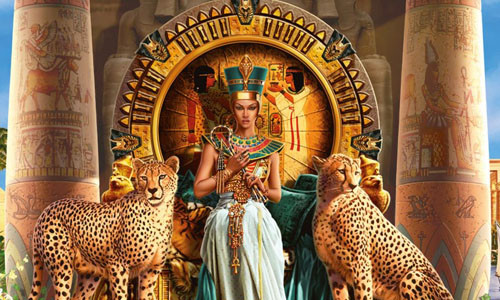
The Egyptian queen Cleopatra is known as one of the most beautiful women in human history. Cleopatra had several interesting beauty methods documented in a highly regarded book of secret beauty practices. Among them, the most famous was bathing in donkey milk, which she believed was an anti-aging and skin-smoothing remedy due to the alpha hydroxy acids it contained.
And it took the milk of 700 donkeys for her daily bath. Furthermore, Queen Cleopatra frequently mixed donkey milk with crocodile dung to create a unique facial mask.
She also bathed in tubs filled with roses to have sweetly fragrant skin. For blush, she used a mixture of clay and crushed beetles. She also used kohl eyeliner.
Japan
Japanese women, especially the Geishas, have long been renowned for their beautiful, radiant, and smooth white skin. But to achieve that mesmerizing beauty with their red lips, Geishas used rice powder to whiten their skin and cleansed their faces with nightingale droppings.
Geisha also removed their eyebrows with tweezers and drew on false eyebrows. Heian-era geisha even blackened their teeth using a mixture of oxidized iron solder in an acidic solution. The beauty of Japanese women was often judged on the length of their hair, with the ideal length being below their waist.
Elizabethan era
Queen Elizabeth II was the epitome of beauty and style for women of her time. Women of that era went to great lengths to achieve her pale complexion. A high forehead was considered a sign of nobility, and women would pluck out their hair follicles to meet this standard.
Raw egg whites were applied directly to the face to achieve a smooth, porcelain-white complexion. To achieve a pale complexion, many women used arsenic despite knowing that it could be fatal. Some women even used leeches to suck their blood in order to achieve a naturally pale skin tone.
The most shocking beauty treatment involves using slimy tapeworms, with women willingly swallowing the worms to digest their food, thus making them slimmer.
Ancient India
A distinctive feature of the beauty of ancient Indian women was their striking skin and eyes. Ancient Indians had beauty practices such as using cow dung and cow urine – which had anti-infectious properties – to reduce fat, treat acne, and heal cracked heels.
Additionally, Mughal women chewed betel nut as an essential part of their beauty routine to give their lips a reddish hue.
According to VNN
| RELATED NEWS |
|---|