

'We cannot abandon the traditional Lunar New Year yet.'
(Baonghean) - Recently, many opinions have been expressed suggesting merging the traditional Lunar New Year with the Gregorian New Year to minimize the impact on socio-economic development and align with international practices, especially as Vietnam integrates more deeply with the world. However, this opinion has not necessarily received widespread public support. What can be done to both preserve traditional culture and celebrate the Lunar New Year joyfully and warmly while still meeting the changing demands of modern life? On the occasion of the 2017 Lunar New Year (Year of the Rooster), a correspondent from Baonghean Newspaper interviewed Associate Professor Dr. Luong Hong Quang - Deputy Director of the National Institute of Culture and Arts, Ministry of Culture, Sports and Tourism.
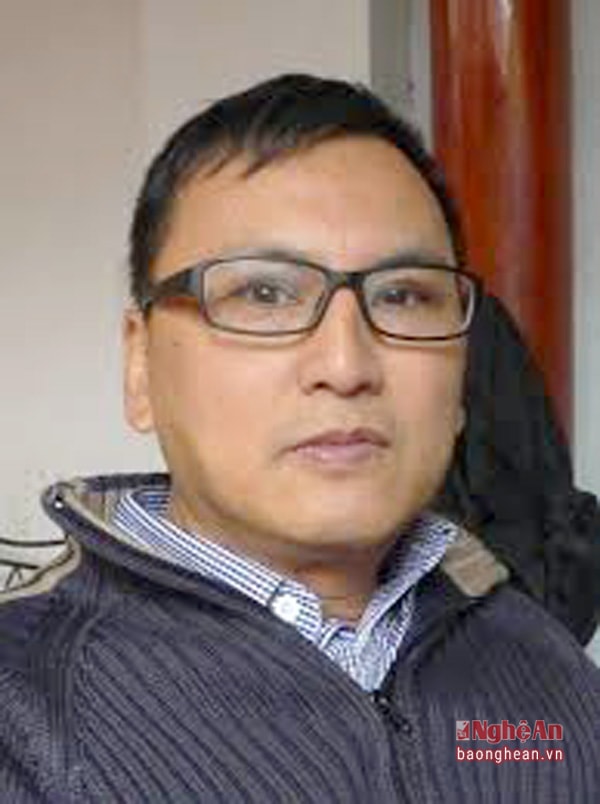 |
| Associate Professor Dr. Luong Hong Quang |
- Professor, Dr. Luong Hong Quang! Among the 12 zodiac animals, the image of the Rooster evokes abundance, prosperity, and wealth. Do you have any premonitions about these good things coming to our country in this Year of the Rooster?
Associate Professor Dr. Luong Hong Quang:Chickens are domesticated animals with a long history and have become a cultural symbol in the West, the East, and Vietnam. The chicken represents diligence, agility, health, and abundance. With such a sacred animal, people always wish for this year to be a year of national development.
Vietnam is not only a country with a rich historical tradition, but in the present day, it will stand shoulder to shoulder with developed countries. It is a country that hopes to industrialize, modernize, and integrate internationally, multilateralize, diversify, and befriend all nations. In a year of harmonious spiritual energy, we hope this will be a good year for the country.
There are two points that I find particularly inspiring. Firstly, the process of democratization is becoming stronger and more widespread, not only a political commitment of the Party and the State, but also a necessity of social life and of each individual. It is an inevitable path. Secondly, the process of international integration. It is through international integration that we understand our level of development, what we need to improve, what we need to learn. These two things form the foundation for better socio-economic development in the coming year.
- Speaking of traditional Tet (Lunar New Year), perhaps now that life is better, some families celebrate Tet in a more elaborate and ceremonial way, leading some young people to view Tet as something burdensome and complicated. What is your opinion on this matter?
Associate Professor Dr. Luong Hong Quang:In a developed society, the differentiation into social groups with different cultures, preferences, and needs is normal. Based on the traditional Lunar New Year, each social group and each individual has their own way of worshipping their ancestors, showing respect to their parents and teachers, and socializing with friends.
All of that, I think, will lead to different trends in how we celebrate Tet. But overall, I still see people viewing Tet as a necessary occasion. Perhaps, nowadays, people realize that in the process of international integration, the timing of our Tet celebrations has some impact on economic and social development.
For example, in industrial zones, before and after Tet (Lunar New Year), for about a month, the workers (who are originally farmers from the region) go home early and don't return afterwards, so the industrial zones lose a whole month of work. Government agencies also take 7-8 days off.
All of that requires a more practical perspective to align with international standards. For example, in Shenzhen (China), they operate 24/7; it's a Special Economic Zone, and they can't invoke the traditional Lunar New Year or the working hours of Chinese laborers. Therefore, they establish 24/7 shifts to facilitate international trade. It's the same for us; we need to find a way to adapt accordingly.
That doesn't mean I'm advocating for the abolition of the traditional Lunar New Year. It's a long process, and we need social negotiation. I believe we need a balance. The Lunar New Year is an occasion to clearly demonstrate the balance between tradition and modernity.
There are traditional elements that were very good in the past, but are no longer suitable in modern times. We need to think of a way to change things. Is our traditional Lunar New Year too long? 7, 8, 9 days. Then, by inertia, it's over by the 15th day of the first lunar month. Especially in the North.
- It's a fact that recently, life has changed a lot, and many young families often organize trips and vacations during the Lunar New Year. There are also opinions that these people don't care about their ancestors and family, and are selfish. What are your thoughts on this?
Associate Professor Dr. Luong Hong Quang:I think the percentage of people traveling isn't very high. Their travel during Tet (Lunar New Year) is, in my opinion, a choice made by a relatively small social group. But they already have Tet preparations to attend to beforehand. During Tet, they can also exchange greetings online through mass media. After returning home, they have opportunities for family reunions. This represents a diverse development, and that percentage will continue to increase.
I think that in their lives, they can't travel forever. So we shouldn't generalize or heavily assume that this is a departure from their ancestors or traditions. I think it's a new way of behaving in a new context.
- It may not be the whole story, but here and there in the press and on social media, many articles and statuses have appeared about the fear of Tet (Lunar New Year) among city daughters-in-law. In your opinion, how should this situation be viewed?
Associate Professor Dr. Luong Hong Quang:I think life adjusts itself. Nowadays, in urban areas, eating and drinking during Tet (Lunar New Year) is no longer a major concern, so daughters-in-law or other female members of the family don't have to worry as much. But in rural areas, it's still a problem.
In rural areas, especially with rising living standards, people try to reinforce traditional values through rituals during Tet (Lunar New Year), which includes preparing large feasts. Everywhere you go, there's eating, drinking, and toasting with alcohol; this is a burden for women. That's what we believe requires a revolution in lifestyle and way of living.
From a modern perspective, rituals honoring ancestors are still very important, but in tradition, there's no requirement for elaborate feasts, constant offerings, or always using fresh offerings. Such practices are time-consuming, raise concerns about food safety and hygiene, and are financially wasteful.
All of that requires a balance between ritual and everyday life. The goal is to maintain the rituals while ensuring the convenience and practicality of daily life, avoiding the situation where people in rural areas eat, drink, and toast each other everywhere they go, then immediately ride their motorbikes. All of that is truly dangerous for society and for the individuals themselves.
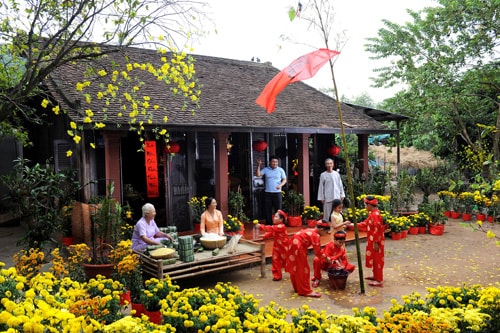 |
| Multigenerational families gather together during the traditional Vietnamese Lunar New Year. |
- So, between the two opposing viewpoints: One is to abolish the Lunar New Year or merge it with the Gregorian New Year; the second is that certain adjustments are needed so that the Lunar New Year does not lose its beautiful meaning in life. What is your opinion?
Associate Professor Dr. Luong Hong Quang:Personally, I believe adjustments are needed to ensure our international integration. This is a lesson from Japan, which also conducted social movements for decades before achieving this. China is also beginning to discuss this issue. North Korea basically follows the Gregorian calendar.
Currently, I think it takes time, it requires social movements. Moreover, culture itself cannot be purely subjective; it needs time and a process of change. In three or four decades, new generations of leaders, those with new ideas, new lifestyles, and new ways of thinking, will be able to make decisions on this issue.
Clearly, we now see that the traditional Lunar New Year is excellent from the perspective of preserving cultural values and identity, but from other perspectives such as international integration and economic development, there are discrepancies. How can we now achieve harmony between economic development and the preservation of national cultural values? We need such discussions, moving towards social consensus, and I think this is a long-term issue. As for abolishing the traditional Lunar New Year right now, I'm sure most people would disagree.
Thank you, sir. I wish you a very meaningful Lunar New Year with your family!
Sacred Cloud