

The arduous life of South Korea's number one woman.
(Baonghean.vn) - In 2013, Park Geun-hye became the first female president of South Korea. Three years later, political scandals pushed this powerful woman to the brink of collapse.
Early years
Park Geun-hye, South Korea's first female president, was born on February 2, 1952, in Daegu, Gyeongsang-North Province. She was the daughter of former South Korean President Park Chung-hye (who served from 1961 until her assassination in 1979) and former First Lady Yuk Young-soo (who died after being shot during an assassination attempt on her husband in 1974).
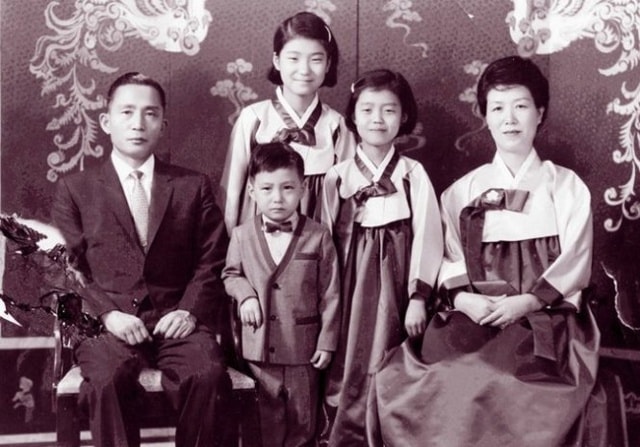 |
| The Park family. Photo: Internet. |
Chung-hee began his 18-year reign when his daughter was only 11 years old. His presidency caused division within South Korea, which later became a subject of controversy surrounding his daughter Park Geun-hye's presidential campaign.
Critics call him a dictator, a human rights abuser, and a stagnation of democracy in South Korea; supporters, however, assert that he transformed the economy and helped the country recover from the Korean War.
Entering politics
After graduating from high school, Park Geun-hye enrolled at Sogang University in Seoul, graduating with a Bachelor of Science degree in engineering in 1974. That same year, the young Park experienced a terrible tragedy: her mother was shot and later died at the hands of Mun Segwang, whom South Korea claims was a North Korean assassin plotting to assassinate the South Korean president. The people of South Korea were deeply saddened by the passing of Yuk Young-soo, the beloved First Lady.
Putting aside her unspoken personal pain, Park Geun-hye became the "acting first lady"—a title that demanded entirely new responsibilities for a 22-year-old who had just graduated from university.
Yet, Park adapted well to the political world: from the moment she assumed the role of First Lady, she proved to be both graceful and efficient in meeting with high-ranking officials, managing state affairs, and fulfilling many other duties…
Five years after her mother's death, Park Geun-hye once again had to contend with tragedy: her father, President Park Chung-hee, was murdered by Kim Jae-kyu, the head of the intelligence agency, at a dinner party on October 26, 1979.
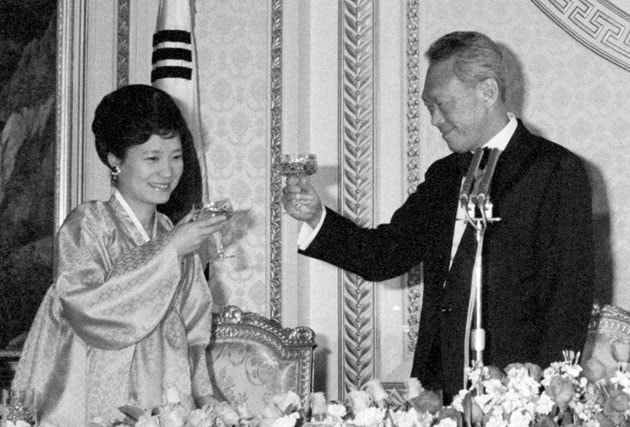 |
| Park Geun-hye replaced the late First Lady in 1979. Photo: Internet. |
Female Member of Parliament
After assuming the role of First Lady, Park continued to thrive and achieve success in South Korean politics, being appointed Vice Chairperson of the Grand National Party (GNP) in 1998. That same year, she began her term as a member of the National Assembly. She was subsequently re-elected four times, serving five consecutive terms. By that time, Park had developed a clear objective: not only to unite the party system within South Korea, but also to unite and strengthen the entire nation.
In 2003, Park became chair of the GNP's presidential election committee. The following year, she was elected chair of the GNP, amidst a difficult period for the party following its failed attempt to impeach President Roh Moo-hyun.
In 2007, she aimed for the presidency, becoming the party's candidate in the primary elections, but lost to Lee Myung-bak, who later won the presidential election. In 2012, the GNP party was renamed the Saenuri Party (New Front). Park remained a key figure in the Saenuri Party, holding the position of chair of the party's emergency committee.
South Korea's first female president
In the historic election on December 19, 2012, Park defeated her 59-year-old pro-democracy opponent and former human rights lawyer Lee Myung-bak to win the Blue House – living up to her nickname "Election Queen" and, more notably, becoming South Korea's first female president.
Unmarried at the time of her election, Park often said she was “married” to the country. Following her victory, Park promised a “new era” of government and pledged to be “the people’s president.” She promoted reunification and prosperity for South Korea, while also being cautious about the threat posed by North Korea. She was sworn into office in February 2013.
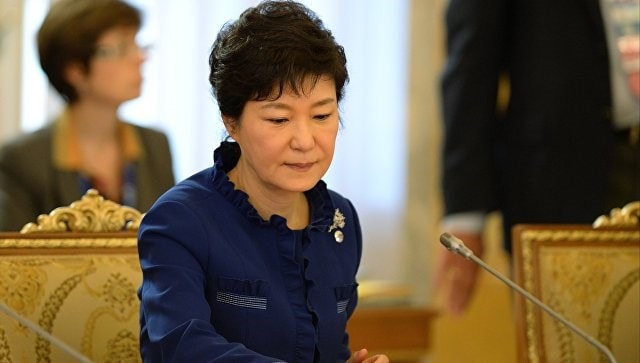 |
| Ms. Park is currently embroiled in one of the biggest political scandals in South Korean history. Photo: Internet. |
Political scandal and impeachment
As president, Park was criticized for abusing her power to silence the opposition, and polls quickly made her one of the most disliked leaders in the country. In October 2016, she became embroiled in a corruption scandal that ultimately led to a decline in her political standing.
Park was accused of extortion, abuse of power, bribery, and allowing her close friend Choi Soon-sil, the daughter of Choi Tae-min, the late leader of a religious organization and spiritual advisor to the Park family, access to classified information. Not only did Choi have access to confidential information, but she also apparently had the power to edit Park's speeches, knew the president's foreign travel itinerary in advance, and even advised her on her clothing choices.
Upon hearing the news, the South Korean people did not hesitate to express their shock and anger. Over six weeks, between 500,000 and 1,500,000 people protested, demanding Park's resignation. Her approval rating plummeted to an unprecedented low of 4%. On October 9, 2016, the South Korean National Assembly accused Park of "serious violations of the Constitution and laws" and voted to impeach her.
Park has apologized three times for the scandal, asserting that she did not act for personal gain. In one statement, she said, "My heart breaks to think that I cannot resolve the deep disappointment and anger of the people even after apologizing 100 times."
Thu Giang
(According to Biography)
| RELATED NEWS |
|---|