

Le Duan: A leader who dedicated his life to the Party and the people.
(Baonghean) - At 79 years old, with 56 years of Party membership and nearly 60 years of revolutionary activity, the life and revolutionary career of Comrade Le Duan are closely linked to the revolutionary process of our nation.
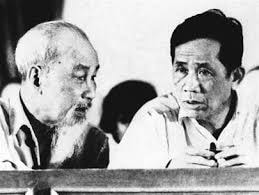 |
| Comrade Le Duan was an outstanding leader of the Party and an excellent disciple of President Ho Chi Minh. (Archival photo) |
Comrade Le Duan, whose real name was Le Van Nhuan, was born on April 7, 1907, in Hau Kien village, Trieu Thanh commune, Trieu Phong district, Quang Tri province. Coming from a working-class family with a tradition of patriotism, Comrade Le Duan was early enlightened about the revolution. He was among the first to respond to Comrade Nguyen Ai Quoc's call to follow the revolutionary path of Marxism-Leninism. He joined the Revolutionary Youth Association in 1928.
Following the founding of the Communist Party of Vietnam in June 1930, the Hanoi City Party Committee was officially established. Introduced directly by Comrade Nguyen Ngoc Vu, the first Secretary of the City Party Committee, Comrade Le Duan became a communist party member, participating in the city's Party organization and belonging to the first generation of communist party members in Hanoi.
In 1931, Comrade Le Duan was appointed a member of the Propaganda Committee of the Northern Regional Party Committee. Later, he was arrested in Hai Phong and sentenced to 20 years in prison. He was successively imprisoned in various prisons of the French colonial regime, such as Hoa Lo (Hanoi), Son La, and Con Dao, from 1931 to 1936. The brutality of the enemy did not break him; on the contrary, it further tempered his will, honed his intellect, and strengthened the qualities of a revolutionary fighter.
In October 1936, faced with the Vietnamese people's struggle and the victory of the People's Front in France, the colonial government in Indochina was forced to release many Vietnamese revolutionary fighters, including Comrade Le Duan. Immediately after his release from prison, he enthusiastically resumed revolutionary activities in the central provinces, implementing the Central Party Committee's policy of establishing the Indochinese Democratic Front to mobilize and unite the masses to fight against colonial reactionaries, the threat of fascism, and war. In 1937, Comrade Le Duan was appointed Secretary of the Central Committee of the Indochina Party. From then until 1939, he actively worked in many localities in Central Vietnam, from Quang Tri and Thua Thien-Hue to the South Central region.
In 1939, he was appointed to the Standing Committee of the Central Party Committee, and at the end of that year, together with Comrade Nguyen Van Cu, the Party's General Secretary, he chaired the Sixth Conference of the Central Executive Committee in November 1939, deciding to establish the Indochinese Anti-Imperialist Front to replace the Democratic Front, shifting the revolutionary struggle to a new phase for the Vietnamese revolution: from a struggle for democratic and social rights to a struggle aimed at directly overthrowing the imperialist, colonial, and feudal puppet regime. This was the beginning of a new revolutionary upsurge, leading to the victory of the August Revolution.
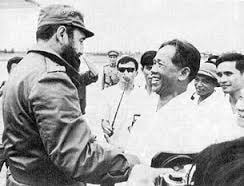 |
| Comrade Le Duan during a visit by Cuban President Fidel Castro, who encouraged the just struggle of the Vietnamese people. (Archival photo) |
Arrested by the French colonialists and exiled to Con Dao for the second time (1940-1945), along with other communist fighters, Comrade Le Duan once again demonstrated his revolutionary character and qualities, overcoming challenges and remaining steadfastly loyal to the Party and the nation.
Following the success of the August Revolution and the establishment of the Democratic Republic of Vietnam, Comrade Le Duan and many other outstanding Party cadres were welcomed back to the mainland by President Ho Chi Minh, the Central Committee of the Party, and the people. Having just been released from imperialist prison, he eagerly embarked on a new struggle.
Comrade Le Duan's revolutionary life was always closely linked to the impregnable South. In his capacity as Deputy Secretary, then Secretary of the Southern Regional Party Committee, and after the Second Party Congress (1951) as a member of the Politburo and Secretary of the Central Bureau for the South, he successfully fulfilled the tasks assigned by the Party Central Committee and President Ho Chi Minh: directly leading the resistance war against French colonialism in the South. From the success of the resistance in the South, our Party drew valuable lessons for the resistance war against French colonialism and for the struggle against the US to save the nation.
After the Geneva Accords were signed, from 1954 to 1957, under the direction of the Central Committee of the Party and President Ho Chi Minh, Comrade Le Duan remained in Southern Vietnam to continue leading the people's struggle to demand that the opposing side implement the 1954 Geneva Accords on Vietnam and Indochina. Based on the theories of Marxism-Leninism and Ho Chi Minh Thought on war and revolution, in 1956, Comrade Le Duan drafted the famous document: The Outline of the Revolution in Southern Vietnam.
The Outline clearly stated that the South Vietnamese government was a new type of colonial regime, a puppet of American imperialism. This government brutally trampled on the achievements our people had gained in the resistance war against French colonialism and sabotaged the Geneva Accords. The correct and creative ideas put forth in the Outline of the South Vietnamese Revolution made a significant contribution to the creation of Resolution 15 of the Central Committee (2nd Congress) and many resolutions of the Politburo and the Central Committee of the Party, contributing to the formulation of the revolutionary strategy for both North and South Vietnam throughout the period of resistance against the US and for national salvation.
In mid-1957, Comrade Le Duan was transferred to Hanoi for work. Along with comrades Ton Duc Thang, Truong Chinh, Pham Van Dong, Vo Nguyen Giap, etc., he was one of President Ho Chi Minh's close associates.
In 1960, at the Third National Congress of the Party, Comrade Le Duan was re-elected to the Central Committee, elected to the Politburo, and held the position of First Secretary of the Central Committee of the Party.
From 1969, after the death of President Ho Chi Minh, Comrade Le Duan, together with the Politburo and the Central Committee, formulated strategic issues and resolved theoretical and practical problems of the Vietnamese revolution.
The work "Under the Glorious Banner of the Party, for Independence and Freedom, for Socialism, Advancing Towards New Victories," written by the comrade in 1970, is an important theoretical document summarizing the experiences of the past revolutionary period, pointing out the direction and tasks of the new period, simultaneously carrying out the socialist revolution in the North, building a strong rear base for the whole country; and carrying out the national democratic revolution in the South, moving towards national reunification and fulfilling international obligations.
Our nation's resistance war against the US was an extremely heroic and creative people's war. Under the leadership of the Party, the entire nation, millions of people united as one, bravely fought and defeated many war strategies of the US imperialists and their puppets, from "unilateral war" to "special war," then "local war," "Vietnamization war," and achieved complete victory in the Spring 1975 General Offensive and Uprising, liberating the South and unifying the country.
Throughout his 15 years as First Secretary of the Central Committee of the Communist Party, amidst extremely serious challenges facing the country and complex international developments, Comrade Le Duan, together with the Politburo and the Central Committee, steadfastly pursued the path of independence and self-reliance, leveraging international aid, assistance, and solidarity. He wisely led the people and revolutionary armed forces of the entire country to defeat the American invaders and their puppets, liberate the South, and unify the Fatherland.
From 1976, continuing in his position as General Secretary of the Central Committee of the Party, together with the Politburo and the Central Committee, Comrade Le Duan focused much effort on formulating the guidelines for building and defending the Fatherland.
With nearly 60 years of continuous, rich, and vibrant revolutionary activity, including almost 30 years holding the positions of First Secretary and General Secretary of the Party, Comrade Le Duan made immense contributions to the revolutionary cause of our Party and our people. Comrade Le Duan dedicated his entire life to the Party and the nation, for the noble ideal: an independent, unified Vietnam progressing towards socialism, and a Vietnamese people living in freedom, prosperity, and happiness.
Nguyen Thi Hong Vui
(Provincial Party Committee's Propaganda Department)
| RELATED NEWS |
|---|