
Doctors treating children with HIV.
(Baonghean) - They are not only doctors, but also family and friends, sharing and empathizing with the joys and sorrows of child patients and their families. This dedication has kindled hope for children infected with the "disease of the century".
(Baonghean) - They are not only doctors, but also family and friends, sharing and empathizing with the joys and sorrows of child patients and their families. This dedication has kindled hope for children infected with the "disease of the century".
The clinic for treating children infected with and exposed to HIV/AIDS at the Tropical Diseases Department of Nghe An Obstetrics and Pediatrics Hospital has been in operation for over 8 years. For many nurses, doctors, and medical staff working at the clinic, the time they spend in contact with people infected with HIV/AIDS may be even longer.
According to Dr. Nguyen Van Son, Head of the Tropical Diseases Department, he has over 10 years of experience working with children with HIV/AIDS and is now the main person in charge of examination and treatment here. Dr. Son shared: "The most difficult thing is counseling and encouraging the patients' families when they first find out their child or grandchild is infected with HIV. They are shocked, so some people do not cooperate with the doctors in the treatment."
Understanding that mindset, we pay close attention to encouraging and advising family members that ARV treatment is for prolonging life. From my own experience, I've found that healthcare workers must be persistent and patient to convince patients' families."
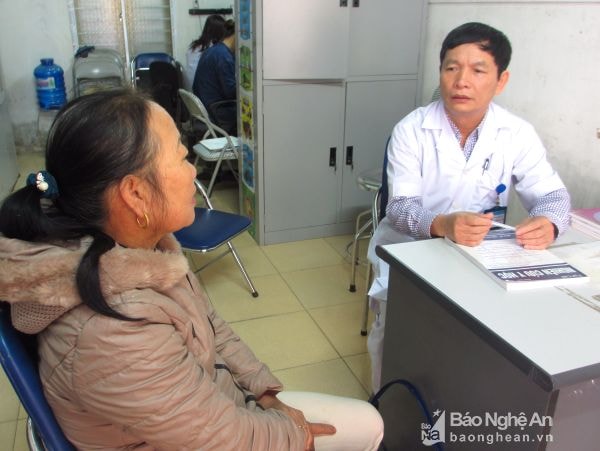 |
| Dr. Nguyen Van Son, Head of the Tropical Diseases Department at Nghe An Obstetrics and Pediatrics Hospital, advises the patient's family. Photo: Thu Hien. |
Caring for and treating children with HIV/AIDS is very difficult, so the doctors and nurses here have empathy and understanding for the patients' feelings. There is no contempt or discrimination at the clinic; instead, there is love and responsibility, standing by the patients, helping them fight the disease, preventing opportunistic infections, and prolonging their lives for as long as possible.
The sincerity of the doctors and nurses is a great source of encouragement for patients, helping them maintain their faith. Mr. LVH, the father of 3-year-old LVS from Vinh City, shared: “When we first learned that our child was HIV positive, my wife and I felt like we had been struck by lightning; we wanted to give up, thinking everything was over. Coming to this HIV clinic and treatment center, we received very dedicated advice from the doctors and nurses. They regularly reminded us to give our child the correct dosage and time of medication, and explained the benefits of adhering to treatment. After nearly two years of treatment, our child's health has stabilized, and he is now attending school with his friends. My family is very happy.”
Similarly, the heartfelt letter from Ms. NTH, written to Dr. Nguyen Van Son - Head of the Tropical Diseases Department, Nghe An Obstetrics and Pediatrics Hospital, and his colleagues when she brought her child for HIV treatment, evoked deep emotion: “At the height of my suffering, when I had lost all hope and faith in life, those hands reached out, grasped, and pulled my child and me back to life. It made me realize that I am not alone in my fight against the deadly HIV/AIDS. I am very grateful to the doctors and nurses for giving me a healthy child who can go to school with friends and live a normal life within the community.”
Currently, the clinic is treating 496 children infected with or exposed to HIV/AIDS. In fact, we've witnessed some children spending up to 10 months a year in hospital treatment for seven different illnesses, including septicemia due to fungal infection, lung abscess, pericardial effusion, pleural effusion, encephalitis, pulmonary tuberculosis, bone destruction, and osteocephaly.
Many patients seeking treatment come from families with HIV/AIDS who are facing difficult living conditions, including poverty, orphanhood, living with grandparents or relatives, or having either parent infected with HIV. Treating these children is particularly challenging, especially in counseling and treatment, ensuring adherence to treatment protocols and schedules.
The hardships of making a living also affect patients' follow-up appointments. Some patients come from other provinces, and each trip to receive medication is very difficult due to their poverty and lack of money for transportation. In some cases, they have enough money to travel but not enough to return home.
The most heartbreaking part is when the children gradually understand and wonder why they have to take medication regularly. At that point, the hardest thing is providing psychological counseling to help them accept the information that they are infected with HIV. During those times, the whole family and medical staff work together to help the children overcome their feelings of shame and illness, continue treatment, and have faith in life...
Thu Hien