

Israeli technology is a key feature in the Vietnamese military.
Currently, Israel is one of the few partners besides Russia that supplies weapons and equipment to Vietnam.
Besides Russia, which holds a dominant position in the structure of weapons and main combat equipment in the branches of the Vietnam People's Army, Israel is one of the very few Western countries that supply modern weapons to Vietnam.
Israeli weapons are sharp and sophisticated in the military.
The first type of weapon worth mentioning is the personal weapons in the Vietnamese Army. Among these, Israeli-made rifles are significantly present, gradually replacing the Soviet-era AK rifle.
The AK-47, introduced into the Vietnamese army in the 1960s and 1970s, no longer meets the demands of modern warfare. Over the past two decades, Russia has supplied Vietnam with virtually no new infantry weapons or ammunition, thus creating an increasingly urgent need for a replacement.
As early as 2011, several Vietnamese military units were supplied with and tested Israeli infantry weapons such as the TAR-21 Tavor assault rifle, Uzi submachine gun, Negev light machine gun, Matador grenade launcher, and CornerShot angled rifle…
Israeli firearms were highly regarded, so a pilot project for cooperation between Israel and Vietnam in the production and modernization of weapons and equipment was subsequently launched at the Z111 factory, under a contract worth approximately $170 million.
Z111 was granted a license by Israel to manufacture two types of weapons: the Galil ACE 32 assault rifle and the Galil ACE 31 carbine, by the Israeli arms company IWI Ltd.
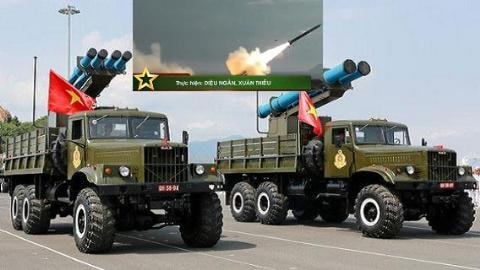 |
| The ACCULAR and EXTRA multiple rocket launcher systems of the Vietnamese Navy during a parade. |
Vietnam's first Israeli-made products were launched in early 2014 and successfully test-fired in October of the same year. Currently, these Israeli personal weapons are being equipped to the army, special reconnaissance units, commandos, and marines of the Vietnamese military.
The Vietnamese military has also purchased EXTRA and ACCULAR high-precision rocket artillery rounds from IMI Company - Israel, for use in the LAR-160 mobile multiple rocket launchers, deployed to the 685th Coastal Artillery-Missile Battalion of the 4th Naval Region.
The EXTRA rocket, manufactured by the Israeli company IMI, is a guided rocket artillery round (usually GPS), with a range of 150 km, a 300 mm warhead, and a weight of 120 kg. The ACCULAR rocket, on the other hand, has a 160 mm caliber, a range of 40 km, and a warhead weight of 35 kg.
Israeli weapons experts say these rocket artillery rounds are highly accurate (only deviating from the target by about 10 meters). The rocket launchers are mounted on truck beds and carry between 2 and 16 rockets. These rockets have a long storage life without compromising reliability.
These weapons are extremely effective at destroying reconnaissance points and pre-prepared firing positions. The entire enemy force, even landing craft in progress, will have no chance of survival within the firing range of EXTRA and ACCULAR.
Vietnam is also purchasing SPYDER short-/medium-range air defense missile systems from Israel, each system consisting of one control vehicle and six mobile launchers, equipped with Python 5 and Derby missiles, to equip its air defense units.
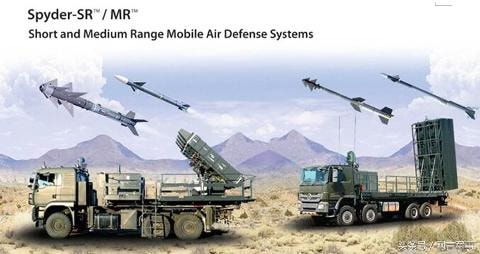 |
| Vietnam has purchased the SPYDER air defense missile system from Israel. |
The missiles, manufactured by Rafael Advanced Defense Systems in collaboration with Israel Aerospace Industries (IAI), have an operational altitude of 20-9,000 meters and a range of 1-20 kilometers. If an additional booster stage is fitted, the target engagement range can be increased to 35 kilometers, and the interception altitude to 16 kilometers.
These missiles allow for the destruction of various aerodynamic targets, including helicopters and drones at low and medium altitudes, thus significantly enhancing the anti-aircraft guns (23 mm and 37 mm) of the Vietnamese air defense forces.
Vietnam has also begun building its missile defense system with contracts with Israeli companies Rafael and Elta, to purchase several EL/M 2106 ATAR 3D air surveillance radar stations and EL/M-2084 MMR radar stations – which are used in the renowned Iron Dome missile defense system.
These radars can guide interceptor missiles to ballistic targets at a range of 35 km and an altitude of 16 km. Israeli radars have extremely good anti-jamming capabilities, as well as the ability to build integrated networks for processing information when connected to friend-or-foe identification radars and communication stations.
Recently, international media reported that, following successful cooperation projects in the past, Vietnam intends to purchase other types of weapons from Israel, such as anti-tank missiles and maritime patrol drones.
Furthermore, Vietnam could also collaborate with Israel on projects to upgrade T-54/55 main battle tanks, or cooperate with Israel in the field of connecting, integrating, and sharing combat information for various weapons within a unified combat system platform.
As early as five years ago, the media reported that Vietnam was closely monitoring and evaluating the combat effectiveness and technical capabilities of the Israeli Heron and Searche Mk.2 unmanned aerial vehicles (UAVs), which were in service with a squadron of the Indian Navy (deployed at the Tamil Nadu naval base).
As early as 2014, the Vietnamese military acquired the Orbiter 2, an unmanned aerial vehicle (UAV) manufactured by ADS (Israel), and put it into service.
 |
| Israeli Galil ACE rifles during a parade of the Vietnam People's Army. |
However, the Orbiter 2 is a very small UAV with a short operating range (80km), a short flight time (4 hours), and a maximum altitude of 3km, making it only suitable for near-shore target reconnaissance and fire guidance missions, and unable to undertake long-range patrol missions.
With a ceiling of 10km, a range of 320km, and an operating time of 54 hours, Israel's Heron unmanned reconnaissance aircraft will be well-suited for long-range patrol missions over the South China Sea.
Another type of weapon is the Spike NLOS guided anti-tank missile. Due to its weight of up to 70 kg, the Spike is mounted on mobile platforms such as cars, helicopters, or tank chassis.
This type of missile is capable of destroying enemy tanks and armored vehicles at a range of 25 km, which is five times greater than guided anti-tank missiles produced by the US, Europe, Russia, and China. At the same time, it can also attack low-flying helicopters or enemy warships.
If we acquire Spike NLOS, we can choose platforms to carry this missile such as 4x4 military vehicles, M113 armored personnel carriers, and especially modified M48 tanks.
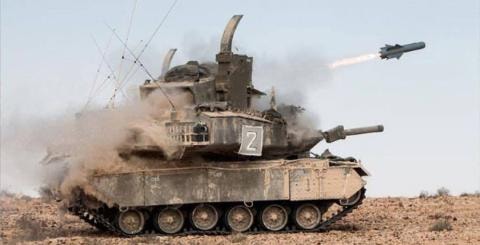 |
| The Spike NLOS anti-tank missile is the perfect choice. |
Furthermore, Vietnam could cooperate with Israel in the field of connecting, integrating, and sharing combat information between combat vehicles of different standards, for example, connecting Russian and Western-style weapons in a unified command and control system or integrating different types of equipment on a particular weapon system.
In fact, this is crucial if Vietnam wants to acquire more Western weapons, while it is currently using mostly Russian weapons, for example, connecting Airbus C-295 AEW&C early warning and control aircraft to Gepard-class warships, Russian Su-30MK2 fighter jets, and Dutch Sigma-class warships…
According to Baodatviet
| RELATED NEWS |
|---|