

Will astronauts use a 'rejuvenation drug'?
Scientists have discovered a crucial process in DNA repair that could be applied to develop drugs to reverse aging.
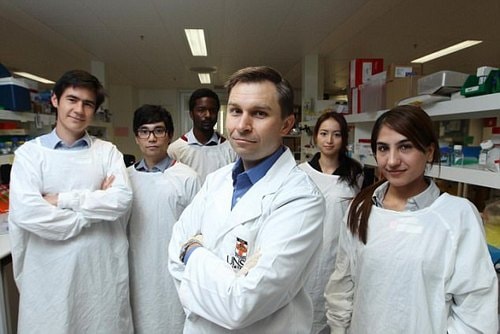 |
| The research team discovered the process that helps repair DNA. Photo: 9News |
Scientists have announced a breakthrough discovery that could allow the production of a drug to reverse the aging process. It could repair damaged DNA and even protect astronauts on Mars from the harmful effects of solar radiation, ABC reported on March 24.
The research team discovered a crucial signaling process in DNA repair and cellular anti-aging. In experiments on mice, they found that the drug has the potential to directly repair DNA damage caused by radiation exposure or aging.
"It was impossible to distinguish the cells of older mice from those of younger mice after a week of treatment. We are getting closer to a safe and effective anti-aging drug. Perhaps it will only take 3-5 years to bring it to market, if the trials go well," said Professor David Sinclair, the lead author of the study.
Human trials will begin within six months. This project has attracted the attention of NASA, which is facing the challenge of maintaining the health of astronauts during a four-year mission to Mars.
Even on short missions, astronauts experience rapid aging due to cosmic radiation, along with muscle weakness, memory loss, and many other symptoms upon returning to Earth. On a trip to Mars, the situation would be far worse. 5% of an astronaut's cells would die, while the risk of cancer would be 100%.
Cosmic radiation isn't just a problem for astronauts. Ordinary people are easily exposed when flying, with a flight halfway around the Earth absorbing as much radiation as an X-ray.
 |
| This drug could speed up DNA repair, reversing aging. Photo: 9News. |
In theory, anti-aging drugs could reduce the impact and damage to DNA in frequent flyers. Another group that would benefit from the research are childhood cancer survivors.
Dr. Lindsay Wu, a colleague of Professor Sinclair, suggests that 96% of childhood cancer survivors develop chronic illnesses by age 45, including cardiovascular neurodegenerative diseases, type two diabetes, Alzheimer's disease, and the appearance of tumors unrelated to the original cancer.
Human cells can naturally repair their DNA, but this ability decreases with age. Scientists have identified the molecule NAD+ as playing a key role in protein interactions that control DNA repair. It is a signaling molecule present in all body cells.
An enhanced variant of NAD+, called NMN, can improve the ability to repair DNA damage in cells. For the past four years, Professor Sinclair and Dr. Wu have been working to incorporate NMN into medicine.
According to VNE
| RELATED NEWS |
|---|