

Three ways to help you reduce scars.
When a wound first forms, you should treat it as soon as possible; don't wait until a scar forms before seeking treatment.
When a wound is newly formed, it's the ideal time to start treating scars, because once a scar has formed, the treatment process becomes much more difficult and almost impossible to remove.
When the skin is damaged, the body initiates a "self-healing" process. This process of cell proliferation and rearrangement to compensate for the damage is difficult to control, leading to conditions such as pitted scars, hypertrophic scars, or keloid scars.
Infected wounds slow down the healing process and leave unsightly scars. You should intervene during the period of rapid skin change – when the wound has just occurred – to facilitate faster healing and reduce the risk of infection.
You can prevent scarring by following these principles: caring for the wound from the start, minimizing further injury, and promoting faster healing. The key to scar prevention lies in what you do to your skin throughout the healing process.
Here are some wound care steps that can help prevent scarring:
Step 1: Pay attention to wound hygiene.
To avoid the risk of infection, you should pay attention to cleaning the wound as soon as it forms and after each dressing change. You can use saline solution or diluted alcohol to kill bacteria, wash away dirt, blood clots, and dead tissue.
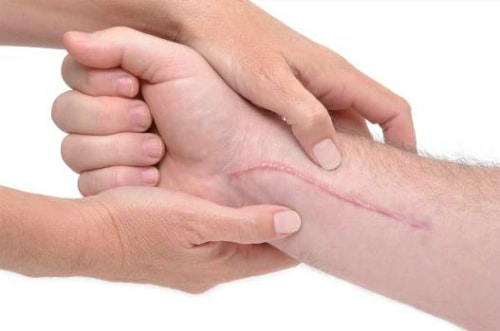 |
Scars should be treated as soon as a wound forms. |
You should clean the wound 1-2 times daily (depending on the cleanliness of the environment the wound is exposed to and the amount of discharge) until it is completely healed to ensure that it is not further damaged by infection.
Step 2: Protect and moisturize the wound.
During the wound's early stages, protection and moisture retention are crucial. In fact, maintaining the skin's natural moisture facilitates cell proliferation and wound healing. However, excessive moisture can create a favorable environment for bacteria to invade and grow, leading to infection.
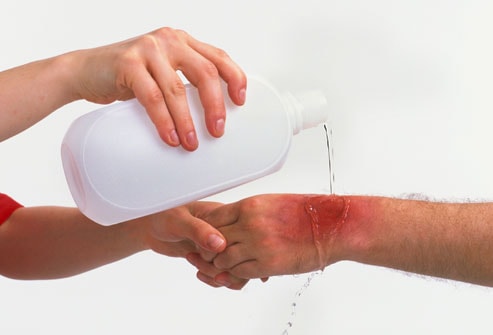 |
You can use saline solution or diluted alcohol to kill bacteria, wash away dirt, blood clots, and dead tissue. |
To remedy this, you should use wound-covering gels like Skincol, which contain active ingredients that create a protective barrier, shielding the wound from external bacteria. This type of gel also promotes skin regeneration and reduces wound healing time.
Step 3: Massage the affected area regularly.
Massage movements can stimulate better blood circulation in the damaged skin area, creating favorable conditions for the formation of healthy new cells. They also break down the densely produced collagen bonds in the damaged skin, making it softer, easier to heal, and less prone to scarring.
When massaging, you should perform gentle rubbing movements in both clockwise and counter-clockwise circular motions about 2-3 times a day, each time for about 15-20 minutes.
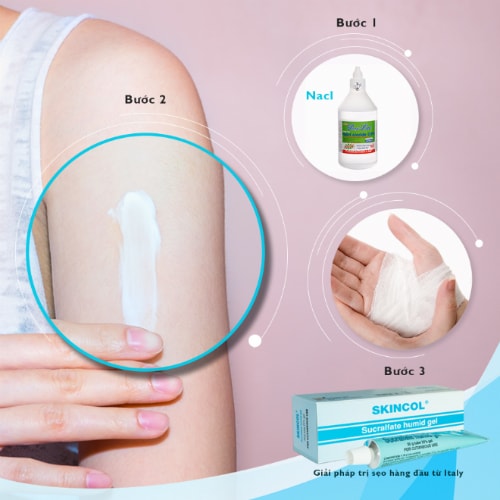 |
Skincol - a wound healing and scar prevention solution imported from Italy, suitable for all ages. |
Prevention is better than cure, so caring for wounds from the start is the easiest way to avoid scarring. You need to properly care for the wound to ensure sterility, apply antiseptic medication, keep the injured area well-moisturized, and maintain a healthy, nutritious diet to support the skin's best self-regeneration.
According to VNE
| RELATED NEWS |
|---|