
The world's best missile defense systems.
(Baonghean.vn) -
(Baonghean.vn) -Future wars will be swift and decided by modern weapons, including missiles with immense destructive power. Therefore, the lack of an effective missile defense system will cause significant losses for a nation if attacked by long-range missiles, ballistic missiles, and unmanned aerial vehicles.
1. THAAD
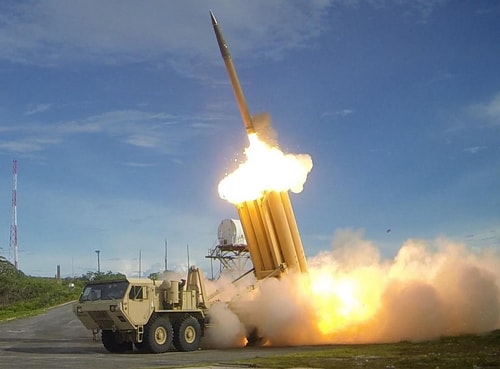 |
| The Terminal High Altitude Area Defense (THAAD) missile defense system, developed by the US military, is designed to shoot down short- and medium-range ballistic missiles. THAAD officially entered service with the US military in 2008. THAAD destroys targets using a "hit-to-kill" approach, meaning the interceptor missiles do not carry nuclear warheads and destroy targets through impulse and kinetic energy. During the approach phase to the enemy missile, THAAD uses an interceptor module equipped with an infrared-guided warhead to track the target. The missile destroys the target using kinetic energy from the high-speed collision, not an explosive warhead like conventional missiles. |
2. S -300V
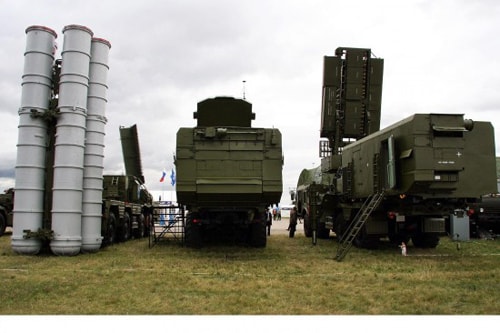 |
| The S-300 is a series of long-range surface-to-air missile defense systems manufactured by the Russian Almaz Arms Industry Corporation. It is the third-tier air defense system of the Russian military, countering ballistic missiles, cruise missiles, and tactical aircraft, replacing the older SA-4 "Ganef" system. This defense system features "GLADIATOR" missiles with a maximum combat range of approximately 75 km and "GIANT" missiles capable of engaging targets up to 100 km away and at an altitude of approximately 32 km. Unlike THAAD, the S-300V missile system carries nuclear warheads to destroy targets. |
3. Antey 2500
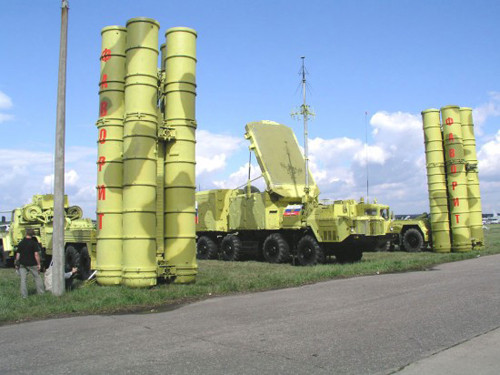 |
| This is an upgraded version of the S-300V system, also known as S-300VM or "Antey-2500". It is designed to destroy medium- and short-range ballistic missiles at a range of up to 2,500 km, as well as cruise missiles and space-launched missiles, tactical and strategic aircraft, and precision-guided weapons. |
4. S-300PMU1/2
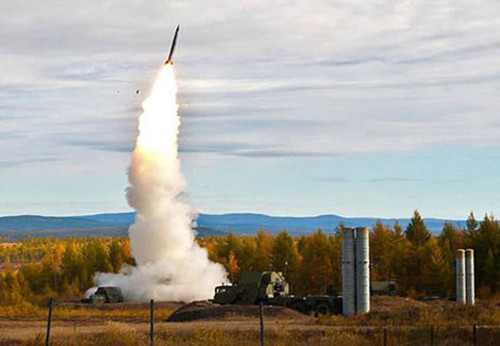 |
| The S-300PMU-1 (US, NATO designation SA-20A), introduced in 1999, typically uses the 83M6E command and control system, although it is also compatible with the older Baikal-1E and Senezh-M1E CCS command and control systems. The 83M6E system incorporates the 64N6E (BIG BIRD) surveillance/detection radar. The fire control/fire detection and guidance radar is the 30N6E, which can be combined with a 76N6 low-altitude surveillance radar and a 96L6E all-altitude surveillance radar. |
5. Patriot Pac 1/2/3
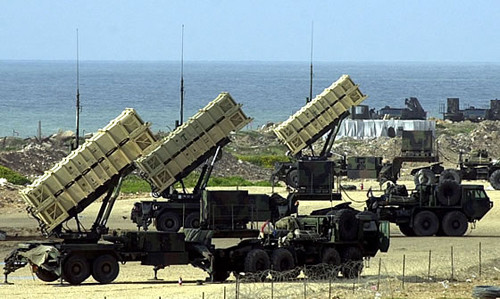 |
| The Patriot Advanced Capability (PAC) anti-ballistic missile system, or Patriot for short, was developed by the United States to replace the Nike Hercules system (the Pentagon's medium- and high-altitude air defense system) and the MIM-23 Hawk system (the US military's medium-range tactical air defense system). Patriot utilizes an advanced, high-performance airborne interceptor missile system and radar. Patriot is manufactured at Redstone Arsenal in Huntsville, Alabama, the same facility that previously developed the anti-ballistic missile (ABM) defense system and the Spartan and Sprint missiles within the Patriot system. |
6. S - 400
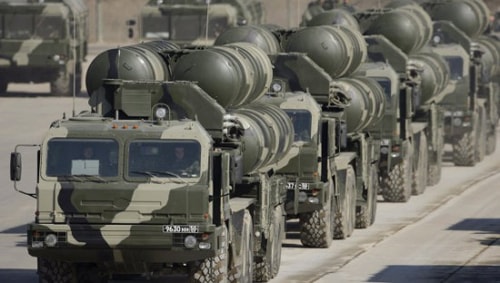 |
| The S-400 is a new generation missile defense system designed by Russia to replace the S-200, S-300V, S-300PMU1, and S-300PMU2. Introduced in 1999, the S-400 is capable of shooting down all airborne targets, such as strategic, tactical, and reconnaissance aircraft, and intercepting medium-range and tactical ballistic missiles from a distance of 400 km, an altitude of 30 km, and a maximum target speed of up to 4,800 m/s. Notably, the S-400 can intercept strategic missiles with a range of 3,500 km, 3.5 times greater than the US Patriot missile. |
7. Aegis (ACS)
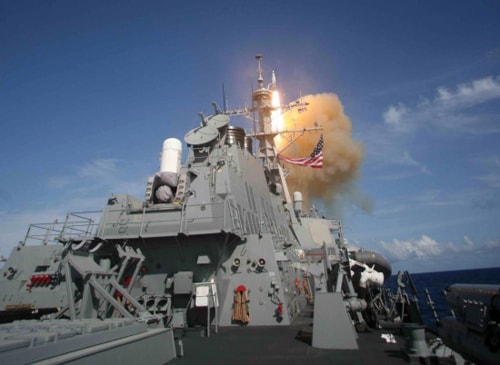 |
| The Aegis ballistic missile interceptor system (ACS) is a mobile, sea-based naval weapon system developed by the U.S. Missile and Ground Radar Agency and currently manufactured by Lockheed Martin. Aegis is designed to intercept medium- and long-range ballistic missiles using SM-3 interceptor missiles and short-range missiles using SM-2 interceptor missiles. The SM-3 missile, based on the SM-2, has a range of approximately 500 km and an altitude of about 160 km, utilizing advanced radars, computer systems, and satellite navigation (GPS) to adjust and guide its approach to the target. |
8. Arrow
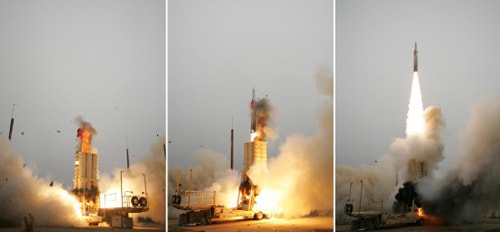 |
| The Arrow missile interception system is a collaborative production between Israel Aerospace Industries and Boeing of the United States. The Arrow project began in 1986, and currently, 50% of its development costs are funded by Israel's close ally, the United States. The Arrow missile defense system is designed to intercept tactical ballistic missiles, short- and medium-range ballistic missiles, and intercontinental ballistic missiles at altitudes up to 100 km. |
9. MEADS
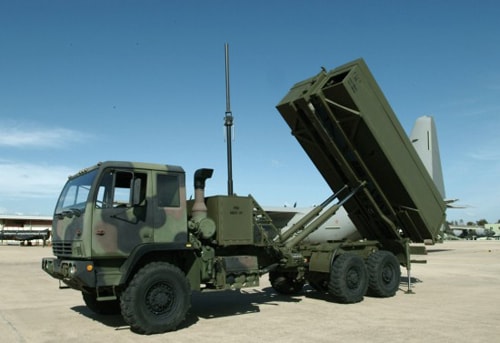 |
| The MEADS air defense missile system was developed jointly by Lockheed Martin of the United States and MBDA of Germany and Italy. The MEADS system provides combat capabilities beyond the atmosphere. Combining radar systems and multinational communications, it creates a wide-ranging air defense network, enabling participating nations to effectively counter airborne threats such as tactical and operational missiles, cruise missiles, fighter aircraft, and unmanned aerial vehicles. |
10. Pantsir-S
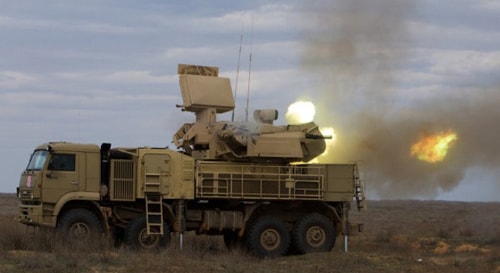 |
| The Pantsir-S short-range air defense system was developed and manufactured by the KBP Tula Research Institute of Engineering Equipment in Russia. This is a mobile air defense system integrating anti-aircraft guns and missiles. The anti-aircraft missiles have a speed of 1300 m/s, a range of 20 km, and a maximum altitude of 15 km. The missiles are radio-guided and can simultaneously track and engage multiple targets. Each Pantsir-S system also has two reserve missile salvos, and missile transport vehicles can be used with the systems. |
11. S-500
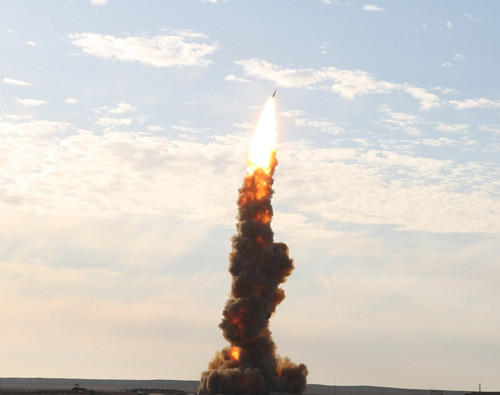 |
| The S-500 missile defense system is a high-quality version of the S-400 system. The S-500 is capable of simultaneously intercepting 10 medium-range ballistic missiles with a range of 3500 km. In terms of interception altitude and speed, the S-500 is world-leading. It can shoot down targets flying at altitudes up to 200 km and speeds of 7 km/s. Furthermore, the S-500 is capable of intercepting all types of medium- and short-range ballistic missiles, operational and tactical missiles, and supersonic cruise missiles. |
12. Boeing YAL-1
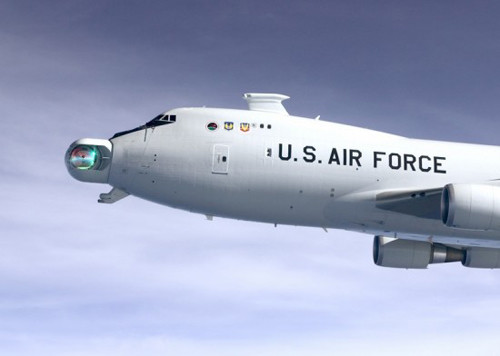 |
| The YAL-1 is a high-energy laser weapon, also known as an Airborne Laser (ABL). Developed and manufactured by the American company Boeing, the YAL-1 is capable of destroying tactical ballistic missiles, such as the Scud missile, shortly after launch. The YAL-1 emits a high-energy beam of light (laser) at the missile in mid-air, heating it and causing it to explode before reaching its target. The entire process of destroying a missile takes only about 10-12 seconds. |
Peace
(Synthetic)
| RELATED NEWS |
|---|