

Farmers are 'isolated' in the consumption of their agricultural products.
A pig goes through 3-4 intermediaries from the farm to the supermarket or market, with the retail stage accounting for 20-30% of the profit.
During a discussion on the socio-economic situation on the morning of June 9th, Deputy Chairman of the Foreign Affairs Committee Nguyen Sy Cuong raised concerns about the recent agricultural product rescue efforts. According to him,First dragon fruit, watermelon, garlic, red onion, then pork, bananas...The problem of surplus agricultural products will certainly persist unless there is a fundamental solution from the management authorities.
"The familiar refrain of 'bumper harvest, low prices; high prices, poor harvest' has been sung repeatedly by farmers and National Assembly representatives across many terms, even though no one has officially licensed this song," he said.
What concerns the Deputy Chairman of the Foreign Affairs Committee is the current situation where "pork is as cheap as sweet potatoes, land ownership certificates are being chewed up, and the suffering of livestock farmers is evident," but unfortunately, the Government's report on socio-economic development submitted to the National Assembly does not assess this issue.
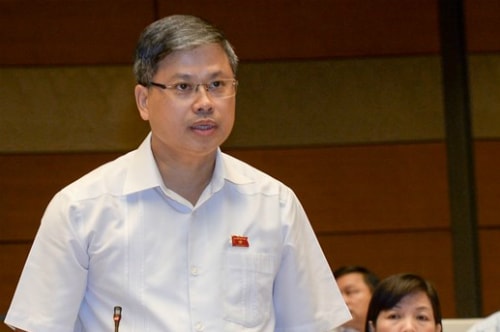 |
According to Nguyen Sy Cuong, Deputy Chairman of the National Assembly's Foreign Affairs Committee, ensuring market access for agricultural products needs to be seriously considered by all ministries and agencies. (Photo: National Assembly) |
In addition, Mr. Cuong observed that the distribution process is hindering production.He analyzed whether the 3-4 fold increase in pork prices in supermarkets could be considered price manipulation, what was the role of state management agencies, and who benefited from the situation of a bumper harvest leading to falling prices?
According to him, the damage to the livestock sector is considerable.Outstanding loans for pig farming amount to 32.9 trillion VND, not including loans for animal feed production (over 12 trillion VND) and veterinary medicine production (485 billion VND)."The risk of outstanding debts turning into bad debts, and millions of livestock farmers nationwide facing bankruptcy and default, is entirely possible," the representative from Ninh Thuan province said, and suggested.The government is conducting a comprehensive assessment of the damage and consequences, which he considers to be enormous.
"The issue of finding markets for agricultural products needs serious consideration. What's the point of producing if there's no market?", Mr. Cuong continued, suggesting that more time should be allocated for questioning and debate to find solutions for agricultural product consumption, so that "we won't have to talk about this so much anymore in the future."
*Representative Nguyen Sy Cuong
According to delegate Nguyen Thi Kim Be, for many years the agricultural sector has only been struggling to choose a logo for rice, therefore the recurring problem of "bumper harvest, low prices" has always been a constant nightmare.
This reality has been raised by her and other delegates in questioning the former head of agriculture – former Minister of Agriculture and Rural Development Cao Duc Phat – but nothing has changed. Continuous calls to rescue agricultural products are made, but prices remain low and no one buys them. Sadly, according to her, some businesses exploit the plight of farmers to enhance their reputation, calling for a pork rescue, but ultimately abandoning the farmers. "Farmers are left alone in selling the products they produce," Ms. Bé lamented.
And there's moreDelegate Doan Van Viet from Lam Dong province expressed concern.The surplus supply of agricultural products, requiring constant rescue efforts, has not yet brought peace of mind to farmers.
Recount the events of the rescue operations.Regarding watermelons, pork, or even the time when farmers in Lam Dong province had to abandon ripe tomatoes on the trees due to drastically falling prices, Mr. Viet pointed out that the main reason is the small-scale, spontaneous, and unplanned nature of agricultural production, whileThe supporting industries for agricultural processing are limited. Farmers' income is mainly derived from "working for meager wages".
While emphasizing that agriculture is the backbone of the economy, delegate Nguyen Tuan Anh from Binh Phuoc province noted that this backbone is weakening due to various factors. This is the bottleneck preventing sustainable growth in the agricultural sector.
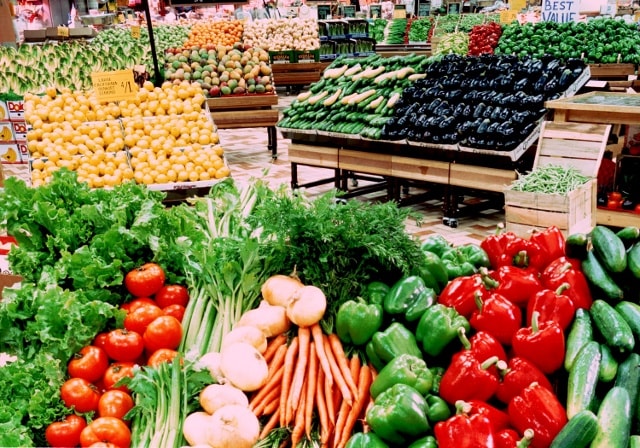 |
| Illustrative image |
To address this issue, Mr. Tuan Anh emphasized the need to accelerate the restructuring of the agricultural sector and develop high-tech agriculture.According to calculations, the investment cost for a high-tech agricultural facility ranges from 6 to 15 billion VND per hectare, depending on the production model. This high cost makes it difficult for businesses to implement without support from policies, mechanisms, and favorable loan interest rates.
The Prime Minister has instructed the State Bank of Vietnam to formulate specific policies and support levels for the 100 trillion VND credit package, but with such strict conditions, it is difficult for people to borrow capital to invest in this sector. A representative from Binh Phuoc province suggested that it is necessary to quickly verify land ownership rights for businesses investing in high-tech agriculture and provide interest rate subsidies for these businesses.
According to delegate Doan Van Viet, the government needs stronger policies to build "entrepreneurialization of farmers, corporatization of agriculture," focusing on supporting agricultural startups and developing high-tech, large-scale agricultural production models.
Delegate Thich Thanh Quyet proposed that agricultural production should follow a chain from the farmer's production stage to product consumption.Furthermore, it is necessary to strengthen the linkages among the four stakeholders (State – scientists – farmers – businesses) to set goals for raw material planning, concentrate land consolidation, and foster linkages among farmers…
According to VNE