The Elysée Palace is the residence and workplace of the French president, but it is considered an art museum, housing over 200 paintings and 70 valuable sculptures.
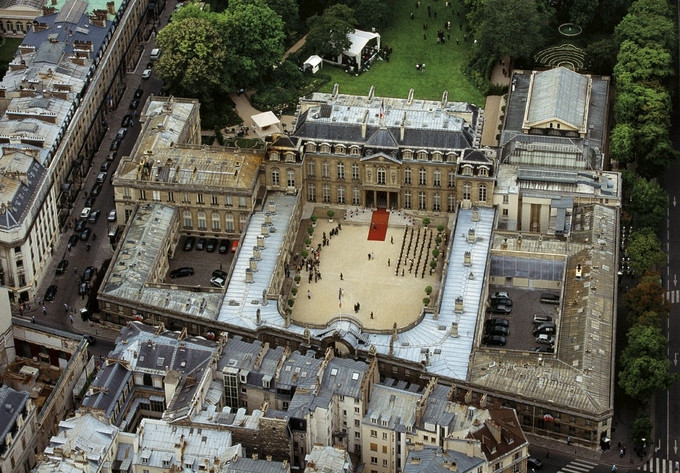 |
| The Elysée Palace was built in 1718 and was owned by a count. Later, King Louis XV bought it to serve as a residence for the Marquise de Pompadour, the king's most favored mistress. |
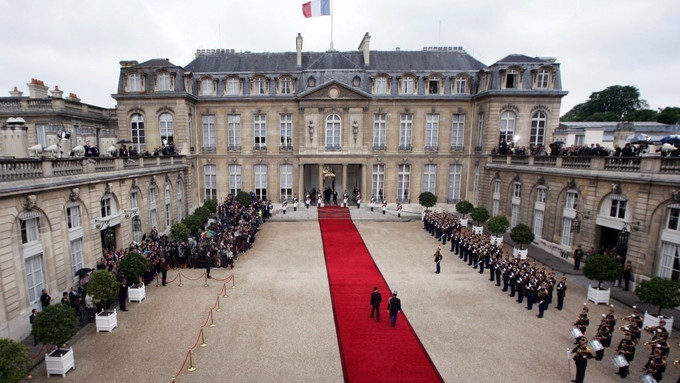 |
| Since 1873, the Elysée Palace has officially been the residence and workplace of the French president. Currently, a team of over 800 people provides daily security and service to the president. |
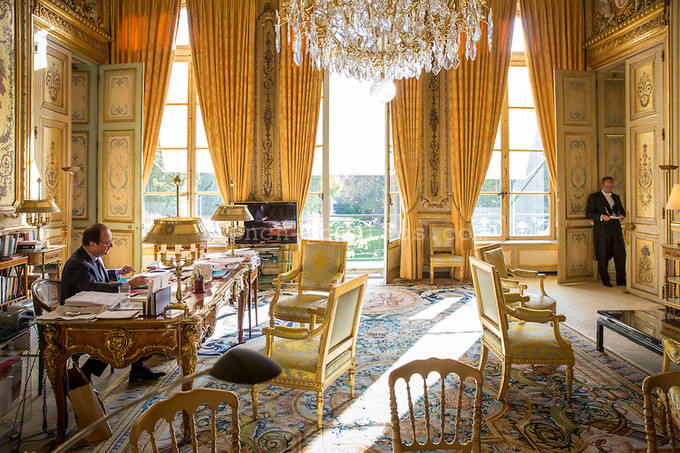 |
| Outgoing President François Hollande in the "Salon Doré," also known as the Golden Room, the official office of French presidents. Traditionally, the distance between the chairs arranged around the "First French Table" in the Golden Room is always exactly 60 cm. |
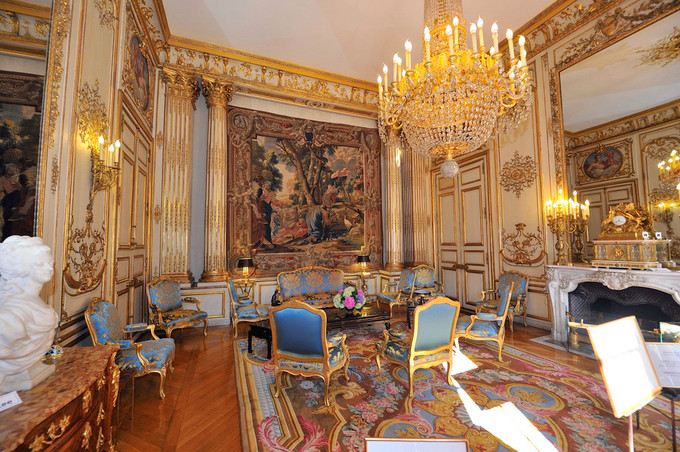 |
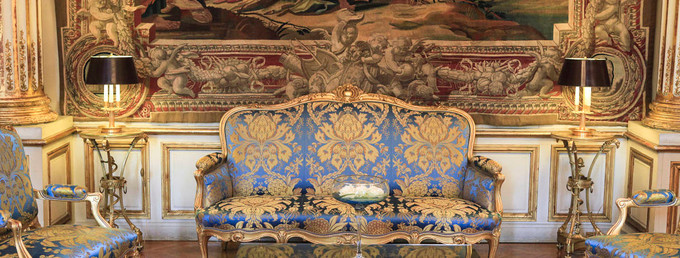
| The French call the Elysée Palace a "fortress" with 365 rooms. But with a collection of over 200 paintings and nearly 70 valuable statues, the French presidential residence resembles an art museum more than a fortress. |
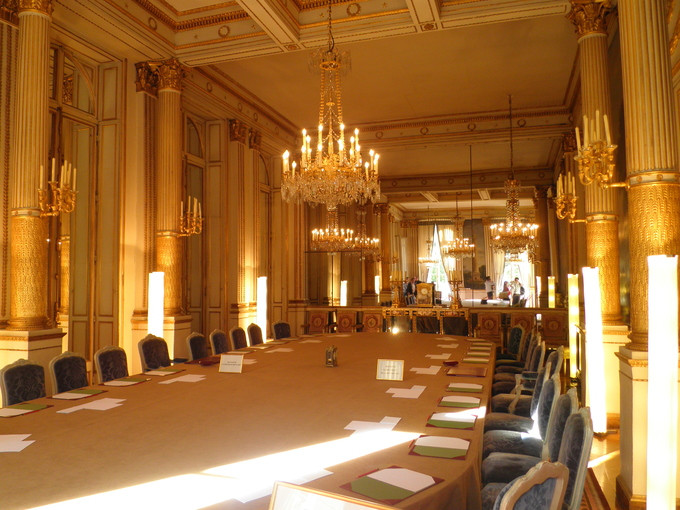 |
| Every Wednesday morning, the Cabinet holds its regular meeting in the "Salon Murat," the Murat Room, named after Joachim-Napoléon Murat, Napoleon Bonaparte's brother-in-law and one of the most prominent marshals in the emperor's campaigns. In this room, the president sits in the center, facing the prime minister, surrounded by ministers. Meetings of the Defense Council are also held here. |
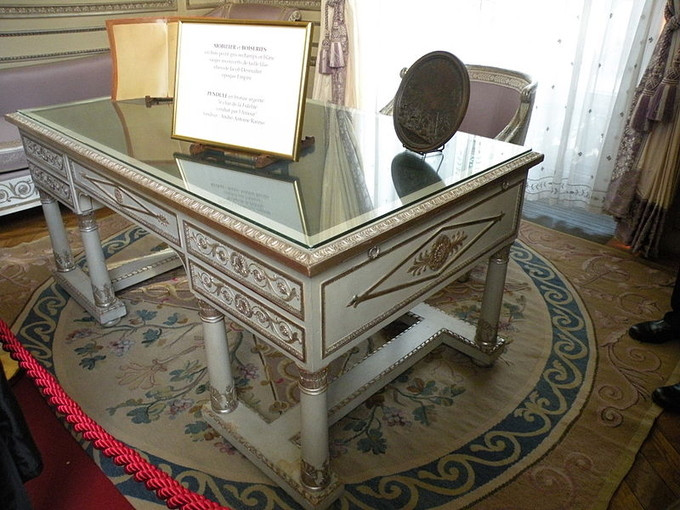 |
| Other famous rooms in the Elysée Palace include the "Salon d'Argent," the Silver Room, where Napoleon officially abdicated after his defeat at Waterloo. |
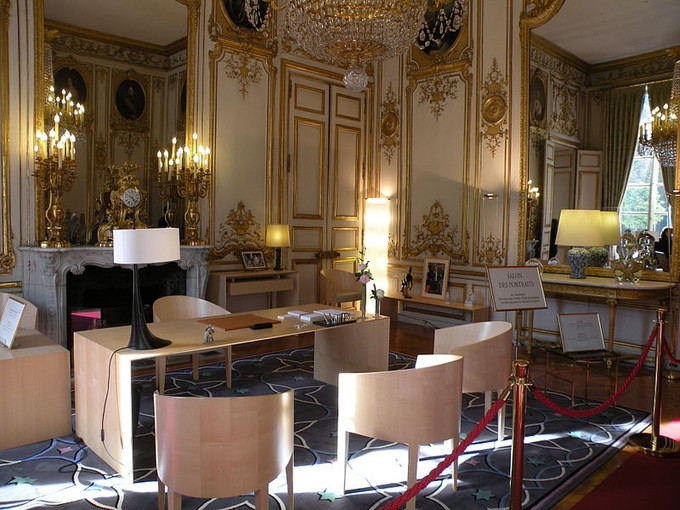 |
| "Salon des Portraits," or the Portrait Room, is a room displaying portraits of all the world's most prominent leaders. |
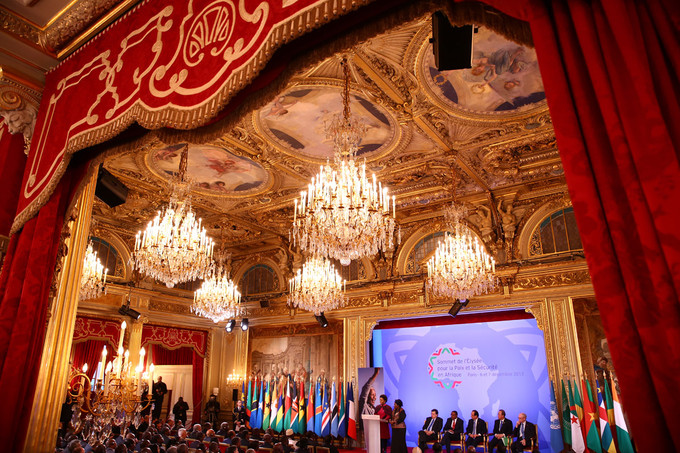 |
| And the "Salle des Fetes," the Festival Hall, is where the inauguration ceremonies of French presidents take place. |
 |
| The Elysée Palace remained closed throughout World War II. It is noteworthy that high-ranking Nazi officials, despite occupying Paris, did not live or work in the Elysée Palace for fear of anger and resistance from the Parisian people. |
 |
| Each year, the Elysée Palace is only open to the public on two European Heritage Days, the third Saturday and Sunday of September. This is an opportunity to visit Paris's architectural and historical landmarks for free. Locals and tourists wishing to admire the beauty of the Elysée Palace are advised to queue from 6 am. |
According to VNE

