

Experiential tourism in Nồi village
(Baonghean) - After decades of decline, the traditional pottery village in Tru Son commune (Do Luong district) is gradually reviving, thanks in part to experiential tourism activities.
On the last Sunday of April, the atmosphere in Nồi village seemed more lively, with many cars parked all along the village road. Ms. Nguyen Thi Hong's house in Hamlet 11 was as joyful as a wedding. In the courtyard, many artisans from the village were "demonstrating" and instructing visitors on how to make earthenware pots.
The smooth, pliable clay, transformed by the skillful hands of the women and mothers, along with simple tools like a potter's wheel, pieces of cloth, bamboo rings, pots, pans, kettles, and jars, gradually appeared, much to the surprise of many. Dozens of people surrounded the artisans, intently watching each movement of shaping the clay, spreading it, and pushing the potter's wheel.
After watching, they can try their hand at making clay pots, vases, basins, etc., according to their preferences. The children are the most enthusiastic, immediately jumping into the clay, practicing turning the pots, molding shapes of birds and animals, bowls and plates, and writing their names on them...
The artisans are willing to help and guide the children so they can create their own products. Ms. Hong's yard has become a practice area for the ancient craft of pottery making, attracting a large number of "students" of all ages.
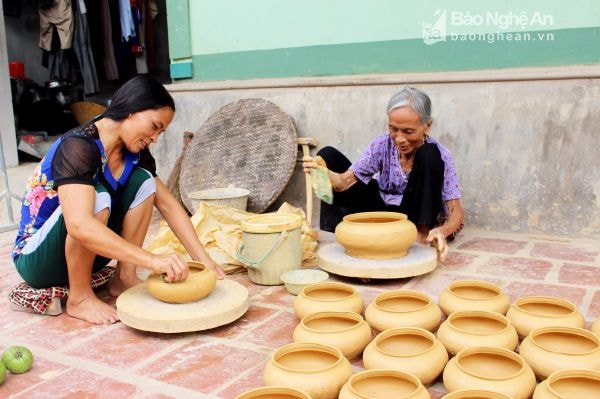 |
| Craftsmen in the village finish their products. Photo: Huy Thu |
On days when tourist groups come to experience the craft of making earthenware pots, the village becomes bustling with activity. From the artisans to the visitors, everyone is enthusiastic and excited.
The artisans of the pottery village are delighted because after decades of the pottery production being stagnant and neglected, it has suddenly become much more vibrant. Products are selling better, and many people are coming to visit and learn. Visitors from all over are curious and fascinated by the traditional pottery-making methods of their ancestors, which they can now see firsthand, touch, and especially get to roll up their sleeves and make pots alongside the villagers.
Ms. Nguyen Thi Hong excitedly shared: “From March until now, dozens of groups, large and small, have come to the village to visit. One group came in nearly 20 cars, with over 80 people, filling my yard to watch. They even stayed, using clay pots to cook rice, stew fish, boil vegetables, and enjoy a cheerful meal. This is truly unprecedented in the history of Noi Village.”
According to Mr. Le Xuan Tho, Vice Chairman of the Tru Son Commune People's Committee, currently there are 4 hamlets (10, 11, 12, 13) in the commune with more than 60 households still maintaining the craft of making earthenware pots, both full-time and seasonal. Two hamlets (10 and 11), formerly part of Thuong Giap village, were once the heart of the earthenware pot making craft in Tru Son, with about 35 households still practicing the craft, and nearly 20 households in hamlet 11 alone.
According to Mr. Nguyen Van Tuan, head of Hamlet 11, in the past, almost every household in the village made clay pots. However, from the 1980s onwards, the craft fell into crisis; no one bought the products, and selling the products wasn't enough to buy rice to eat, so many families abandoned the craft. In the last five years, along with the socio-economic development, the market demand for clay pots has increased, causing the clay pot making craft in Tru Son to gradually revive.
However, due to market demands, the products have also changed. Previously, people mainly made large pots for cooking, roasting, and steaming, which they transported on carts to sell throughout the villages. Now, they have switched to making smaller products such as small and medium-sized pots, herbal medicine pots, orchid pots, and piggy banks, which they supply to traders, restaurants, hotels, and pharmacies inside and outside the province.
Simultaneously with the restoration of production, experiential and educational tourism activities in the craft villages have begun to emerge. In previous years, only a few people occasionally visited the villages to take photos, but now quite a number of groups and associations come to the villages through various channels such as tour packages organized by travel agencies, and as stops for backpacking groups. They come to experience real life, to live and work alongside the locals, including groups of foreign tourists.
It is known that before a group of visitors arrives, the villagers prepare all the necessary materials, assign artisans to serve, and arrange the venue... On many days with large crowds, the village has to mobilize the homes of the artisans, the village cultural center, and the historical site of Hoi Thien Temple to accommodate them.
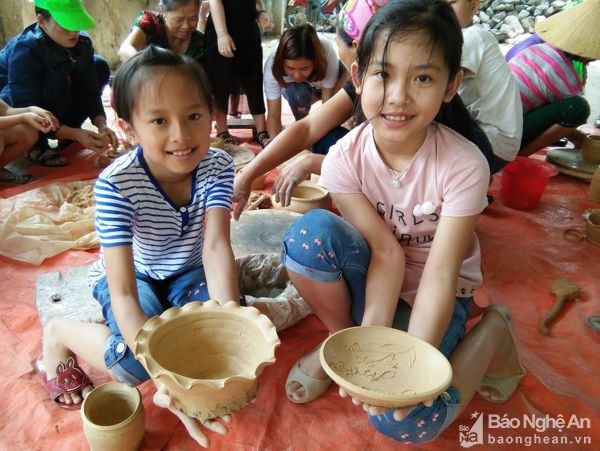 |
| Children visiting the craft village are delighted with the products they see. Photo: Huy Thu |
For years, the artisans of Tru Son have only known how to diligently mold, carve, and cook to create products that meet consumer tastes. Now, they have a new role to play: "performing" and guiding tourists. This has left the artisans somewhat awkward and hesitant in their actions and gestures during interactions. However, what tourists clearly perceive is the enthusiasm and openness of the locals.
Ms. Phan Thanh Dung (33 years old), a lecturer at Nghe An Pedagogical College, and her children, who had previously visited Noi Village for a hands-on experience, said: “Our group was quite large, around 80 people. Upon arriving at Noi Village, we were warmly welcomed by the locals, who created favorable conditions for the children to practice their skills. It's a traditional craft village, but it offered many interesting experiences, especially for the children.” Sharing the same sentiment, Ms. Tran Thi Ngoc Dieu (35 years old), a cultural officer in Thanh Chuong town, added: “Visiting Noi Village was a very new experience. Once you're here, you don't want to leave. If the local authorities invest in tourism, it will be very popular.”
Experiential tourism in Noi village is entirely spontaneous, so everything remains "simple" and "rustic," just like the language of the local people. While it's a side activity to agricultural production and hasn't yet generated significant income for the villagers, it has brought a breath of fresh air to this peaceful countryside.
According to Mr. Le Xuan Thong, Secretary of the Tru Son Commune Youth Union: “The Youth Union has advised the Commune Party Committee and government on promoting tourism activities in Noi Village. In the near future, the Commune Youth Union will lead a pottery-making training program for young people in the two central branches of the village, thereby supporting artisans in experiential tourism activities. In addition, we will guide and encourage young people in the craft village to create websites and Facebook pages to enhance the promotion of their products and the image of their homeland online. The Youth Union and schools will also promote pottery-making training for local students.”
With the efforts of the local officials and people, it is hoped that Noi village in Tru Son will soon become an attractive destination for tourists from all over the world on their journey to explore Nghe An province.
Huy Thu
| RELATED NEWS |
|---|