

Safe manual transmission driving skills for new drivers.
(Baonghean.vn) -When first learning to drive, manual transmission cars are the choice of almost everyone. Once you can drive a manual car, driving an automatic becomes easier than ever.
To proactively control situations on the road and achieve more reasonable fuel consumption when driving a manual transmission car, drivers should pay attention to the following driving techniques:
Shift gears at the correct speed.
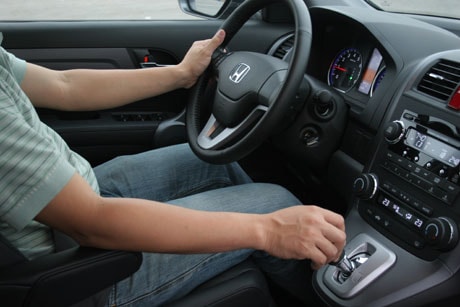
Besides knowing how to drive, you also need to know how to drive in a way that's best for your vehicle, such as avoiding clutch wear and tear and shifting gears when the engine is still weak. The reality is that most drivers in Vietnam tend to shift gears before the engine reaches sufficient RPM, causing the car to feel sluggish and lacking power. If you shift to a higher gear before reaching sufficient speed, the car will feel sluggish, and pressing the gas pedal won't increase acceleration (forcing the gear).
Generally, different car manufacturers have different optimal gear shift thresholds, but on average it's around 2,500 rpm when shifting from 1st to 2nd gear. Shifting gears at the right time will give the car more power to shift into subsequent gears and prolong engine life. Combined with quick gear changes (quickly reducing throttle and disengaging the clutch - shifting - slowly releasing the clutch while simultaneously increasing throttle), and better handling of obstacles on the road, you'll be able to drive faster and more smoothly.
 |
Use the clutch pedal properly.
The clutch pedal is always a challenge for everyone driving a manual car, but it's also the clutch pedal that makes driving much safer.
For a smooth ride, remember to fully depress the clutch pedal, and when releasing it almost completely, pause for 3 to 5 seconds to allow the vehicle to begin moving before fully releasing the clutch.
When you depress the clutch pedal and the car doesn't lurch or lurch forward, it means you're using the clutch correctly. The clutch making proper contact with the flywheel without sudden movements will help your car last longer.
When driving in crowded areas or on rough roads, you should frequently use the clutch pedal to prevent the car from jerking.
Starting a manual transmission car
During the driving test, the starting position is the easiest part to fail because releasing the clutch too far causes the engine to stall.
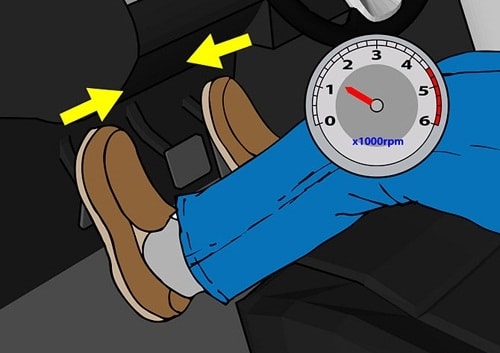
If you use the "clutch - handbrake - gas" or "clutch - footbrake - gas" method repeatedly when stuck in traffic on a hill, you'll sweat profusely and your arms and legs will ache. To successfully climb a hill in traffic jams, you need to practice the "clutch - gas" technique until you can keep the car stationary on the hill using only the clutch and gas. This means engaging the clutch and gently applying the gas to keep the car stationary. If the car starts to roll back, add a little more gas; if it moves slightly forward, reduce the gas.
 |
Be careful when using the parking brake.
Many drivers often use the parking brake when starting on an incline and tighten it again if there are signs of rolling back downhill. In fact, the parking brake is not designed to stop a moving vehicle, but only to keep it stationary once it has stopped. Trying to stop a vehicle using only the parking brake is inappropriate and dangerous.
If the handbrake isn't fully released while the car is moving, it will wear out prematurely, the brake pads will become worn and shiny due to slippage, but more dangerously, the heat generated can cause the brake fluid to boil, resulting in brake failure. You should use the traditional starting method you learned to use when learning to drive; it's safer and easier.
Avoid returning to number N (zero).
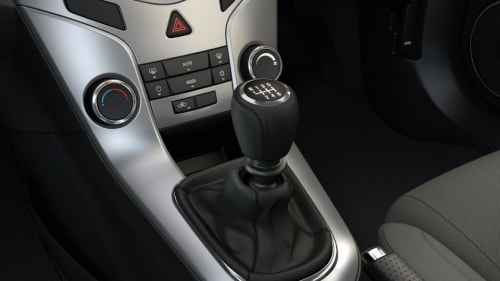
Experts advise against shifting a manual transmission car into neutral (N). When in neutral, the car will accelerate forward due to inertia, making it difficult to control speed and react to obstacles.
Especially when driving downhill, you should absolutely never shift to neutral (N). A car hurtling downhill without the assistance of the gearbox, relying solely on braking for too long, will cause the brakes to overheat and become ineffective. Many people, in an attempt to save fuel, shift to neutral, losing control of the vehicle and leading to unfortunate incidents.
 |
In the morning, you shouldn't start the engine and drive off immediately.
This is the time when the engine is most susceptible to wear and tear and damage. After a long period of inactivity, most of the engine oil has settled to the bottom of the engine. The cylinders and combustion chambers now have only a thin layer of oil clinging to their surfaces.
Starting the engine at this point requires a certain amount of time for the oil to be fully pumped into the cylinders. Then, turn the ignition key and let the engine idle for about half a minute to a minute before operating it.
Overtaking on the road
If you want to overtake another vehicle on the road, shift to a lower gear (around gear 3). While downshifting, keep your foot on the brake pedal to avoid damaging the engine and clutch. Using your horn and turn signal while overtaking will help ensure the safety of you and other vehicles around you. Afterwards, you can skip the intermediate gear (4th) and go straight to gear (5th) to save fuel.
5 things to avoid when driving a manual transmission car.
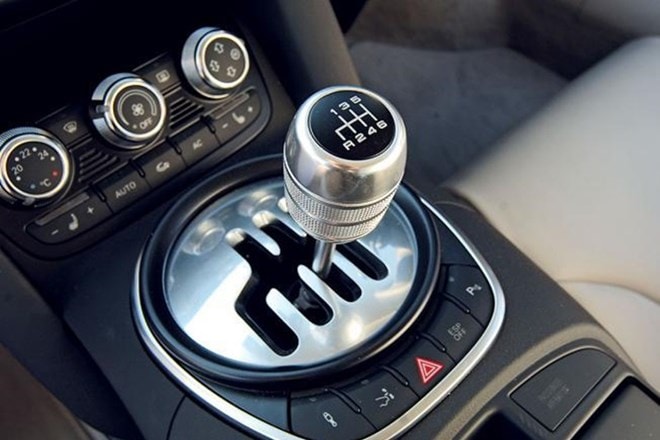
- Don't fiddle with your hands when you don't need to shift gears:The operating mechanism of a manual transmission involves depressing the clutch, shifting gears, releasing the clutch, and accelerating; the car will then move slowly. Sometimes, some drivers keep one hand on the steering wheel and the other on the gear lever for convenience when shifting gears, or simply as a habit when driving leisurely on the highway. However, constantly keeping one hand on the gear lever directly affects the transmission. When shifting gears, the gear lever is directly connected to the shift lever – which is shaped like a three-way junction. This shift lever connects directly to the synchronizer and "pushes" the synchronizer into engagement with the gear teeth, allowing the car to shift into gear.
When the vehicle is in motion, these parts will vibrate, although the vibration is very slight, only noticeable when you place your hand on the gear lever. However, when the driver continuously places their hand on the gear lever, it causes the gear shift lever to come into contact with the synchronizer, which is rotating at a very high speed, leading to both parts wearing out and becoming damaged quickly.
 |
- Don't leave the gear lever in gear when stopped at a red light:Shifting to neutral (N) is most beneficial for the vehicle when stopped at traffic lights or in traffic jams. Although the bearings directly connected to the clutch assembly have a relatively long lifespan, this doesn't guarantee durability if the driver uses the vehicle incorrectly. Shifting to neutral disconnects the clutch from the gearbox, preventing the bearings from contacting the clutch springs, thus increasing the lifespan of the vehicle's drivetrain.
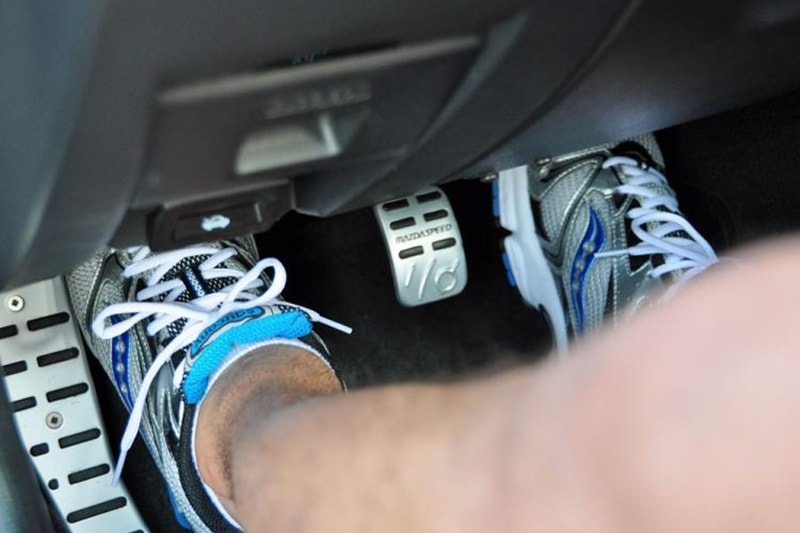
- Do not rest your foot on the clutch pedal:The clutch pedal's function is to disengage the clutch, separating the transmission from the engine so the vehicle can shift gears. When resting your foot on the clutch pedal, some force is applied, especially in vehicles with very light clutch pedals. This prevents the clutch plates from fully engaging with the engine, causing clutch slippage. As a result, the transmission will not transmit 100% of the engine's power, leading to increased fuel consumption and premature wear of the clutch plates.
The clutch is the component responsible for connecting the engine and gearbox to transmit power to the drive gears. Furthermore, the clutch also has the ability to disconnect the power transmission when necessary. Therefore, if the driver constantly rests their foot on the clutch pedal, this component will operate "half-heartedly" and wear out quickly. When the clutch is about to fail, the car will lose acceleration and feel sluggish.
 |
- Do not use the clutch to hold the vehicle on a slope:This is how you damage the gearbox "in every way" because components like the clutch plates, drive gears, and bearings will have to withstand enormous friction to keep the entire weight of the vehicle stationary on a slope, while the brakes on all four wheels can handle this responsibility more easily.
In reality, this feature only allows the car to remain stationary for 1-2 seconds to give the driver time to switch from the brake pedal to the accelerator pedal. Use the parking brake when parking for longer than 5 seconds. If you are worried about the car rolling downhill, release the clutch slightly, press the accelerator, and slowly release the parking brake to allow the car to move uphill.
- Don't force the gear to speed up:The higher gears on the gear lever help the car go faster while keeping the engine RPM low, saving fuel and ensuring the engine components operate under the lowest possible pressure. When wanting to accelerate, drivers often downshift, increase the throttle, and then shift back up. This allows the car to accelerate very quickly but is also more damaging to the gearbox compared to pressing the accelerator to increase speed.
Furthermore, only shift gears when the vehicle has reached sufficient speed, and avoid the habit of shifting gears when the engine RPM reaches the red line. Forcing the gearbox to work under high pressure for extended periods will inevitably reduce its lifespan and lead to costly repairs.
Ngoc Anh
(Synthetic)
| RELATED NEWS |
|---|