

10 interesting facts about Cambodia
(Baonghean.vn) - When mentioning Cambodia, many people immediately think of the horrific genocide under Pol Pot (also known as the Khmer Rouge) and the Angkor complex. However, when you come to Cambodia, you will discover many fascinating things.
1. Which structure appears on the Cambodian flag?
 |
| The Angkor Wat symbol appears on the Cambodian flag. |
That is Angkor Wat, a temple complex considered a symbol of Champa culture and of Cambodia. The colossal temple was built using 5 million tons of stone over a period of 35 years. The temple's symbol is a source of pride for the Cambodian people, and was placed on the Cambodian flag in 1850.
2. What is the capital city of Phnom Penh known by?
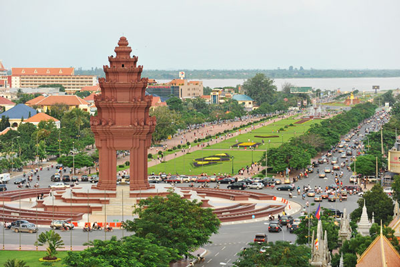 |
Phnom Penh is the largest city and the capital of Cambodia. It was known as the "Pearl of Asia" in the 1920s. Along with Siem Reap, it is one of the two most popular tourist cities in Cambodia. The city boasts many buildings influenced by French architecture, as well as numerous distinctive Khmer architectural structures.
3. What religion was Angkor Wat originally built for?
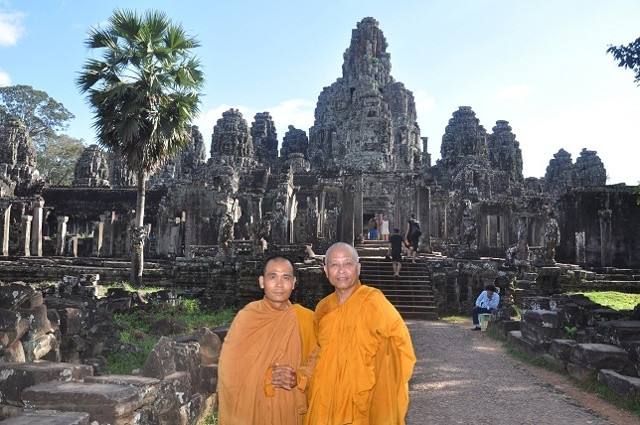 |
| Angkor Wat was originally built as a Hindu temple. |
Angkor Wat has been a Buddhist temple for centuries. Angkor Wat (Temple of the Heavenly King) is part of the Khmer Empire's architectural complex, built between the 9th and 15th centuries, originally intended as a Hindu temple, but later becoming a Buddhist temple.
4. What do Angkor devotees usually leave at the foot of Buddha statues?
Angkor devotees often leave lotus flowers at the foot of Buddha statues because the lotus is one of the symbols closely associated with Buddhist tradition. We often see images of Buddha seated on a lotus throne.
5. What is the truth about the giant catfish in the Cambodian Mekong River?
 |
| The giant catfish is an endangered species in the Mekong River. |
The giant catfish is one of the rare fish species found in the lower reaches of the Mekong River in Cambodian territory. However, few people know that the giant catfish in Cambodia have no teeth, feed only on plants and algae, and can grow up to 3 meters long.
6. What will the Tonle Sap River be like during the rainy season?
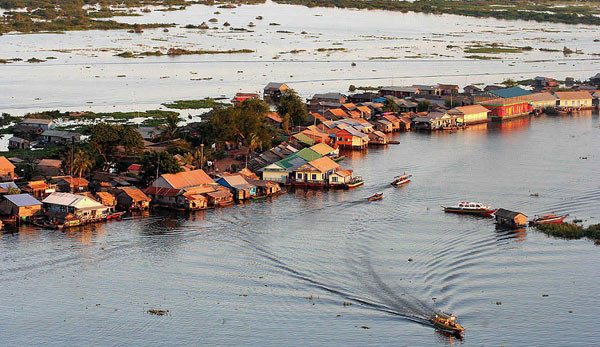 |
| Tonle Sap, or the Cambodian Great Lake, is a combined lake and river system of immense importance to Cambodia. |
Tonle Sap, or the Cambodian Great Lake, is a combined lake and river system of immense importance to Cambodia. It is the largest freshwater lake in Southeast Asia and was recognized as a UNESCO World Biosphere Reserve in 1997. During the rainy season, starting in June, instead of the Tonle Sap River draining water from the lake into the Mekong River, the river flows upstream, replenishing the lake and causing the water level to rise, increasing its area to 16,000 km².
7. What type of fabric is the traditional Cambodian Sampot made from?
 |
| Sampot is made from silk fabric. |
A sampot is typically a piece of cloth, about 3 meters long and 1 meter wide, wrapped around the waist, extended and tied with a knot, then pulled up between the legs and secured with a metal belt. This cloth is made of silk.
8. What are the main ingredients for the famous Cambodian dish prahok?
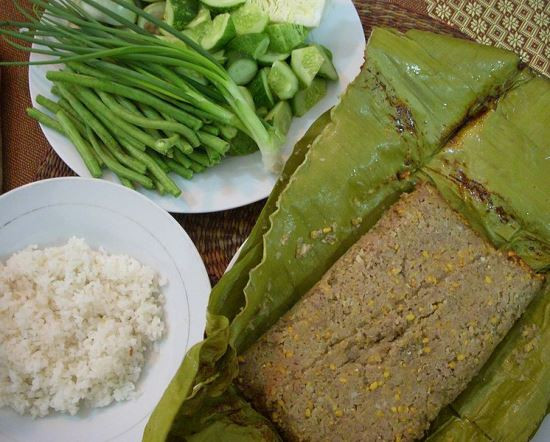 |
| Prahok fish sauce in Cambodia. |
It can be said that this is a traditional dish in the culinary life of the Cambodian people. Fermented fish paste (Mắm bò hóc) is made from freshwater fish, gutted, scaled, and then pounded. The fish is then sun-dried for a day before being pressed in a jar with salt and spices, and then sun-dried for several months before use.
9. What currency does Cambodia use?
 |
| Cambodian Riel currency. |
The official currency of Cambodia is the Riel, which is usually only used for small expenses such as motorbike taxi fares, snacks, giving money to beggars, and other small payments, while the US dollar is the commonly used currency in Cambodia.
10. What is the official language of Cambodia?
Khmer is the official language of the Kingdom of Cambodia. In addition to Khmer, the Cambodian Constitution also allows the use of English and French as second languages to facilitate integration with the outside world and to attract tourists and foreign investors.
Peace
(Synthetic)
| RELATED NEWS |
|---|