(Baonghean.vn) - In the 113 years from 1862 to 1975, approximately more than 20,000 Vietnamese people were classified as 'the greatest danger to the rule ofFrance andAmericans in Indochina were imprisoned in the "hell on earth" of Con Dao.
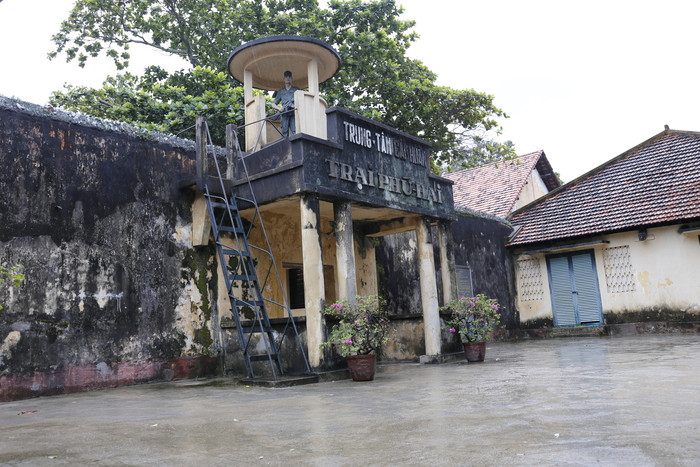 |
| Con Dao Prison (now in Ba Ria - Vung Tau province) was established by a decree signed by Governor Bonard of Cochinchina on February 1, 1862. It was a prison system with many solitary confinement areas and tiger cages. Camp Banh 1 (later renamed Phu Hai Camp) was the most crowded, comprising 10 large cells, 20 stone solitary confinement cells, one special cell, a rice mill, and a stone quarry. Photo: Duc Anh |
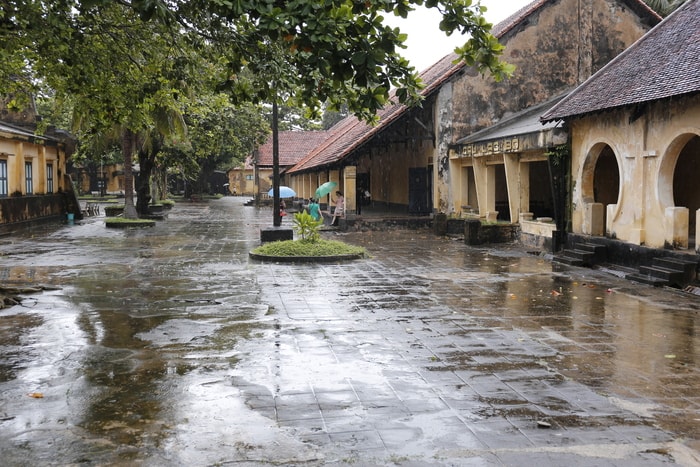 |
| Among the prison systems scattered throughout the country at that time, such as Son La, Buon Ma Thuot, Hoa Lo, etc., Con Dao prison was the largest and most brutal, with numerous tortures, starvation, and disease outbreaks. However, the communist prisoners transformed Con Dao into a battlefield and a revolutionary school, truly becoming a breeding ground for the Vietnamese revolution. (Photo: Duc Anh) |
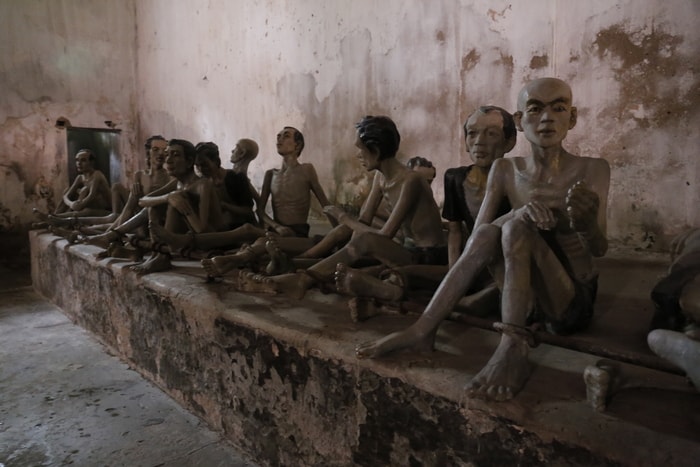 |
| Each large cell at Phu Hai prison camp was only large enough to hold a few dozen people, but at times they held up to a hundred. Photo: Duc Anh |
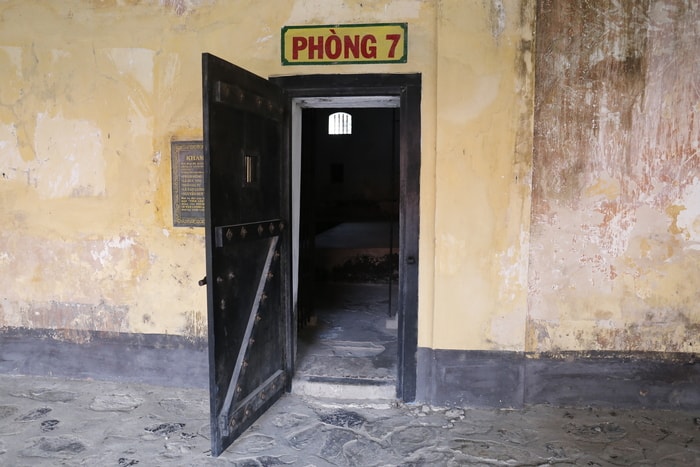 |
| Cell 7, also known as Prison Cell No. 7 at Phu Hai Camp, was once the detention center for staunch revolutionary fighters, including comrades Pham Hung, Le Duc Tho, Ngo Gia Tu, Le Van Luong, and Nguyen Duy Trinh... This was also the birthplace of the secret newspaper "Tien Len" (Forward), run by comrades Pham Hung and Le Van Luong during the period 1930-1939. Photo: Duc Anh |
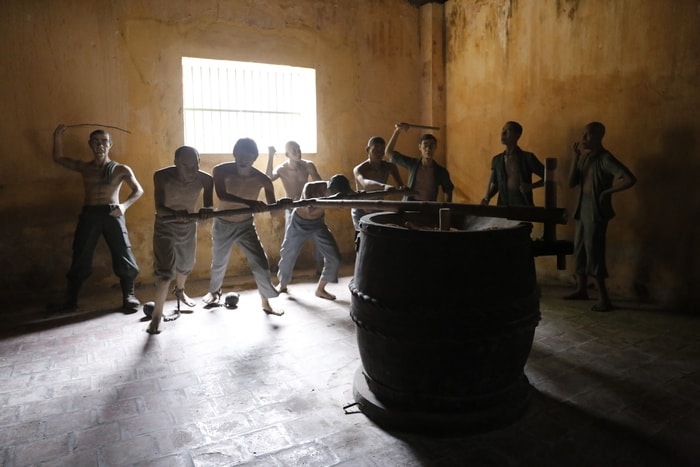 |
| Forced labor in the rice mill was the final form of repressive measures listed in the regulations of Con Dao prison. The dark cell contained five millstones made from old tin containers, filled with clay. It took six prisoners to turn each millstone, and they also carried weights on their feet. Two prisoners were shackled together, and they toiled from 6 am to 5 pm under the constant whipping of metal rods against their bare backs whenever they were slow. (Photo: Duc Anh) |
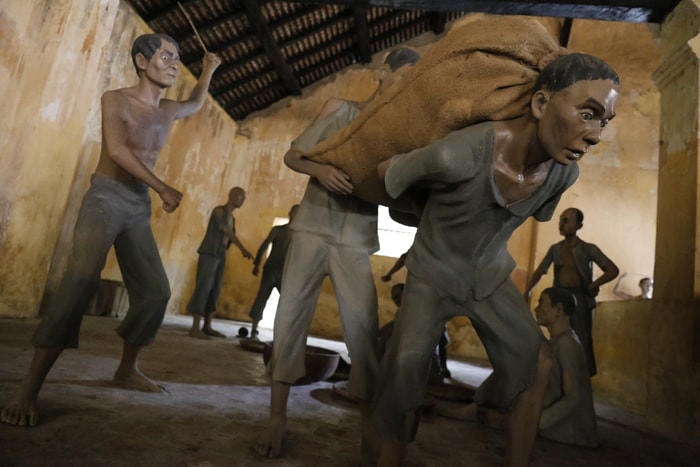 |
| Due to working in a dark and dusty environment, prisoners often suffer from pneumonia and blurred vision after a year of service here. Photo: Duc Anh |
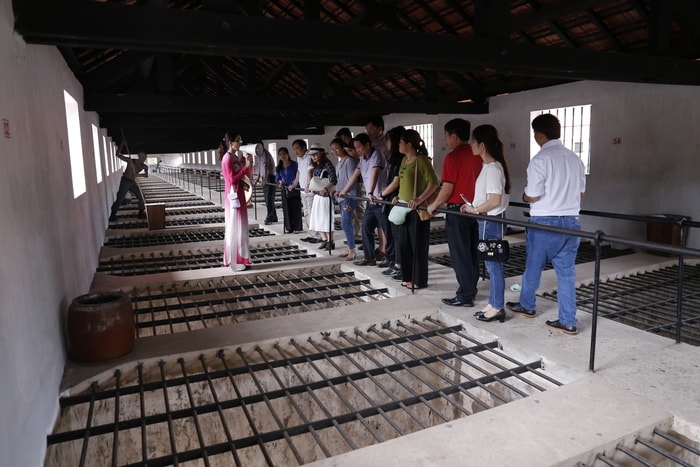 |
| Phu Tuong Prison, famous for its "tiger cages," was built in 1940, covering an area of over 5,000 square meters and comprising 120 cells with iron bars above, and 60 "sunbathing" rooms without roofs. Photo: Duc Anh |
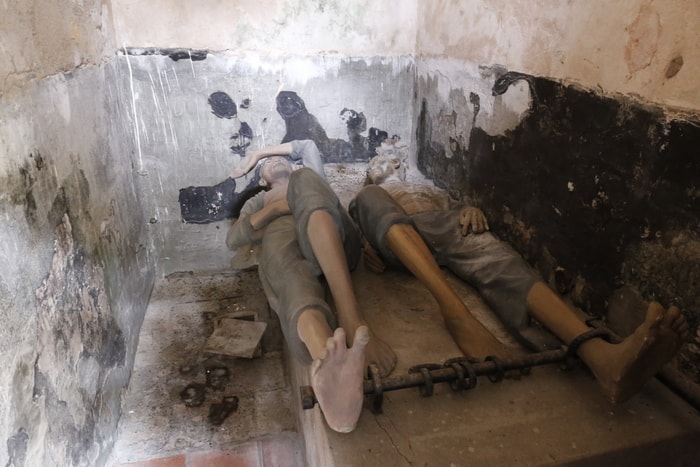 |
| Being shackled, both single and double, eating bland rice and drinking plain water, being forced to starve, and having to relieve themselves in place were common punishments applied in this tiger cage. These political prisoners were also shackled even during their time outside "enjoying the fresh air." (Photo: Duc Anh) |
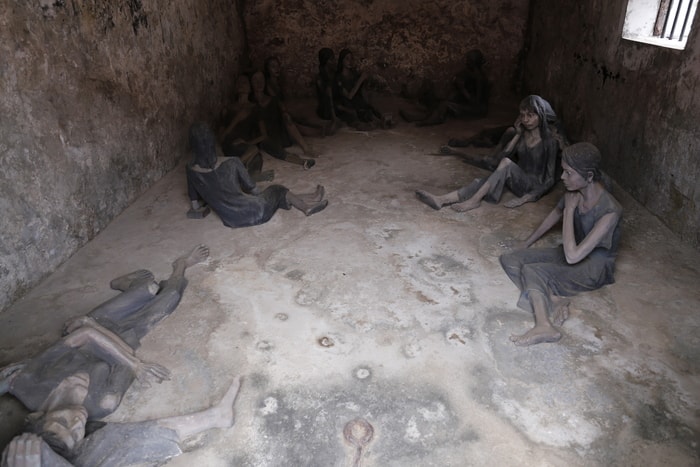 |
| This solitary confinement cell was completely hidden for 30 years and was only discovered by a delegation of American congressmen in 1970. The revelation of the truth shocked and stunned international public opinion. In the photo: A cell for female prisoners. Photo: Duc Anh |
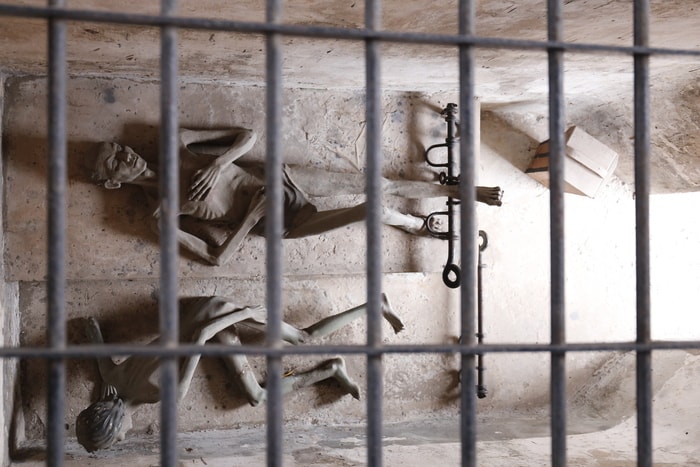 |
| One of the cruel practices in the tiger cages was that on hot days, the guards would pour cold water over the prisoners from above, then sprinkle lime powder on top so that the lime would mix with the water and burn the prisoners. Most of the prisoners confined in the cages were reduced to skin and bones after a short time. Photo: Duc Anh |
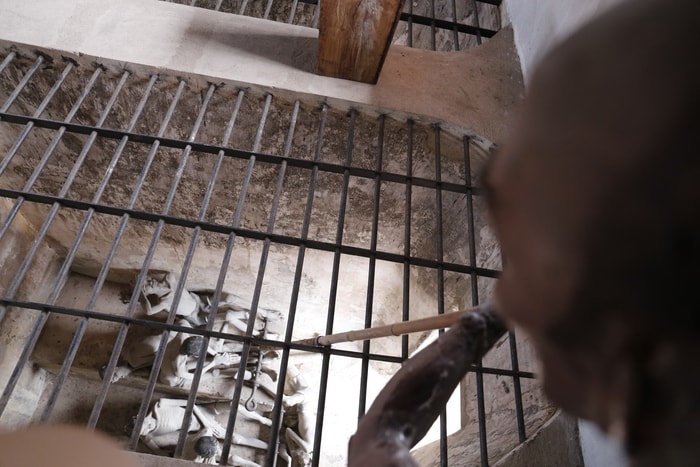 |
| Even more cruel, the guards would use brass-tipped batons to stab prisoners whenever they saw any reaction in the cells, causing many injuries. Photo: Duc Anh |
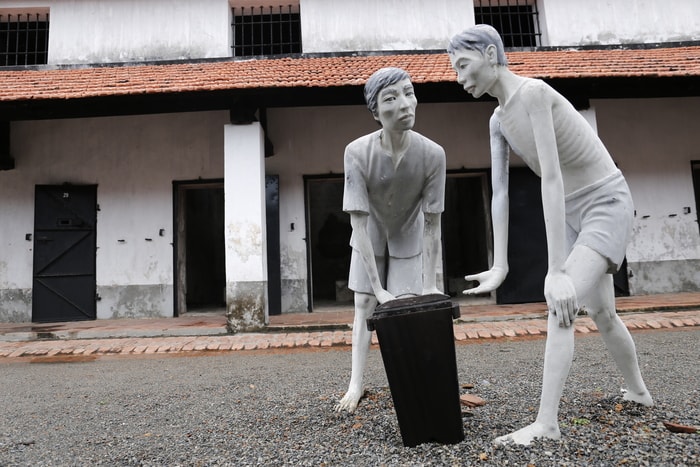 |
| Prisoners were tortured with "sunbathing" and having to hug toilet buckets. Photo: Duc Anh |
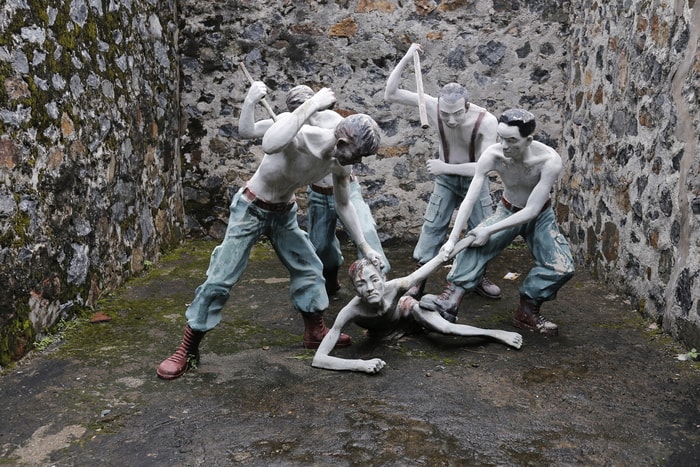 |
| At Phu Tuong prison camp, even in the "sunbathing" cells, prisoners were frequently tortured with the most vicious methods, including batons, rattan whips, bullwhip, heated iron pliers, electric shock boxes, and fingernail pins. Only extremely brave prisoners could endure such torture without confessing. Photo: Duc Anh |
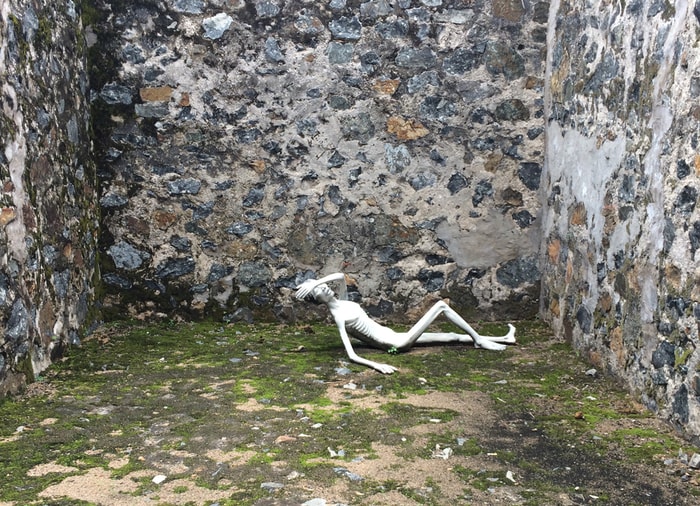 |
| The sunbathing area was where the colonialists imprisoned prisoners within four stone walls, surrounded by barbed wire. Not only were they tortured, but they were also stripped naked and left exposed to the sun and dew until they died. Photo: An Nhan |
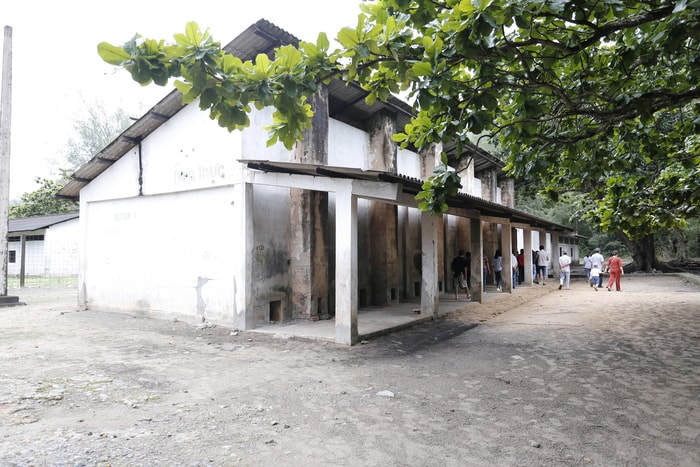 |
| Immediately after taking over, with the number of prisoners skyrocketing, the American empire built more tiger cages, which is why these are known as American-style tiger cages. Photo: Duc Anh |
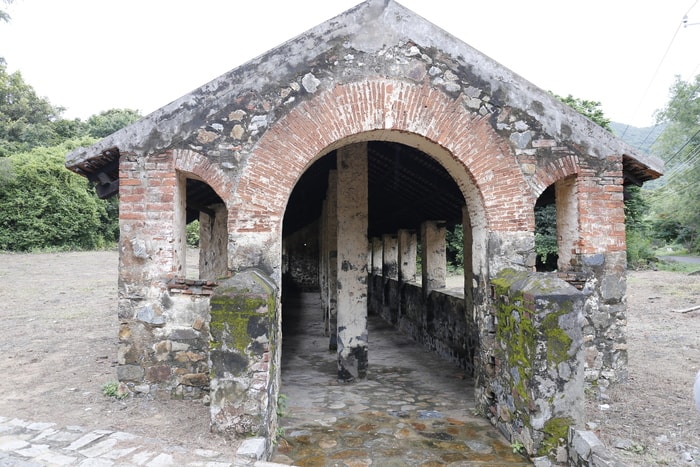 |
| The cattle pens in Con Dao were at one point converted into prison cells for inmates. Photo: Duc Anh |
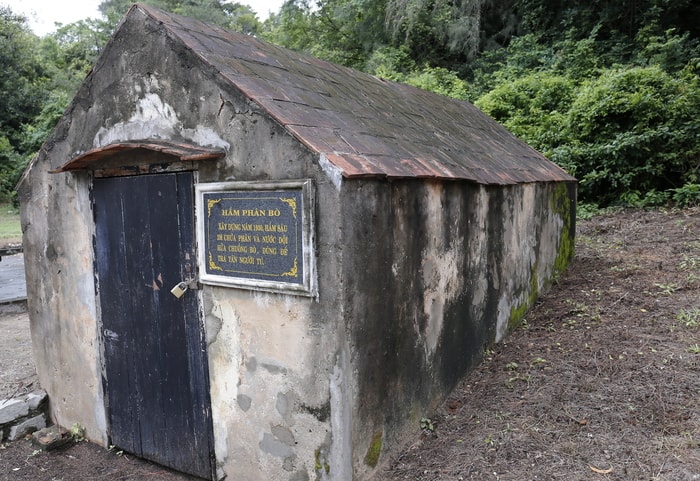 |
| The cow dung pit, built in 1930, is 3 meters deep and contained cow dung and water used to wash cow sheds, and was used to torture prisoners. On the day of Con Dao's liberation, liberation forces rescued two prisoners who were submerged there. Photo: Duc Anh |
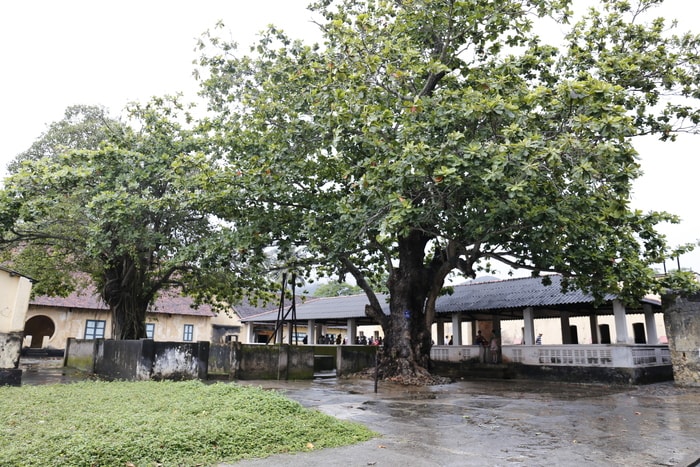 |
| Con Dao Island has long been considered a national sanctuary, as it is the resting place of thousands of outstanding sons and daughters from the North, Central, and South of Vietnam. It will forever remain a sacred and beloved land, a place of admiration and remembrance for revolutionaries and people throughout the country. (Photo: Duc Anh) |
An Nhan - Duc Anh
