(Baonghean.vn) - The Van - Cua Rao Temple in Xa Luong commune, Tuong Duong district, Nghe An province, is not only known for its sacredness and unique "front water, back mountain" location, but it also boasts ancient trees recognized as Vietnamese Heritage Trees, including a thousand-year-old tamarind tree.
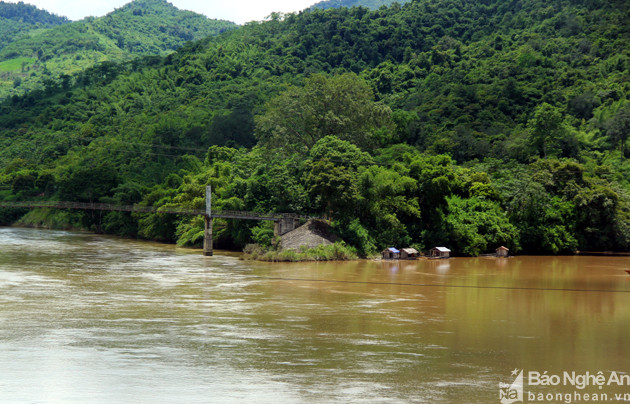 |
| The Van - Cua Rao Temple, built in the 14th century, is located at the confluence of three rivers in Xa Luong commune (Tuong Duong district). The temple is situated in a unique location, with a "front water, back mountain" configuration. To the right of the temple is the Nam Mo River, and to the left is the Nam Non River, which merge to form the Ca River, the upper reaches of the Lam Giang River. Therefore, it is considered the most strategically located temple in Nghe An province. The temple is dedicated to the famous general Doan Nhu Hai (1280-1335) of the Tran Dynasty, and has long been a sacred spiritual site for the people of Tuong Duong. Photo: Tien Hung |
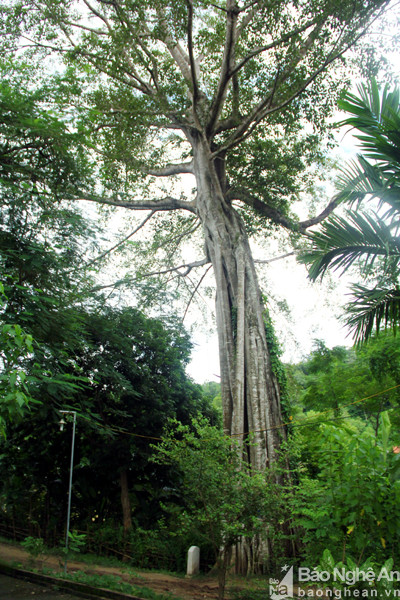 |
| In February 2017, two ancient trees in the temple grounds were officially recognized as Vietnamese Heritage Trees. One of them, a banyan tree, was determined by experts to be 700 years old, predating the temple's construction by local people. (Photo: Tien Hung) |
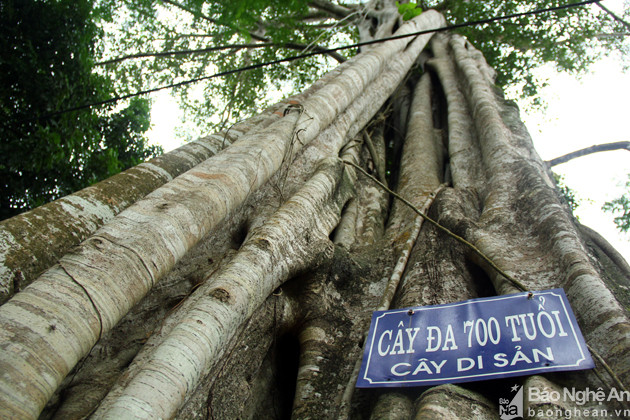 |
| This banyan tree has a diameter of over 3 meters and is over 40 meters tall. Previously, it was grown as a parasitic plant on an ancient fig tree. Later, the fig tree died. Therefore, the trunk of the banyan tree is actually made up of dozens of intertwined root branches, with many gaps still visible inside. The actual base of the tree is more than 30 meters above the ground. Over hundreds of years, moss and various vines have densely clung to its trunk. Photo: Tien Hung |
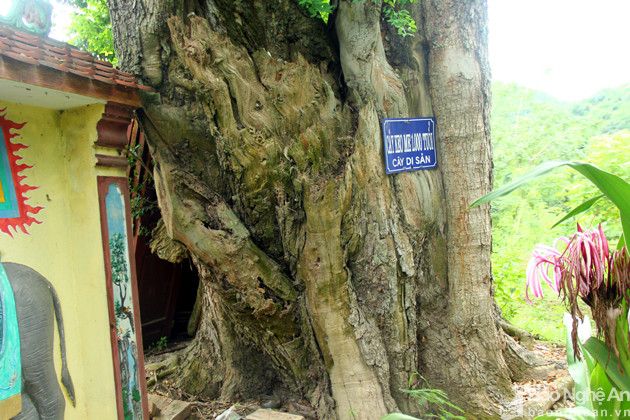 |
| Also recognized as a Heritage Tree is a 1,000-year-old acacia tree here. However, due to its age, the base of this ancient tree has been significantly damaged. Photo: Tien Hung |
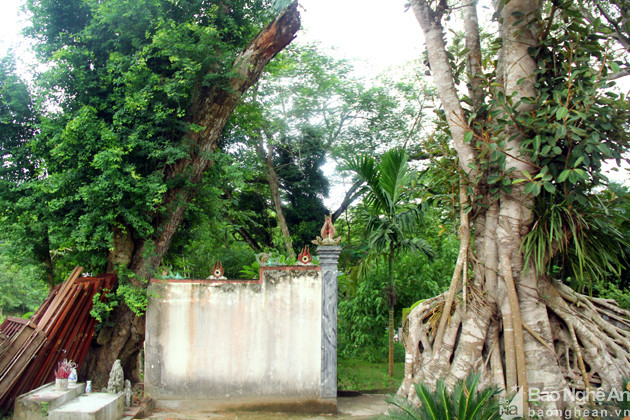 |
| Meanwhile, many branches of this tamarind tree (left corner) were also broken by the storm. The tamarind tree is also known as the water tamarind or western tamarind. According to traditional Vietnamese medicine, both the bark and roots of the tamarind tree have antipyretic properties. The leaves and roots can be harvested year-round for medicinal purposes. The roots are chopped and dried, while the leaves are usually used fresh. Tamarind leaves are used to treat diabetes. The roots are used to treat malaria. They are usually prepared as a decoction. In Guyana, the bark is used as a fever reducer. In India, a decoction of the bark is used as an enema to relieve constipation... Photo: Tien Hung |
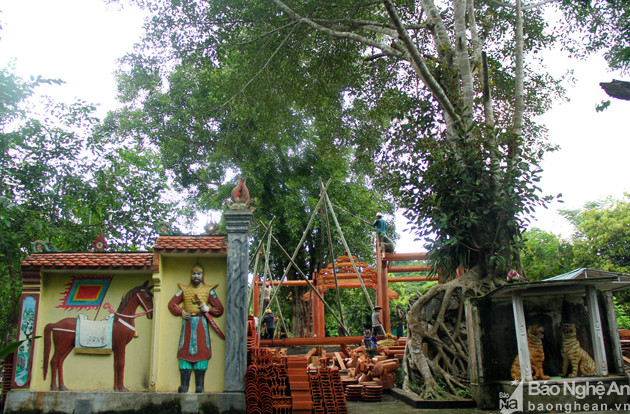 |
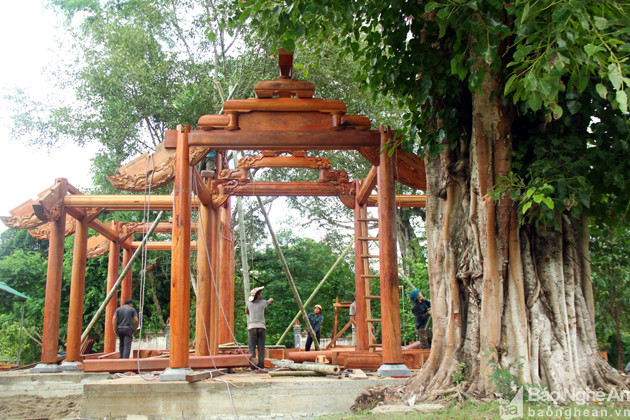
| In addition, within the grounds of the Van - Cua Rao Temple, there are numerous other ancient trees that have not yet been recognized as heritage trees. Meanwhile, the People's Committee of Tuong Duong district is urgently restoring the temple. According to Mr. Pham Trong Hoang, after completion, this temple is expected to be a spiritual destination attracting many tourists. Photo: Tien Hung |
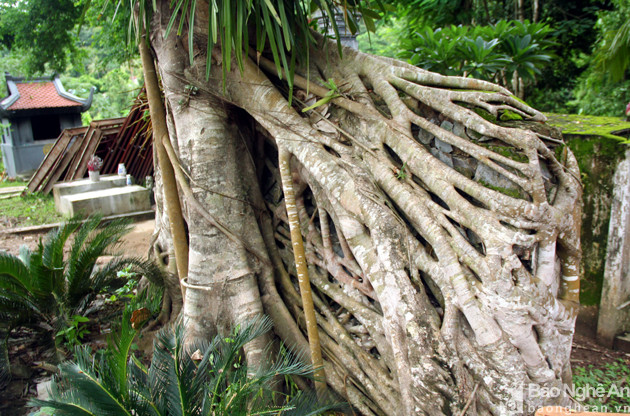 |
| Another ancient banyan tree in the grounds of Van Temple - Cua Rao. Over hundreds of years, many branches and roots of the banyan tree have embraced the screen wall built in front of the temple. Photo: Tien Hung |
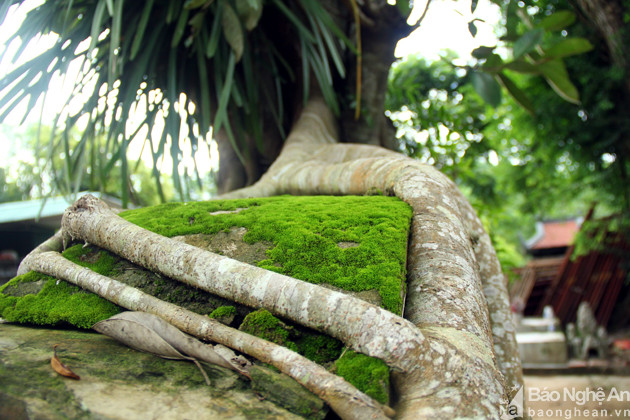 |
| The roots of the banyan tree cling tightly to the screen. Photo: Tien Hung |
 |
| The Bodhi tree behind the temple has a diameter of nearly 2 meters. The Van - Cua Rao Temple currently worships not only the famous general Doan Nhu Hai but also the Three Holy Mothers and Saint Tran Hung Dao. In 2009, the temple was recognized as a provincial-level historical and cultural relic. Photo: Tien Hung |
Tien Hung

