(Baonghean.vn) - Around the world, the peak of the hot season is beginning in many countries. Historically, there have been heatwaves that claimed the lives of thousands of people. And to this day, people are still struggling to cope with a series of other record-breaking heatwaves.
 |
| Children in New York City play on a flooded street after police turned on fire hydrants to alleviate the record-breaking heat. At least 5,000 Americans and 1,100 citizens died as temperatures hit record highs across 12 US states, with North Dakota recording a temperature of 49 degrees Celsius. According to MSN, occurring amidst the Great Depression of the 1930s, the heatwave not only negatively impacted social life but also the already struggling economy. Photo: Internet |
 |
| In 1976, Britain recorded one of the hottest days of the 20th century, with temperatures exceeding 35°C and consistently reaching 38°C for five days. The dry summer led to frequent bushfires and health problems for the country's population. The heatwave lasted until the end of August, accompanied by heavy rain and intense thunderstorms across the country. (Image: Internet) |
 |
| Medical personnel move the bodies of those who died from the heatwave on the streets of Chicago, USA, in 1995. The heatwave, which lasted only five days from July 12-16, 1995, claimed the lives of 700 elderly people in Chicago, one of the hardest-hit areas along with St. Louis (Missouri) and Milwaukee (Wisconsin). (Image: Internet) |
 |
| The summer of 2003 was a record-breaking heatwave in Europe since 1540. Widespread heat claimed the lives of 70,000 people, most notably in France (14,802 deaths). Temperatures in northern France reached a scorching 40°C for seven days. (Photo: AAP) |
 |
| More than 220 people died during the heatwave in North America in July 2006. Temperatures in many areas reached 47 degrees Celsius. In South Dakota, the peak temperature was 54 degrees Celsius. Photo: NOAA |
 |
| People in China spread mats to sleep in the streets during the widespread heatwave across Asia in 2007. India, Pakistan, Nepal, Russia, Japan, and China were among the countries affected by the prolonged heatwave, which lasted from May to September. (Image: Internet) |
 |
| A scorching 43°C heatwave lasting three consecutive days in southeastern Australia caused air conditioners to run continuously, overloaded the power grid, resulting in power outages and bushfires in early 2009. The highest temperatures were recorded at 49°C in Hopetoun, Victoria, and 46°C in Melbourne. Worse still, the events occurred on Black Saturday, when wildfires in Victoria spread, claiming 173 lives. Ten months later, in November 2009, a second heatwave struck the same region. (Image: Internet) |
 |
| In 2010, despite being a temperate country, Russia suffered its worst heatwave in 1000 years, with temperatures exceeding 40 degrees Celsius. Approximately 56,000 Russians died as a result of the extreme heat. In some areas, temperatures reached 44 degrees Celsius, such as in Yashkul, Elogorsk. Average temperatures elsewhere ranged from 39 to 41 degrees Celsius, with the highest recorded temperature being 53.5 degrees Celsius. The heatwave also caused over 50 wildfires in the past month, damaging more than 86,000 hectares of forest across the country. (Image: Internet) |
 |
| In 2013, Europe once again suffered from a record-breaking heatwave. A number of temperate countries, including France, England, Portugal, the Netherlands, Italy, and Spain, experienced temperatures exceeding 40 degrees Celsius, resulting in nearly 55,000 deaths. (Image: Internet) |
 |
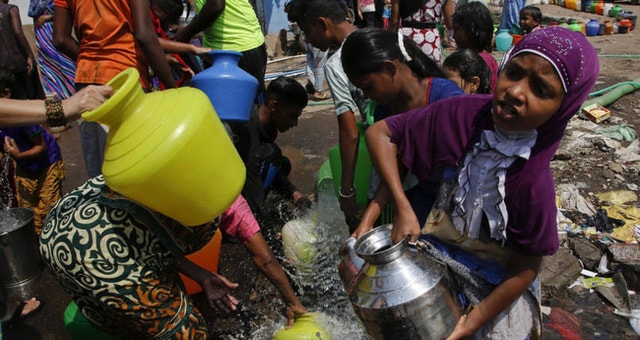
| More than 300 people died during a record-breaking three-day heatwave in Karachi, Pakistan's largest city in Sindh province, in 2015. (Image: Internet) |
 |
| In April and May 2015, India was engulfed in a severe heatwave. Daytime temperatures reached a high of 47 degrees Celsius. A month later, the capital of neighboring Pakistan, Karachi, experienced two days of extreme heat that killed more than 2,000 people. Photo: Reuters |
 |
| In 2016, India recorded 454 suicides in the first few months of the year due to prolonged hot weather. At least 36 farmers in the Marathwada region took their own lives in just one week. (Image: Internet) |
 |
| 2017 could set new temperature records as the Earth suffers increasingly severe consequences from climate change.Scientists predict that temperature records will continue to be broken due to global warming. Studies indicate that if the Earth's average temperature rises from 14 degrees Celsius to 26 degrees Celsius, all the ice on Earth will melt, submerging many countries and cities around the world.In the photo:A 48-kilometer-long ice crack in Antarctica forced British scientists to abandon their research station. Photo: NASA. |
 |
| The prolonged heatwave in Hanoi and central Vietnam is due to the influence of a hot low-pressure area from the west combined with the strong Foehn wind effect. Record-high temperatures during this heatwave have disrupted people's lives. (In the photo:)Hanoi residents cover themselves completely with coats and face masks when going out on hot, sunny days.Photo: Internet |
Kim Ngoc
(Synthetic)

