

12 events that changed human history
(Baonghean.vn) - Humanity has witnessed thousands of momentous historical events that have had a profound impact on the development and progress of humankind. Among them, there are events considered important milestones that have changed the world.
1. Humans discovered fire 1.4 million years ago.
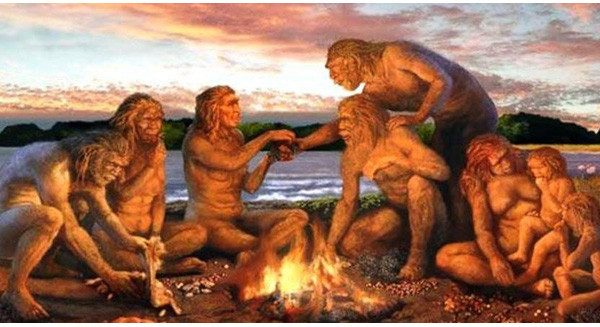 |
| The first invention marking the evolution of modern humans was the creation of fire. While earlier species like Homo erectus utilized naturally occurring fires, modern humans (Homo sapiens) began to create their own fire. Humans used fire for cooking, heating, and lighting. Creating fire was the starting point for all other human technologies, leading to metalworking for toolmaking. (Illustration: Freedom Phoenix) |
2.The bow and arrow was invented 15,000 years BCE.
 |
| Initially, bows and arrows were made from fragile materials. The oldest known bow, the Holmegaard, was found in Denmark around 9,000 BC. Humans developed bows and arrows for hunting animals. Bows and arrows may have been invented after primitive projectiles like spears and boomerangs. However, bows and arrows quickly came into use for military purposes. By 5,400 BC, bows and arrows were the primary weapon in warfare. The hilltop forts of England still bear the marks of coordinated archery attacks. |
3.The wheel was invented 3,500 BC.
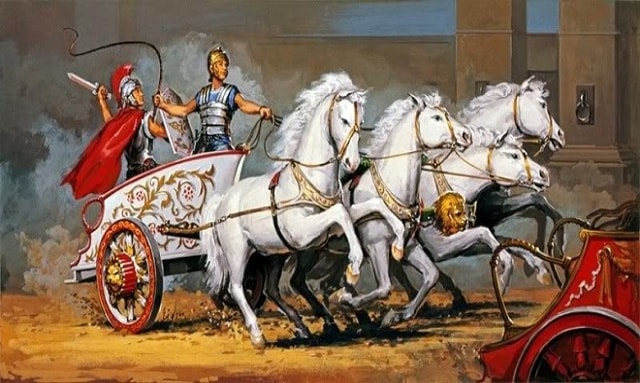 |
| The wheel became widely used from 3,500 BC, leading to major changes in transportation. By 2,000 BC, the Hittites, who lived in what is now Turkey, were the first people to use chariots, which consisted of a chassis attached to wheels pulled by horses, allowing for quick and efficient warfare. |
4.The Iron Age began around 1200 BC.
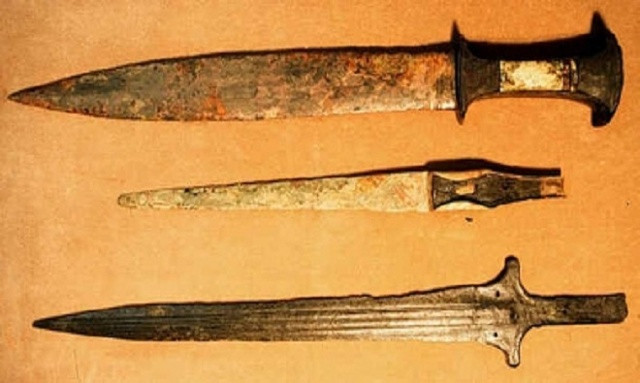 |
| The first mass-produced iron tools were made by the Hittites around 1400 BC. Ironworking technology began to spread from Asia Minor to Europe, Africa, and all of Asia after 1200 BC. Iron tools allowed for more efficient agriculture. Iron weapons and armor also replaced earlier metals like copper, allowing countries with abundant iron to expand their territories more easily than their neighbors. |
5.The invention of concrete (200 BC)
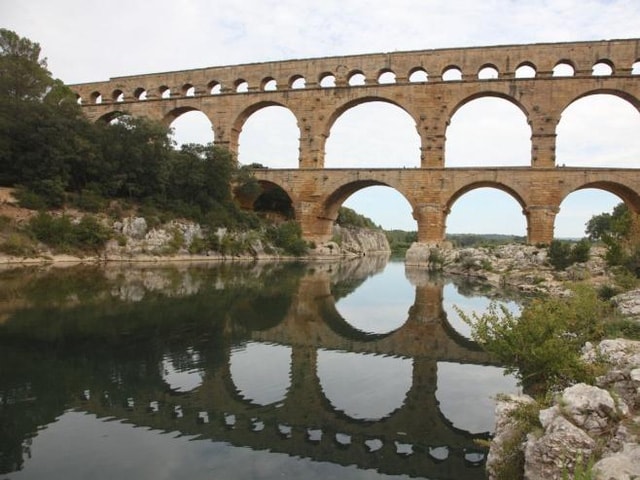 |
| Around 200 BC, the ancient Romans began constructing buildings with concrete. Thanks to its strength, structural integrity, and impermeability, concrete became the primary material for all construction projects, from seaports, temples, palaces, and houses to bridges and culverts. With the help of concrete, fortresses became more secure, deterring enemies, and more unique structures were created, making Rome a powerful empire unmatched by any other. |
6.The Industrial Revolution broke out (in 1712).
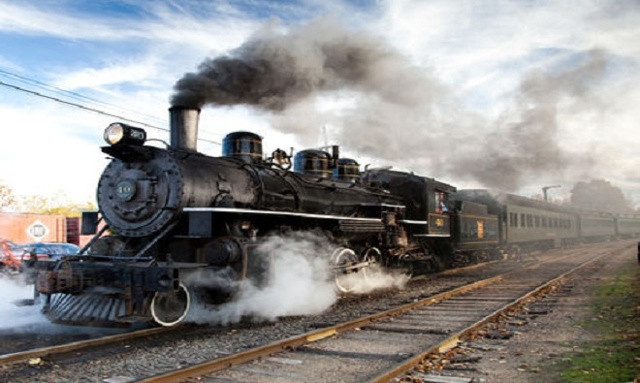 |
| The combined use of iron and steel led to the discovery of new energy sources, fueling the Industrial Revolution that erupted in England in the 18th century. During this period, the steam engine, created by Thomas Newcomen in 1712, allowed for increased labor productivity, transportation, and production, improving logistics. |
7.The first telephone was invented (in 1876).
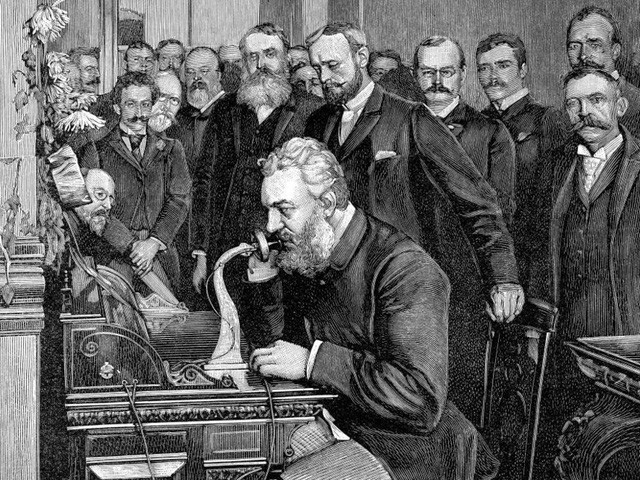 |
| On March 7, 1876, the U.S. Patent Office decided to award Alexander Graham Bell for his invention – one of the most valuable inventions in history: the telephone. Following the invention of the first telephone and its spread across continents, the first international call in 1927 marked a significant step in connecting and bringing people from all over the world closer together. |
8.The airplane was invented (in 1903).
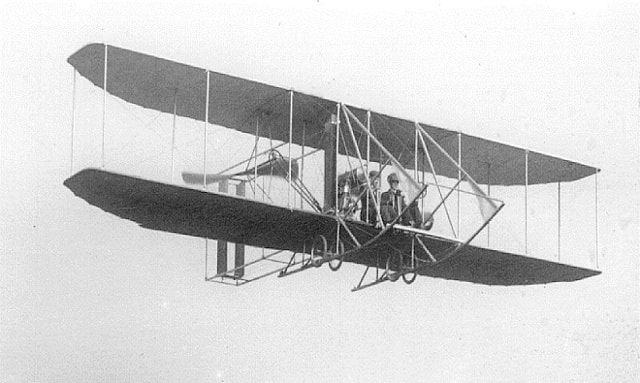 |
| Although the Wright brothers' plane only flew for 12 seconds, it was the first time in history that a heavier-than-air machine could fly. The Wright brothers perfected their design, and the plane entered reconnaissance service during World War I (1914-1918). According to National Geographic, the British and Italians designed the first bomber planes in 1913. |
9.Nuclear weapons (1941)
 |
| A month before the outbreak of World War II, the brilliant German physicist Albert Einstein wrote a two-page letter declaring America's entry into a nuclear arms race against Nazi Germany. In the 1939 letter, Einstein stated that a chain reaction of uranium could produce atomic bombs with unprecedented destructive power. However, it is precisely because of this horrific destructive power that today, many countries are signatories to the Nuclear Non-Proliferation Treaty and strongly condemn the development of such weapons. |
10.Conquer the vast universe.
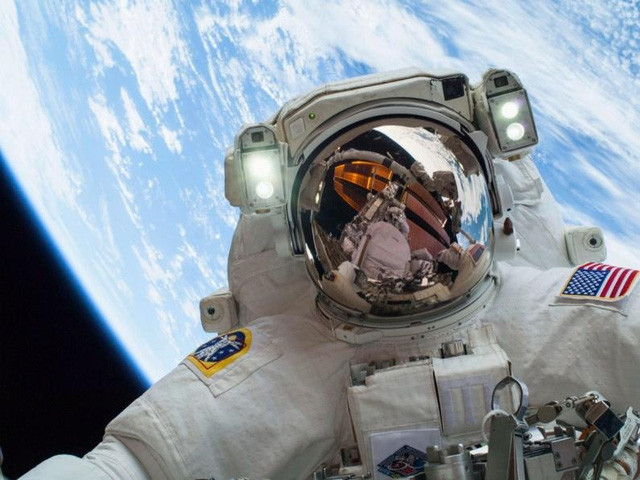 |
| In 1954, Russia first proposed building an artificial satellite. Within three years, the first artificial satellite orbiting Earth, Sputnik 1, was created. In 1958, German aerospace engineer Wernher von Braun, in collaboration with the US military, successfully launched the Explorer 1 satellite. Three years later, Russian astronaut Yuri Gagarin had the honor of becoming the first person to fly into space. This giant leap forward made the United States envious, vowing to be the first country to land a human on the moon – and that became a reality on July 20, 1969. |
11.Internet connection (since 1991)
 |
| Humanity entered an unprecedented era in its history when scientist Tim Berners-Lee invented the World Wide Web in the late 1960s. He developed "software that could create links between all the related files on one's computer, linking multiple computers together. From there, users could share data." He made that software publicly accessible in 1991, and since then, at least 3 billion people worldwide have used the Internet. |
12.Regenerative medicine
 |
| The first major step towards regenerative medicine, restoring damaged or lost organs, came in 1999 when doctors at Wake Forest University successfully created a bladder from stem cells for a young patient named Luke Marsell. Since then, researchers have continuously explored and developed increasingly complex and sophisticated techniques, applicable not only to organs like the bladder, liver, and bones, but also to the brain – the most complex organ in the human body. |
Peace
(Synthetic)
| RELATED NEWS |
|---|