
What fuels the intense Sino-Indian dispute?
China and India, both nuclear-armed nations with a combined population of 2.7 billion, are locked in a military standoff over a territory in Bhutan, a kingdom located in the remote Himalayan region.
China and India, both nuclear-armed nations with a combined population of 2.7 billion, are locked in a military standoff over a territory in Bhutan, a kingdom located in the remote Himalayan region.
The latest disagreement between the two countries erupted in mid-June and is considered the most serious since the border war between them in 1962, Bloomberg reported. The dispute comes as the two rising regional powers vie for influence in the area.
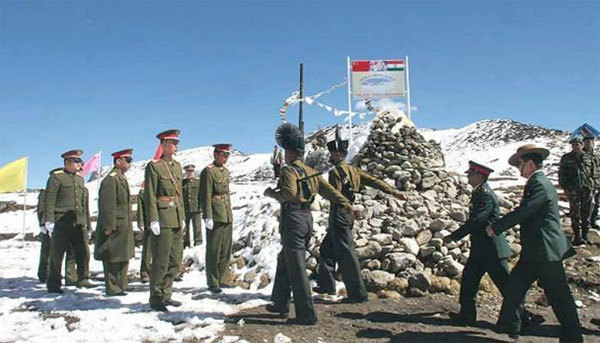
The current flashpoint of contention lies near a tri-junction between Bhutan, China's Tibet, and India's Sikkim. Due to the dispute, both China and India have increased their troop presence in the area.
 |
Where do disagreements arise?
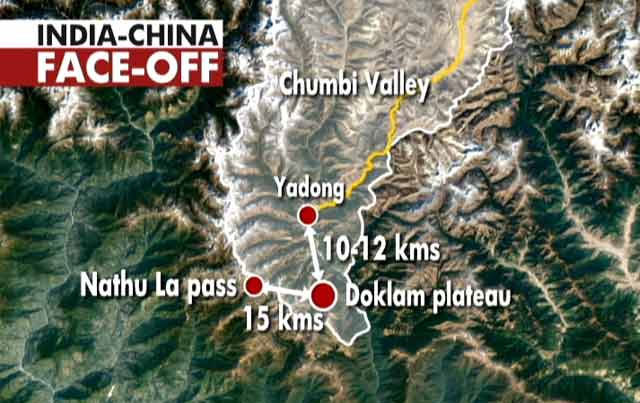
Tensions flared when India protested China's extension of a border line through a plateau that India calls Doklam and China calls Donglang.
This plateau lies at the crossroads between China, the northeastern Indian state of Sikkim, and Bhutan. It is also currently a disputed area between Beijing and Thimphu. India supports Bhutan's claims to the Doklam plateau.
India fears that if the road is completed, it will give China access to India's strategically important but vulnerable artery. This route is a corridor approximately 20km long, connecting seven northeastern Indian states to the mainland.
Officials in New Delhi told regional analyst Subir Bhaumik that they had objected to and prevented the road's opening, arguing that it could allow Chinese soldiers to launch a massive attack on Indian positions, destroying two bunkers at the nearby Lalten outpost.
"We didn't fire a shot; our soldiers simply formed a human wall and prevented China from penetrating further," said an Indian general who requested anonymity.
 |
Meanwhile, Chinese officials argue that the Indian border guards' opposition to opening the road is an obstruction of normal operations on the Chinese side. Beijing demands that New Delhi withdraw its troops immediately.
What is the current situation?
Both India and China have deployed additional troops to the border region. According to media reports, soldiers from both sides are closely monitoring each other's movements.
Chinese Ambassador to India Luo Zhaohui told the Indian news agency PTI that New Delhi must withdraw its troops unconditionally for peace to be restored. This statement was seen by China as a diplomatic escalation.
Furthermore, China retaliated by blocking 57 Indian pilgrims en route to Lake Manas Sarova in Tibet as they passed through the Nathu La Pass in Sikkim. Lake Manas Sarova is a sacred site for Hindus, and India and China previously had a formal agreement allowing devotees to visit the lake.
Meanwhile, Bhutan also demanded that China stop building the road, saying it violated an agreement between the two countries.
 |
What did India say?
Indian military experts say Sikkim is the only area through which India can launch a counterattack if China launches a surprise attack. Furthermore, it is the only route along the Himalayan border where the Indian army has a tactical and topographical advantage. The terrain is higher, while Chinese positions are squeezed between India and Bhutan.
"China knows that and they are always trying to prevent us from gaining an advantage," retired Major General Gaganjit Singh, former commander of the Indian Border Force, told the BBC.
Last week, the Indian Ministry of External Affairs stated that China's expansion of the road would alter the existing status quo and seriously affect India's security.
Indian Defence and Finance Minister Arun Jaitley also warned that India in 2017 is far different from 1962 and that the country has the right to defend its territorial integrity.
What was China's statement?
China has just reaffirmed its sovereignty over the area, declaring that the road under construction lies within its territory and accusing Indian troops of encroachment.
Beijing reminded India that it surely remembers its defeat in the 1962 war and warned that China is now stronger than it was decades ago.
A spokesperson for the Chinese Foreign Ministry stated earlier this month that the border in Sikkim was demarcated in an 1890 agreement with the British, and that India's violation was very serious.
China's Global Times also accused India of undermining Bhutan's sovereignty by interfering in the road construction project, despite Bhutan's request for China to halt the project.
Bhutan's role in the Sino-Indian dispute.
Bhutan's ambassador to India, Vetsop Namgyel, said that China's road construction violated an agreement between the two countries. Bhutan and China do not have formal diplomatic relations, maintaining contact through diplomatic missions in New Delhi.
Security analyst Jaideep Saikia told the BBC that Beijing is trying to resolve things directly with Thimphu.
What will happen?
Armed clashes occurred between China and India in 1967, and tensions have occasionally flared up since then. According to commentators, the latest tensions appear to be the most serious escalation in recent years.
However, most observers believe that a second war between China and India will not break out. India will hold elections in 2019, and the country will not risk conflict with a stronger adversary.
As for China, it also does not want to take any action that would harm the image it is building as a leading nation on the international stage.
According to Vietnamnet.vn
| RELATED NEWS |
|---|