

7 safe reversing skills for new drivers
(Baongghean.vn) -Reversing is a difficult skill because it's hard for the driver to accurately observe the rear and control the clutch, plus the seating position isn't very comfortable.
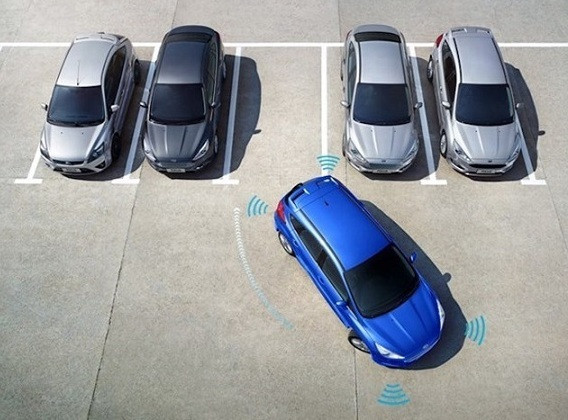 |
The most difficult part of reversing a car is having to move it in the correct direction and into the desired parking spot, avoiding hitting other cars parked behind it.
To reverse your car correctly and efficiently, you should master these 7 techniques:
1. Stop the vehicle, turn on the hazard lights, and engage reverse gear.
This is the first step to follow; each vehicle has a different way of engaging reverse gear, from manual to automatic transmissions. Regardless of the transmission, always remember to depress the brake pedal throughout the first step.
2 - Adjust the mirrors
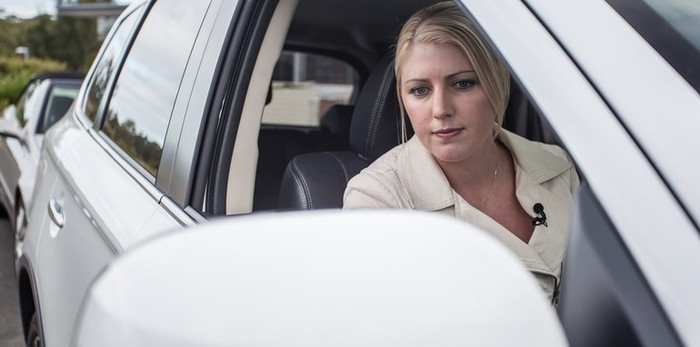
Adjusting rearview mirrors helps drivers have a better view of the rear in each specific reversing situation. Experienced drivers may not need to readjust their mirrors, but it is essential for new drivers.
Many people have a habit of folding down the passenger-side mirror to see the last tire tracks. Experienced drivers can accurately estimate the size of the vehicle, thus avoiding the need to adjust the mirror too much.
 |
3 - Turn around to observe
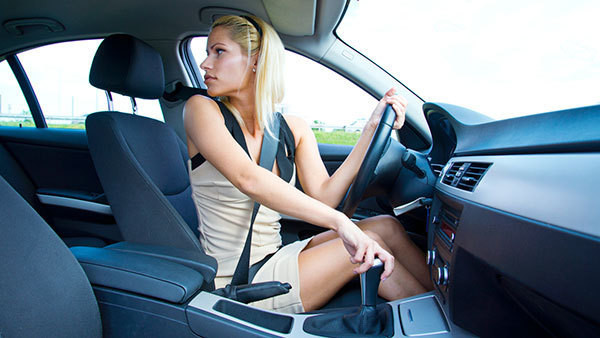
Turning around gives the driver a more comfortable and accurate view than looking in the mirror, but is that really necessary?
In reality, looking in the rearview mirror and seeing the rear window is often how drivers estimate if their car is close to a wall. This method is only suitable if the driver has a good estimate of the car's dimensions.
Exterior rearview mirrors (especially the passenger side) are convex mirrors and often come with a warning sign that says, "The distance between objects in the mirror is greater than the actual distance outside," meaning the vehicle behind is actually closer than it appears in the mirror, to prevent the driver from being complacent.
The rearview mirror is usually a flat mirror, so it accurately reflects distances. Therefore, which mirror to use is a matter of personal habit once you have experience.
Simply glancing in the mirror or turning your head completely around serves the same purpose if the driver has already estimated the actual distance; however, just sitting and glancing in the mirror is definitely less strenuous for the driver.
 |
4 - Drive slowly
Reverse gear is always the strongest gear in the transmission; that is, with the same clutch release and accelerator (or brake release in automatic cars), reverse gear will always be faster than first gear. Furthermore, limited visibility means driving slowly is the safest approach in unexpected situations.
5 - Reversing direction
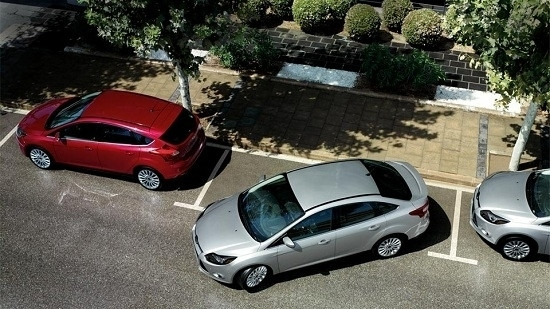
New drivers often lose their bearings when reversing. Remember that whichever side you turn the steering wheel to in reverse, that's the direction the car will go. It's also crucial to maintain control of the front of the car while reversing, as the front of the vehicle always points outwards from the turning radius, making collisions very easy.
 |
6 - Use low beam headlights
Using low beam headlights to estimate distance is also a very good method. When reversing into spaces near walls, bushes, gates, or garages, you should turn on your low beam headlights, because the light reflected off these objects will help you estimate a safe distance. The smaller and brighter the light beam, the closer the vehicle is to the obstacle.
7 - Forward, hug the back; backward, hug the front.
This is a key principle that driving schools usually teach students when they first start learning to drive, especially when navigating S-shaped or zigzag roads. That is, when moving forward, you must stay on the wider side of the curve; for example, when turning left, stay on the right, and when turning right, stay on the left. Conversely, when reversing, stay on the right when reversing right, and on the left when reversing left.
Figuratively speaking, a curve can be likened to a girl lying on her side, with her back being the wider outer edge and her belly the narrower inner edge. When moving forward, you need to follow the girl's back, meaning you should align the car along the outer edge to create space on the belly side, avoiding scraping the side of the car. Conversely, when reversing, you need to follow the belly side to create space on the back side and avoid scraping the front of the car.
On a narrow but divided-lane curve, the front and rear of the vehicle are only counted for the lane the vehicle is currently traveling in. They are not counted for the entire road, as this could easily lead to a head-on collision with an oncoming vehicle.
Ngoc Anh
(Synthetic)
| RELATED NEWS |
|---|