

Ford is embroiled in a scandal for withholding information about exhaust fumes entering the Explorer's cabin.
Both the US government and the National Highway Traffic Safety Administration (NHTSA) have investigated the possibility of exhaust leaks from the Explorer.
The U.S. government launched an investigation into the Ford Explorer in 2016, but News 4 discovered that complaints against Ford and the government had existed for several years before the investigation was announced. The question is, when did the American automaker become aware of the potential safety flaws?
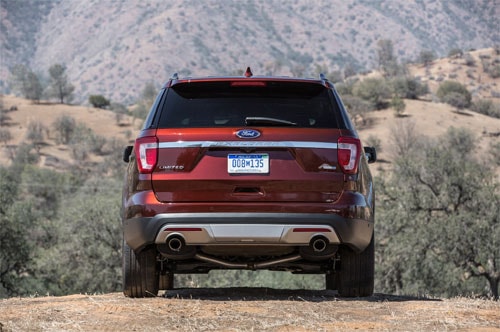 |
Ford is facing the risk of losing customer trust amid allegations of withholding information about technical defects in the Explorer. |
In July 2016, the NHTSA launched an investigation into potential carbon monoxide (CO) leaks in Explorer models from 2011 to 2015. A year later, the agency escalated the investigation to what it calls a "technical analysis," and the list now includes Explorer models from 2011 through 2017.
Many safety experts and consumer protection lawyers want to know when Ford first received a complaint.
"There are a few things about this that really bother me," said David Friedman, former head of the NHTSA and now working with the Consumers Union, the publisher of the prestigious magazine Consumer Reports.
Friedman argues that not only had Ford known about the potential for exhaust or CO leaks for several years, but the company had also sent Technical Service Bulletins (TSBs) to its dealerships.
"That shows they knew something was wrong," Friedman observed.
Meanwhile, News 4's investigation uncovered repair manuals from 2012, 2014, and 2016, including one from 2012 that discussed exhaust fumes in 2011-2013 Explorer models. The manual instructed mechanics on how to fix the leak.
Other manuals from 2014, including those for the 2014 and 2015 models, also mention exhaust fumes entering the vehicle when the auxiliary air conditioning control system is used.
The NHTSA also received complaints about the Explorer. One from June 2011 stated that the "cabin was filled with exhaust fumes." Another complaint from March of the same year said that "my wife repeatedly had trouble concentrating while driving."
In total, there were over 2,700 complaints over the six years, including three accident reports and 41 cases of injury.
Many Explorer owners, like Susan Stazetski of White Plains, Maryland, have even filed lawsuits against Ford, claiming the vehicles made them sick.
"Every day I wake up with a migraine," Stazetski said.
Stazetski's lawyer, Jacqueline Herritt, said that cases like these could be handled under "lemon law".
"Clearly, this falls within the scope of the law. If someone is driving and inhales carbon monoxide, becomes unconscious, suffers a migraine, or all of these things happen to them, then that is definitely a serious safety violation," Herritt stated.
"Safety is our top priority," Ford stated in a press release. "We take this matter seriously. Ford engineers have been working with police and customers nationwide to address these concerns. We are also in Washington, D.C., inspecting the vehicles."
According to the NHTSA, no real data or factual evidence has been collected to substantiate claims of any injuries or accidents resulting from carbon monoxide poisoning. We encourage any driver who feels uneasy to contact their Ford dealer or call the hotline."
NHTSA declined to comment on the opening of investigations.
The NHTSA's initial investigation found no evidence to support such claims, but the agency has previously stated that "carbon monoxide levels may increase in certain driving situations."
"If that is determined to be a safety defect, Ford would be the target of significant fines from the NHTSA for failing to address the issue despite knowing about it," Friedman stated.
Many police departments across the United States, including Montgomery County (Maryland), have grounded their Explorer vehicles after several officers reported becoming ill due to carbon monoxide (CO) entering the vehicle's cabin.
According to VNE
| RELATED NEWS |
|---|