
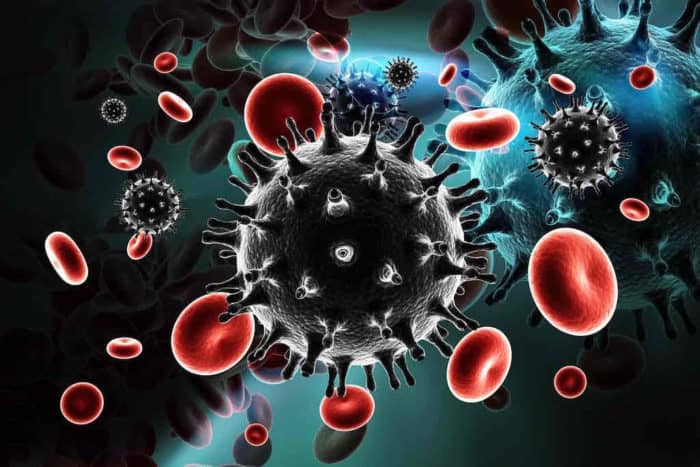
A superantibody that kills 99% of the HIV virus has been discovered.
Scientists have created a superantibody that kills 99% of the HIV virus. The superantibody worked very well in monkeys. Tests on humans will begin in early 2018.
Scientists have created a superantibody that kills 99% of the HIV virus. The superantibody worked very well in monkeys. Tests on humans will begin in early 2018.
 |
Scientists have just discovered an antibody that can destroy the HIV virus. Experiments on 24 monkeys showed that even after being injected with this antibody, the monkeys were immune to the HIV virus, even after being subsequently injected with HIV again.
The reason the human body finds it difficult to eliminate the HIV virus is because the virus is constantly mutating, creating many different strains. Scientists say that a person infected with HIV faces numerous different strains of the HIV virus.
Over the past few decades, scientists have found antibodies in the bodies of some HIV-infected patients that target the HIV virus at its root and eliminate most of the HIV strains present in the body. These are called 'broadly neutralizing antibodies'.
In their recently published study, scientists combined three types of 'broadly neutralizing antibodies' called the 'triple antibody' that are capable of killing up to 99% of the HIV virus.
Professor Anthony Fauci, Director of the National Institute of Infectious Diseases and Allergies (USA), told the BBC: "Combining three types of antibodies, each targeting a weakness in the HIV virus, is an effort to move toward an antibody-based approach to preventing and treating HIV."
Professor Linda-Gail Bekker, president of the International AIDS Society, said: "This type of super antibody appears to transcend natural limits and could have more applications than we previously thought. This is a huge breakthrough."
This study, published in the journal Science, is a collaboration between the U.S. National Institutes of Health and the pharmaceutical company Sanofi. It also includes contributions from scientists at Harvard Medical School, the Scripps Research Institute, and the Massachusetts Institute of Technology.
According to TTO
| RELATED NEWS |
|---|