

Funding for the North-South expressway project is unlikely to be feasible.
Commenting on the investment project for the construction of the North-South Expressway (Eastern section), the Ministry of Finance stated: "It does not demonstrate the feasibility and consistency needed for implementation."
According to the Ministry of Finance, the entire North-South expressway project comprises more than 20 sub-projects, with 11 projects to be implemented during the 2017-2020 period. Of these 11 projects, 8 will be implemented under the BOT (build-operate-transfer) model and 3 will be public investment projects.
The Ministry of Finance stated that the Ministry of Transport also assessed that the bidding process for selecting investors cannot yet be guaranteed to be successful, as evidenced by the recent unsuccessful bidding for the Dau Giay-Phan Thiet expressway project and the Ho Chi Minh City Ring Road 3 project.
The Ministry of Transport has proposed allocating nearly 42,000 billion VND in government bonds to prioritize the implementation of several urgent component projects, such as the Ninh Binh-Thanh Hoa and Dau Giay-Phan Thiet sections. Afterward, concession rights will be granted, and the proceeds will be invested in subsequent sections. The Ministry of Transport also proposed that the Vietnam Expressway Development Corporation (VEC) and the Cuu Long Expressway Corporation (CIPM) mobilize resources to invest in several component projects…
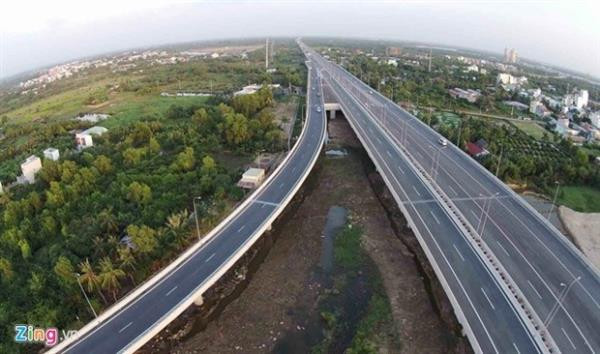 |
| Illustrative image. |
However, the Ministry of Finance believes that the proposed North-South expressway project lacks feasibility and coordination for implementation. Furthermore, the resources of VEC and CIPM are very limited; some of their road investment loans are still being temporarily repaid by the state budget, and some need to be transferred to grants. Meanwhile, CIPM is still primarily managing projects using state budget funds, making feasibility difficult.
The Ministry of Finance also requested the Ministry of Transport to conduct a more detailed assessment of the financial feasibility of the component projects planned for implementation under the BOT (Build-Operate-Transfer) model. At the same time, the Ministry of Transport needs to reconsider the rationality of investing budget funds and then granting concessions for operation, in accordance with the provisions of the Budget Law and the investment model.
Furthermore, the Ministry of Transport stated that for component projects invested under the BOT (Build-Operate-Transfer) model, road tolls are determined directly in the pre-feasibility report and investment contract, with the price and price increase schedule remaining unchanged. The Ministry of Finance argued that this proposal is inconsistent with the authority and form of regulating road usage fees.
According to VOV