

Science can help reduce intense competition in the South China Sea.
According to Euroasia Review, despite the White House's attempts to deny long-standing climate change information and the US withdrawal from the Paris Agreement on climate change, almost everyone can question the wisdom of leaving a science-led peace-building plan in the disputed South China Sea.
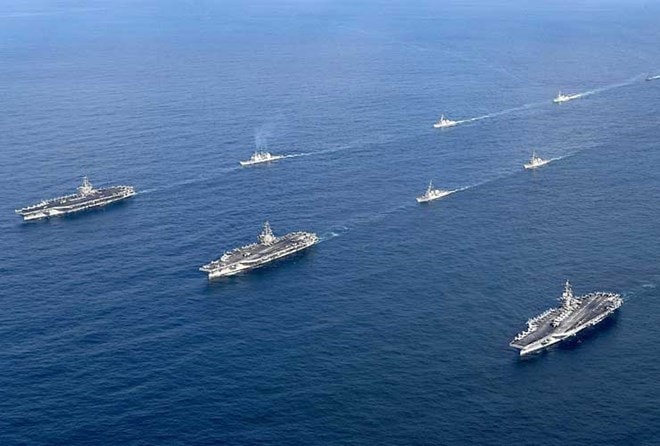 |
| Illustrative image. (Source: koreatimes.co.kr) |
However, science can prove to be a crucial factor in fostering cooperation, rather than competition, not only among countries with territorial claims in the region, but also between the United States and China.
Scientific diplomacy, defined as the role of science in informing diplomatic decisions, has fostered international scientific collaboration and established scientific cooperation to reduce tensions between countries.
There have been strong ties between scientists in Southeast Asia and China, as part of a series of international scientific projects, conferences and training workshops linked to the Food and Agriculture Organization (FAO) South China Sea Fisheries Development and Coordination Programme.
These measures are essential, given the rampant indiscriminate fishing and the decline of coral reefs across the South China Sea, partly because conflicting territorial claims have made ecological analysis and assessment difficult.
Michael Crosby, President and CEO of the Mote Ocean Laboratory in Sarasota, believes that the U.S. can gradually improve international relations through partnerships in marine science, and he argues that the United Nations Convention on the Law of the Sea (UNCLOS) also includes specific provisions applicable to marine science and technology.
Although U.S. President Donald Trump has clearly stated his intention to protect and promote the fossil fuel industry, he may realize that this new form of collaborative science diplomacy works in Asia.
According to Vietnam+