

Mixed-race children in western Nghe An
(Baonghean.vn) - These children have Chinese fathers and Vietnamese mothers, but their marriages have broken down, and life abroad hasn't met their initial expectations, so these young women have brought their children back to Vietnam to live.
Children of mixed heritage
Ms. Mac Thi Hong (born in 1983), residing in Ang village, Xa Luong commune, Tuong Duong district, went to China to work as a factory worker six years ago. Three years ago, she met a fellow worker at the same company named Da Ngau, from Guangdong province, China, near where she was staying, and they got married.
Although they were married, they didn't register their marriage. After having a baby girl about 10 months old, Hong brought her back to Vietnam, registered her with her mother's surname, named her Mac Thi KC, and handed her over to her maternal grandmother to raise, while she continued to go to China to make a living.
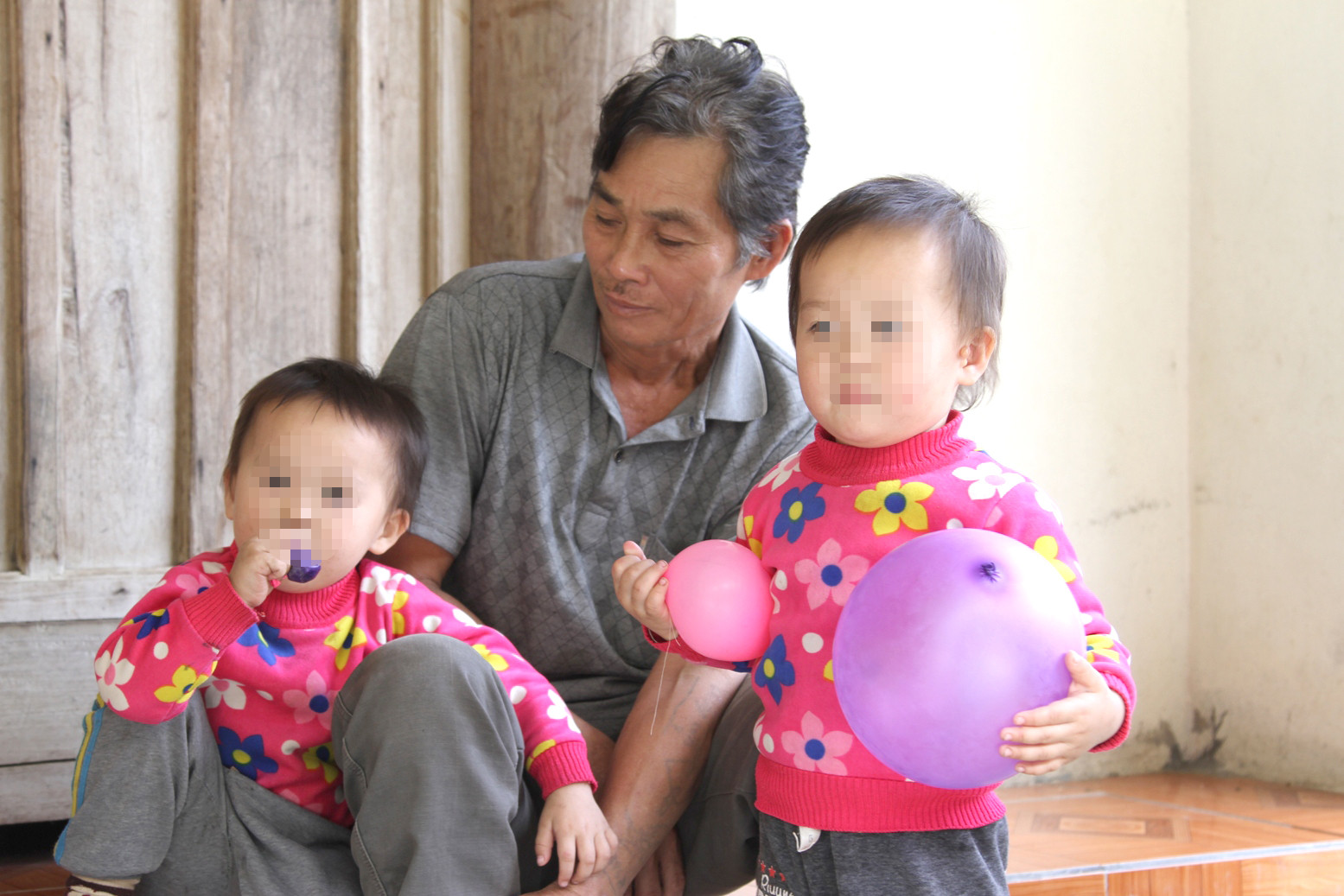 |
| Two twins of mixed Vietnamese and Chinese heritage are playing with their maternal grandfather in Xa Luong commune (Tuong Duong district). Photo: Ha Thu |
"For over three years, I've been working my butt off to raise my granddaughter. Raising her is harder than raising all my own children combined. She's very shy and not as outgoing as her peers. Perhaps it's because she has mixed blood," Mrs. Lan sighed as she shared.
Also in Ang village, following the village headman Lo Kham Nhun, we approached the house of Mr. Luong Van Ha (born in 1974). The small house, perched precariously on the hillside, has "suddenly" taken in two more people in just under a year since his eldest daughter followed her friends to China to find a husband.
Although only 23 years old this year, Luong Thi Quyen, Mr. Ha's daughter, looks like a young woman in her early twenties when she wears makeup and fashionable clothes, no less stylish than girls in the city. It's even harder to believe that Quyen is already the mother of two children, now over two years old. According to this mountain girl's account, in 2014, influenced by friends, Quyen left home to work as a factory worker and find a husband, with the promise of high wages and easy work.
Here, with her rather attractive appearance, Quyen was quickly married to a welder (whose name she doesn't remember to this day, only that he was born in 1991). Quyen gave birth to twin daughters, and her husband's family allowed her to return to Vietnam to care for them. Quyen registered both of her children under her surname.
When we asked about her marital status, this Thai girl, born in 1994, always insisted that she and her husband were still in regular contact, but then "accidentally" revealed that her marriage only lasted 7 months, plus the first month before the "wedding," and that they had never met again since then.
Mr. Luong Van Ha shrugged and shook his head when we expressed our desire to know the truth about Quyen's marital status. Like many other grandparents in this region whose daughters married Chinese men, the family had never once seen their son-in-law, while they had to work hard to raise their granddaughter in hardship from infancy.
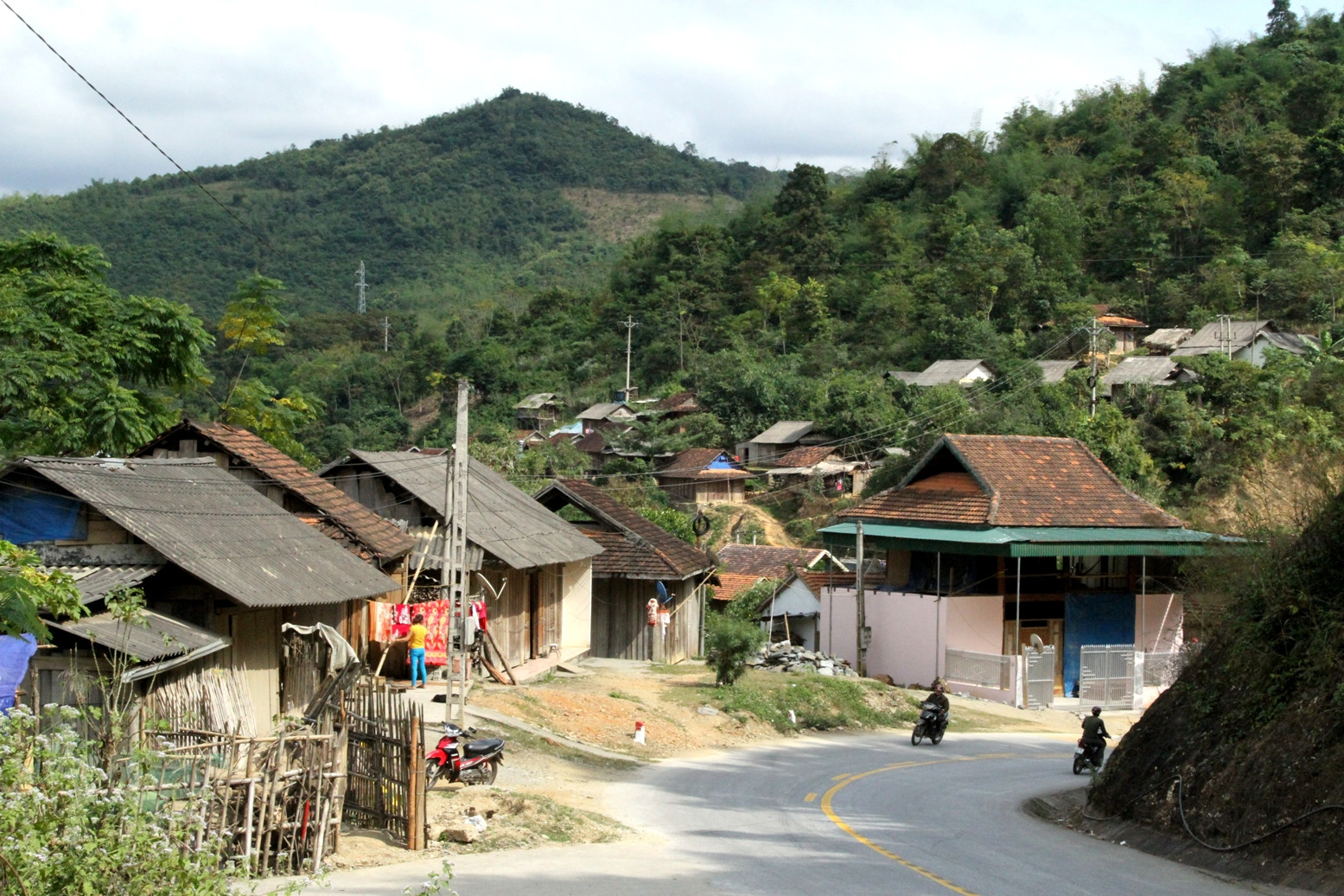 |
| A corner of Ang village, where eight Vietnamese women married Chinese men. Photo: Ha Thu |
Mr. Luong Van Phang, Chairman of the People's Committee of Xa Luong commune, added that every year hundreds of women in the commune leave their villages to work in China. Some return with their children, but most leave voluntarily. In July 2017, there was a case of Mac Thi Khuong returning with her child to report to the authorities that she had been tricked and sold, but the investigation revealed that this was not the case; she had left voluntarily.
The consequences of disillusionment with a cheating husband.
Lieutenant Colonel Tran Phuc Tu, Head of the Tuong Duong District Police, stated that the problem of human trafficking in this border district has continued to be complex. One of the obvious consequences is that many young women cross the border, marry and have children with local men, then return to Vietnam to give birth, or give birth there and bring the children back to Vietnam to raise.
Incomplete statistics from the district police show that there are currently at least over 30 children born under such circumstances, living with their mothers or relatives in the area. Although they are nominally of mixed Vietnamese and Chinese ancestry, their birth certificates bear their mothers' surnames. Most of these mixed-race children live in the locality like other Vietnamese children, although there are also quite a few challenging cases. The most typical example is the story of Vi Thi Hien (born in 1992), residing in Hoa Binh town, Tuong Duong district.
In 2014, Hien was tricked and sold into marriage in China. During her time there, she had a daughter with her husband, but she fled back to Vietnam with her child, who was only three months old at the time and hadn't even been registered or named. After more than a year of being trafficked, she returned to find both her parents and older brother imprisoned for drug-related offenses, and she had lost her home.
Having nowhere to go, Hien had no choice but to entrust her child to an acquaintance in Ky Son district for upbringing, while she continued her illegal border crossing to make a living. The person who adopted the child was Ms. Luong Thi Binh, who registered the child's birth certificate under her own surname. After three years, Vi Thi Hien returned to reclaim her child but was unsuccessful, so she sued in court. After two levels of trial, the court ruled that Ms. Binh must return the child to the biological mother, as DNA testing confirmed the child was Hien's biological daughter. However, being asked for over 200 million VND in child support fees, this mountain woman was unable to pay and had to accept losing her child.
In Ky Son district, the situation of women leaving their villages to marry in China and then bringing their children back to live in the area is also quite troubling. Captain Kha Van Hien, head of the General Investigation Team of the Ky Son District Police, said that incomplete statistics show dozens of cases of women bringing their children from China to live in the area. However, the difficulty is that these individuals do not report their presence, and after a while, they return to China to make a living, so the number fluctuates frequently.
Recently, there have been cases of pregnant women being trafficked to China, not simply marrying, giving birth abroad, and then being brought back to their hometowns for upbringing. While these developments haven't yet caused any significant disruption or difficulties for the police in maintaining security and order in the area, they do raise many potential risks related to the trafficking of women and children, a persistent problem in the border districts of western Nghe An province in recent years.