

Is there a price surge during Tet (Lunar New Year)?
Economist Vu Vinh Phu predicts that a price surge is unlikely during the Lunar New Year holiday, especially for consumer industrial goods and clothing. However, some fresh produce items may see a 10-20% increase in price.
Addressing localized price increases
According to Mr. Vu Vinh Phu, based on the volume of goods, the capacity of Vietnam's distribution system, and market purchasing power, a sudden price surge is unlikely. However, before and after the Lunar New Year, some food items such as free-range chicken, fresh seafood, high-quality vegetables, various types of hot sausages, and premium beef will increase in price by 10-20%. A report from the Ministry of Industry and Trade indicates that the supply of goods for the Tet holiday is ready. The total value of goods in Ho Chi Minh City and Hanoi for the Tet holiday is over 43,000 billion VND.
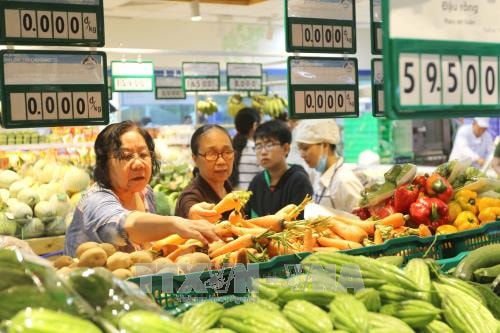
Consumers have many opportunities to choose from a wide range of products. (Illustration photo: Thanh Vu/TTXVN) |
However, some trade experts also have concerns: The supply of goods prepared by localities for Tet needs to be clarified, including what percentage of this supply is controlled by the state-owned trade system and supermarkets operated by the localities? Does it overwhelm the free market? Who determines the selling price of that supply of goods? Does the distribution network cover all markets within the locality? These are the things that consumers are most concerned about during Tet.
According to a representative from the Ho Chi Minh City Department of Industry and Trade, the total value of goods produced and supplied by businesses in the two months before and after the Lunar New Year of 2018 reached nearly 18,000 billion VND, an increase of over 743 billion VND compared to last year's Tet holiday.
To avoid price surges in the days leading up to Tet (Lunar New Year), the Hanoi Department of Industry and Trade has prepared a 15-20% increase in price-stabilized goods, totaling over 7,000 billion VND, a 20-30% increase compared to last year. Based on the results of Tet 2017 and forecasts of consumer spending during Tet, the Hanoi Department of Industry and Trade has planned to increase its goods reserves by 10-15%.
Mr. Le Hong Thang, Director of the Hanoi Department of Industry and Trade, said: The Department will closely monitor the supply and demand of goods and services in the area, focusing on food and essential goods and services for Tet; at the same time, it requested districts and communes to create conditions and support businesses and households in organizing the stockpiling of goods effectively.
"Businesses and markets in the area need to proactively research the market, develop production plans, and stockpile goods and raw materials appropriately to maintain stable production and business operations, ensuring a sufficient supply of quality goods at reasonable prices," said a leader of the Hanoi Department of Industry and Trade.
To stabilize prices during the 2018 Lunar New Year, Deputy Minister of Finance Tran Van instructed the Price Management Department (Ministry of Finance) to proactively implement measures to stabilize market prices. Previously, the Minister of Finance had requested the Directors of the Provincial Departments of Finance to take the lead and coordinate with local departments and agencies to continue advising the People's Committees of the provinces on strengthening management, administration, and price stabilization in their respective areas.
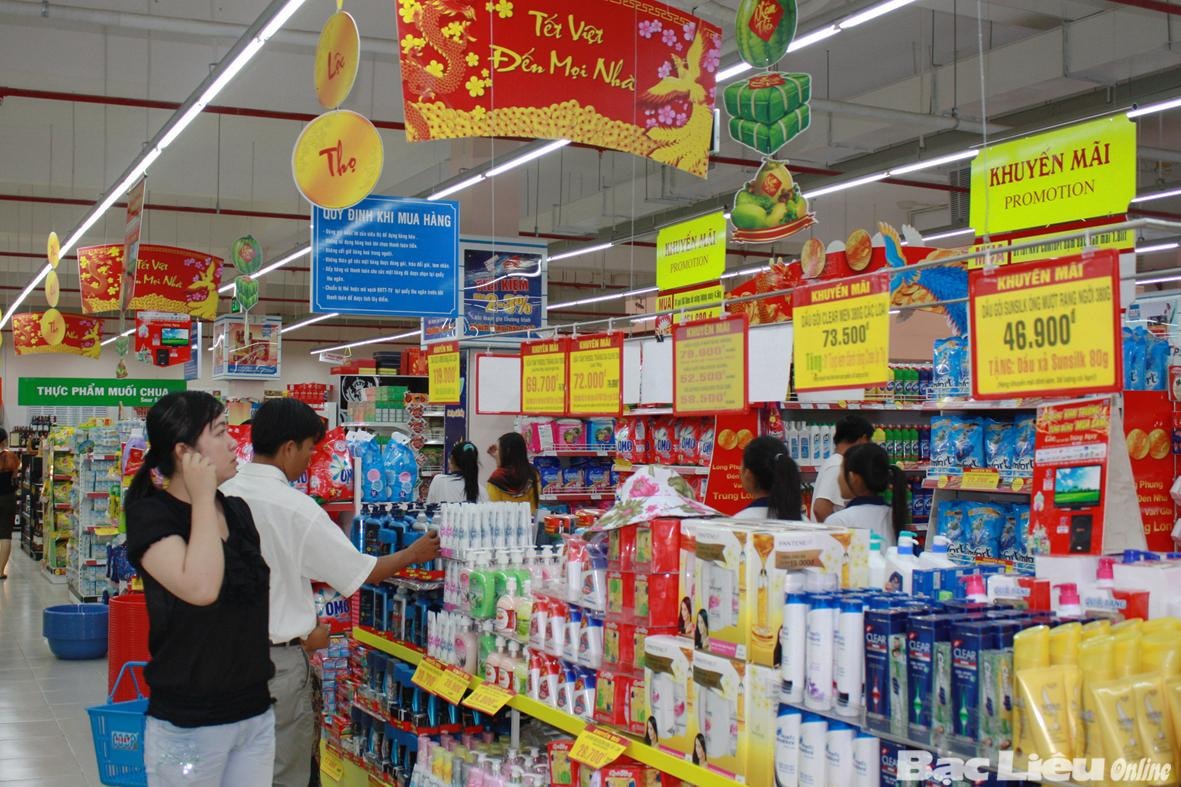 |
| Many promotional policies for Tet (Lunar New Year) goods. (Image: Internet) |
In particular, it is crucial to prevent the exploitation of electricity and fuel price increases to create chain price hikes that are inconsistent with the proportion of these increases in the cost and selling prices of other goods and services. “Closely monitor the price declarations of businesses; strictly control the factors that determine prices and the selling prices of essential goods, price-stabilized goods, and goods on the price declaration list. Take timely measures to address localized price increases and avoid adjusting prices for many items at the same time, especially before and after Tet (Lunar New Year),” a leader from the Ministry of Finance stated.
Carefully manage prices to avoid creating psychological inflation.
A representative from the Price Management Department (Ministry of Finance) stated: In 2018, price management continued to be cautious, carefully assessing the impact of price adjustments on the socio-economic situation and the consumer price index (CPI) to develop appropriate plans and roadmaps, avoiding simultaneous adjustments.
This year, the National Assembly approved a GDP growth target of 6.5-6.7% and an inflation target of 4%. "Keeping inflation at 4% is also a challenge, as solutions to boost growth in 2017, such as accelerating investment, easing credit growth, or continuing the market-based pricing roadmap for healthcare services for those not covered by social insurance in 2017, may have a delayed impact on the CPI in 2018," a price management official stated.
Therefore, according to the Ministry of Finance, the task for price management is to both promote growth and control inflation. The Price Management Department continues to research and improve the legal system on prices, focusing on perfecting the management mechanism and price levels for services that have been transferred from the fee category to price-based management; and continues to effectively perform its duties as a standing body assisting the Steering Committee for Price Management, implementing price stabilization measures for essential goods and services.