

Finding solutions to improve the land access index.
(Baonghean) - Although the Land Law of 2013, which came into effect, has reduced some work steps, in reality, the procedures for creating land funds are still very complex, time-consuming, costly, and require a lot of manpower.
The index of access to land and stable land use is one of the 10 important component indicators of the Provincial Competitiveness Index (PCI), reflecting the quality and effectiveness of state management of land in provincial-level localities to create a favorable environment for the development of private enterprises.
Improving this index is a practical step towards successfully implementing the Project to improve and enhance the provincial competitiveness index.
Looking back at the PCI data published for Nghe An in the last three years, it shows that the "Land Access and Stable Land Use Index" is only at an average level and ranks low compared to the whole country (2014: 5.32/10, ranked 53/63; 2015: 5.38/10, ranked 47/63; 2016: 5.37/10, ranked 52/63).
Among the component indicators that make up the "Land Access and Stable Land Use Index," only the percentage of land area in the province with Land Use Right Certificates is rated highly (91.58% over all three years), while the remaining indicators are at average or low levels. So, what is the actual performance of these component indicators, and what solutions are there to address and improve them?
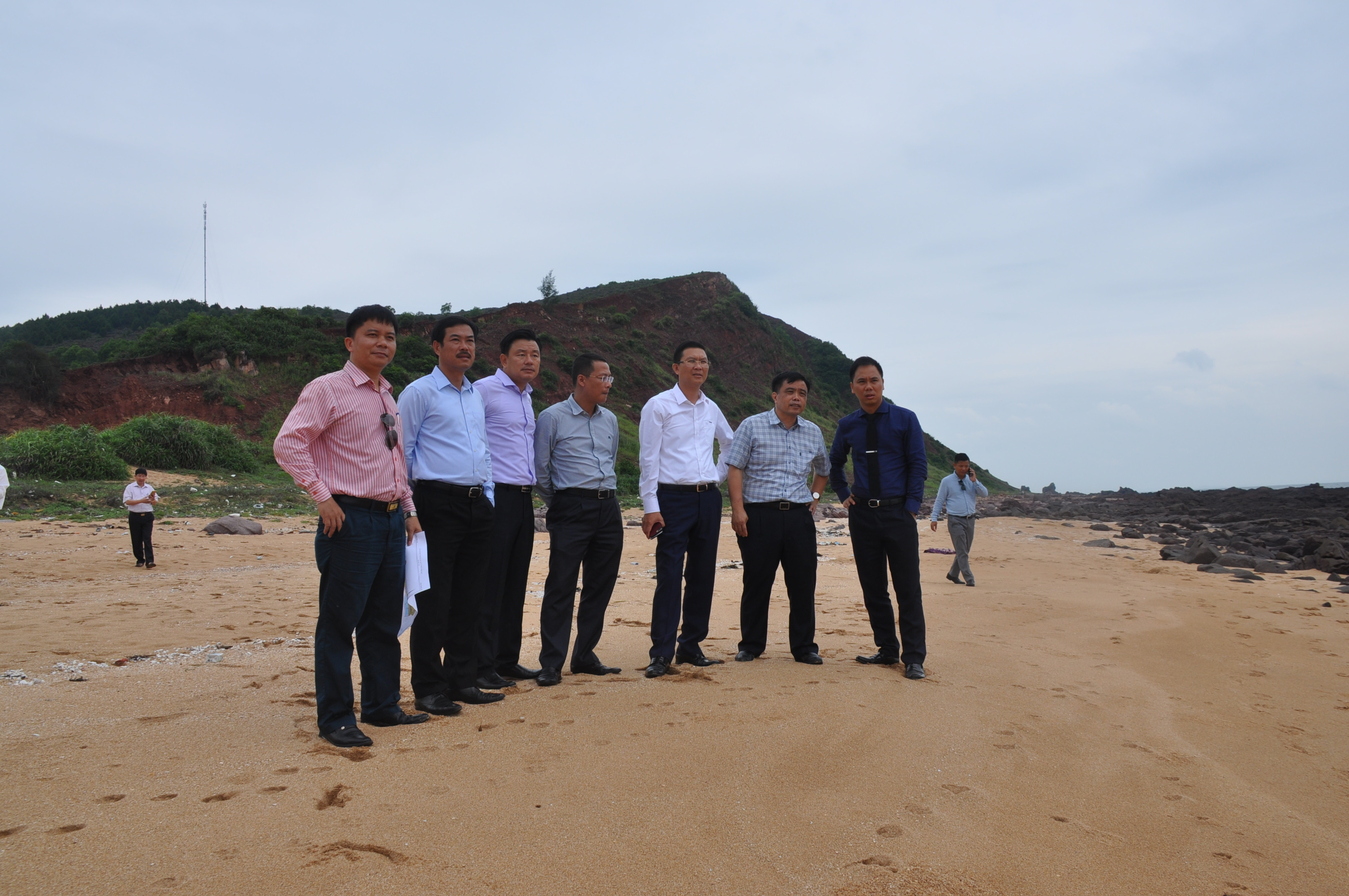 |
| FLC Group conducts a survey in Nghi Tien commune (Nghi Loc district). Photo: Thu Huyen |
It can be said that the percentage of non-state-owned enterprises that assessed themselves as not facing obstacles in accessing land or expanding business premises, although improved over the years, remains very low (13% in 2014, 16.07% in 2015, and 27.03% in 2016). The bottlenecks are clearly identified as the inadequacies and minimal improvements in the administrative procedures related to land, and concerns about the risks and losses faced when businesses have their land confiscated.
Regarding the shortcomings of the administrative procedures system for land, a research result from the provincial-level science and technology project "Effective exploitation of land funds for infrastructure investment and urban renovation in Nghe An province," which was approved in 2014 and chaired by the Provincial People's Committee Office, showed that: The procedure for creating land funds for allocation through auction and land use right valuation includes 7 steps and 34 work stages, involving the participation of 14 agencies and organizations (commune level, district level, provincial level, and technical service organizations).
The procedures for issuing land use right certificates are equally complex, involving numerous sub-procedures such as obtaining signatures from adjacent landowners, confirming the absence of disputes, providing explanations regarding documents, and processing increases or decreases in land area. There are also overlapping processing steps between individuals (officials, team leaders, department heads), and departments (such as between the Land Registration Office, tax authorities, and the Department of Natural Resources and Environment), and a lack of accountability (subordinates approve, superiors disagree, resulting in the file being returned, starting with the land user) during the assessment and processing of applications. This has led to the actual processing time exceeding the regulations, causing frustration and negative consequences.
Regarding concerns about risks and losses incurred when businesses have their land confiscated, the reality is that to be allocated or leased land, most businesses have to bear various costs that are often not compensated when the land is confiscated, such as: the agreed-upon compensation for residents based on market prices, which differs from the amount calculated according to the state's price list.
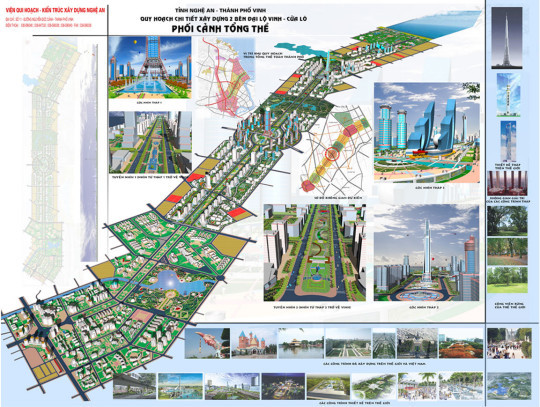 |
| Perspective view of the Vinh - Cua Lo highway project. (Photo: Archival image) |
A 2016 study by the Vietnam Academy of Agriculture indicated that although land valuation in Nghe An was carried out systematically and in accordance with procedures, there were limitations in valuation skills, leading to significant discrepancies between state-determined land prices and market prices in many areas, especially for real estate projects; costs for personnel to carry out administrative procedures (33.33% of businesses reported having to spend more than 10% of their time understanding and implementing legal and state regulations in 2016); and unofficial costs that businesses had to pay (72.73% of businesses reported having to pay these costs in 2016)...
The above analysis shows that improving the "Land Access and Stable Land Use Index" is of great significance, on the one hand contributing to improving the PCI Index, and on the other hand optimally addressing the long-standing inherent shortcomings of land management.
To accomplish this task, based on practical experience, we propose several solutions.
Firstly, regarding administrative procedures in the land sector: conduct a thorough review and reassessment of all stages, processes, and official positions involved in handling land-related documents, including responsibilities, authority, and timelines, in several typical units and localities. Based on this, adjust the process to: reduce redundant and unnecessary steps; assign full responsibility to each official; create detailed flowcharts for each stage and official position involved in the processing procedure; mandate compliance with the process in all localities, prohibiting the addition of any further steps; and implement disciplinary measures against officials and organizations that violate the process.
Secondly, reorganize the one-stop processing method: After the investor signs the investment commitment and approves the location, the remaining tasks should be assigned to a public administrative unit responsible for handling all remaining stages of work to obtain land lease, land allocation, and land use right certificates on behalf of the enterprise/investor. The investor only has to pay the fees according to the prescribed rates.
Thirdly, make the criterion "Business performance results" a mandatory criterion when assessing the capacity of investors, to prevent the situation where new businesses are established to lease land and then the entire business is transferred or merged to make a profit.
Fourth, resolutely revoke projects that violate the Land Law to eliminate land speculation or incompetence. This will, on the one hand, create opportunities for other capable investors, and on the other hand, provide leverage for other investors to fully fulfill their responsibilities. Finally, prioritize resources to create clean land funds to implement state planning, avoiding situations where businesses "create planning." Conduct thorough inventory and management of public land and assets, and strictly enforce regulations on auctioning public land and assets after businesses dissolve or no longer need them for their assigned purposes.