

Canada - a new factor in the North Korea issue.
(Baonghean.vn) - Diplomats from 16 countries began meeting in Vancouver, Canada, from January 15-17 to find solutions to the North Korean issue, a meeting jointly organized by Canada and the United States.
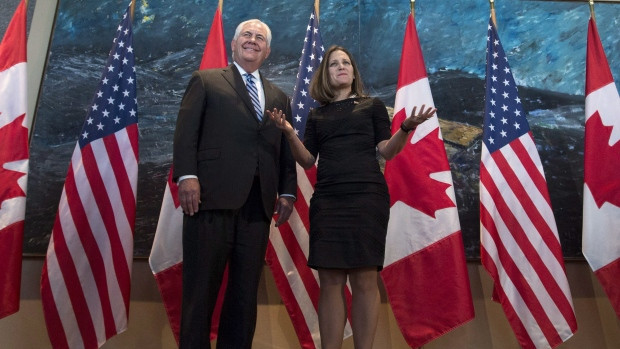 |
| Canadian Foreign Minister Chrystia Freeland and US Secretary of State Rex Tillerson will co-chair a conference on North Korea in Vancouver (Canadian Press). |
This meeting is particularly noteworthy because it marks the first time Canada has played an active mediating role in one of the world's most contentious hotspots.
Canada's return
Canada announced it would host an international conference on North Korea nearly a month ago – a time when the North Korean issue was almost at a standstill. Emergency meetings between the parties involved were constantly taking place, followed by increasingly harsh sanctions against North Korea.
However, North Korea's nuclear and missile tests continue to occur with increasing frequency and sophistication, capable of reaching the entire territory of the United States.
Analysts believe that North Korea is willing to accept a life of hardship in exchange for mastering nuclear and missile technology.
Therefore, there is considerable skepticism about Canada's involvement in the North Korean issue – a country that has been almost completely absent from the North Korean issue for many years.
Canada established diplomatic relations with North Korea in 2001 to support the "Sunshine Policy" of former South Korean President Kim Dae-jung. Since 2010, Canada has largely avoided deep involvement in the country's nuclear program after former Prime Minister Stephen Harper implemented a "control of engagement" policy regarding North Korea.
Canada's limited involvement in the North Korean issue is an advantage for it in its role as a mediator. With stable trade relations with several countries in the region, and virtually no military presence, Canada does not have the direct involvement in the North Korean issue that the United States, Japan, South Korea, or China have.
Therefore, the current time is considered opportune for Canada to rejoin the "North Korea dossier," hoping to bridge the gap between the relevant parties and work towards finding a solution for the Korean Peninsula based on international rules and laws.
Towards a diplomatic solution
At this conference in Vancouver, diplomats are expected to seek solutions to put more pressure on North Korea to force it back to the negotiating table.
While this is not a new approach, Canada believes that the most important thing is to build consensus within the international community on enforcing sanctions, so that solutions to pressure North Korea can be effective.
The current reality shows that UN sanctions against North Korea still have many loopholes, while unilateral US sanctions against North Korea, as well as Chinese businesses operating with North Korea, have had almost no impact on the progress of the country's missile and nuclear programs.
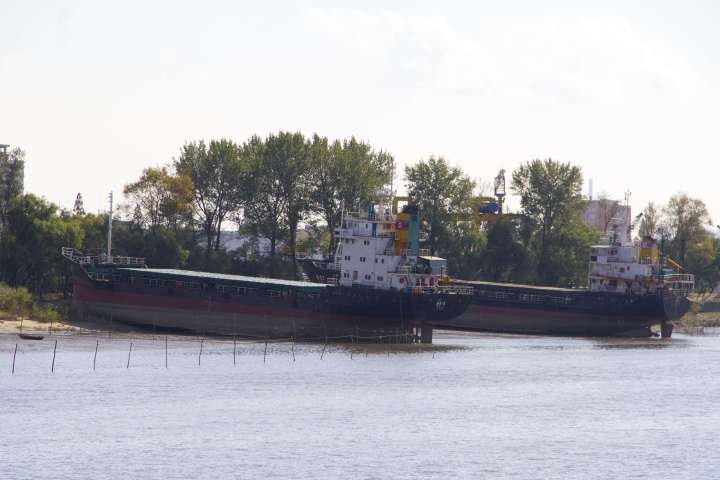 |
| The Vancouver conference will target ships secretly trading with North Korea (Getty). |
Therefore, one of the main topics of this conference is to consider blocking cargo ships from and to North Korea, and blockading sea routes that some ships still use to secretly trade with the country.
Diplomats believe that North Korea has consistently shown resilience in the face of international sanctions. However, intelligence reports indicate that the country's economy is in significant difficulty.
Even North Korea's agreement to resume dialogue with South Korea in early 2018 was believed to be driven by a need for a way out of its current predicament, especially as the harshest period of winter approached. This presented a favorable opportunity for the parties to pursue a solution to bring North Korea back to the negotiating table.
Analysts have repeatedly stated that, regardless of how the situation on the Korean Peninsula evolves, a diplomatic solution through negotiations remains the only viable option.
Nevertheless, there is still considerable skepticism about the outcome of this conference in Vancouver, given that Russia and China were not invited. To date, Canada has offered no explanation as to why two countries with significant roles in the North Korean issue – particularly China – were not included on the guest list.
Canadian Prime Minister Justin Trudeau likely recognized this shortcoming, which is why, two days before the conference, he pledged to continue dialogue with all parties, including Russia and China, and urged them to help ease current tensions on the Korean Peninsula.
A message to the White House
When representatives from 16 countries met in Vancouver to seek diplomatic solutions, the message they wanted to convey was aimed not only at North Korean leader Kim Jong-un but also at the White House, even though the US was a co-host of the conference.
Leading the US delegation at this conference is Secretary of State Rex Tillerson, who has consistently followed the "dovish" stance within President Donald Trump's administration.
Secretary of State Rex Tillerson has publicly supported the resumption of negotiations between the U.S. and North Korea, but his messages have frequently been "noisy" by conflicting statements from President Donald Trump himself, as well as some other members of the administration.
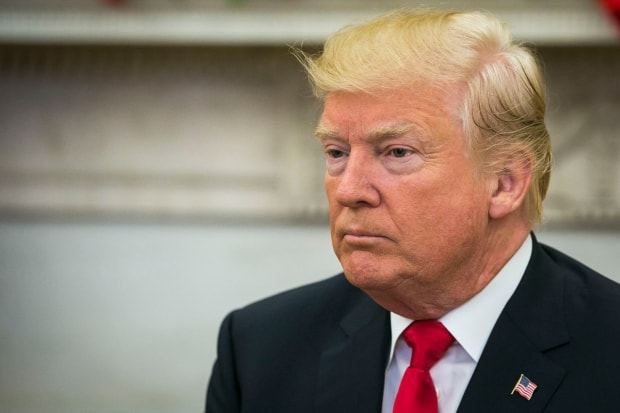 |
| The Vancouver conference also aimed to send a message to President Donald Trump about pursuing a diplomatic solution to the North Korea issue (Getty). |
For example, last December, when Tillerson proposed holding an unconditional dialogue with North Korea, the White House immediately issued a statement saying it was "not ready for dialogue due to Pyongyang's nuclear weapons tests."
Therefore, a unified international front aimed at a diplomatic solution would be the basis for the US Secretary of State to overcome internal disagreements and advance solutions within the US government regarding the North Korean issue.
When he took office as Prime Minister of Canada in 2015, Justin Trudeau sent a message to the international community that "Canada is back."
And there would be no more compelling proof of this message than if Canada could "make a difference" on the North Korean nuclear issue. Of course, Justin Trudeau is not under any illusions to expect a major breakthrough after just this conference in Vancouver.