

The reason India decisively eliminated the Spike super missile.
According to The Indian Express, the Indian Ministry of Defence has made a surprising decision to cancel the Spike NLOS long-range anti-tank missile deal with Israel.
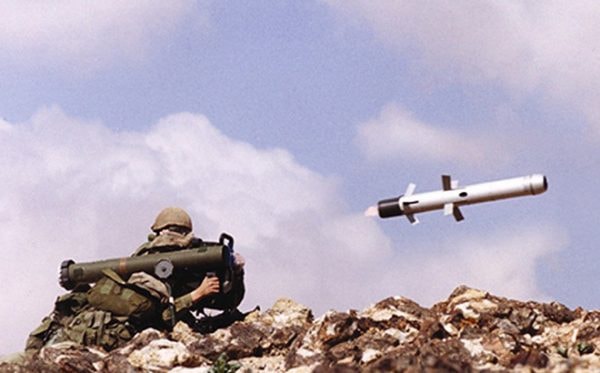 |
The Indian Ministry of Defence announced in a statement that it has decided to completely cancel the Spike NLOS long-range anti-tank missile deal with the Israeli manufacturer. India explained that the reason for this decision is the priority given to similar products manufactured domestically.
Although India has made the decision, Israel has yet to issue an official statement regarding the breakdown of the contract for at least 8,000 Spike missiles and more than 300 launchers under a $525 million deal. The contract was signed in 2014.
The Spike anti-tank missile is a versatile, multi-purpose electro-optical missile system that can be deployed on various combat platforms (land, air, and sea). It is manufactured by the Israeli defense company Rafael Advanced Defence.
This type of missile has a range of 25 km, weighs 71 kg, is very light, and is inexpensive to maintain and operate. Spike can carry various types of warheads: fragmentation, armor-piercing, smart, multi-purpose, etc.
It can integrate with satellite navigation systems or drones, and has its own target acquisition system combined with remote control. With these features, Israel's Spike has outperformed its American counterpart, the Javelin, developed by the American defense company Lockheed Martin Corp and Raytheon Co.
So, was the contract breakdown really due to New Delhi prioritizing domestic products, or were there other reasons?
The Jerusalem Post has conducted an analysis to uncover the true reasons behind this breakdown. India's announcement to cancel the Spike missile contract is most likely related to the quality and effectiveness of the weapon – an issue that South Korea has also repeatedly complained about after purchasing and deploying Spike missiles.
According to this source, the first drawback is a problem with the launch system's functionality. Each complex has four launch platforms, but the second missile cannot be launched until the first missile hits its target because it must be controlled independently.
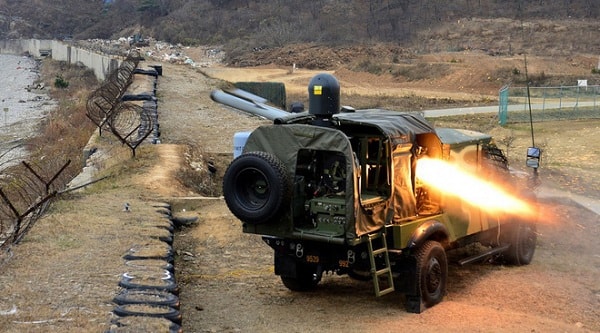 |
| A South Korean Spike missile is fired. |
Given Spike's attack method and the high speed and intensity of the assault, this is unacceptable. Even if these systems can launch missiles simultaneously, they must wait for those missiles to hit their targets before launching the next salvo. According to experts, this is insufficient to counter high-intensity, heavy enemy fire.
The second fundamental flaw of Israeli missiles is their inability to conduct attacks in foggy conditions. In such environments, the missiles' combat effectiveness is significantly reduced.
In the mountainous terrain along the Indian border with China and Pakistan, fog is a frequent occurrence. Under such conditions, Spike missiles would have extreme difficulty intercepting attacks from enemy forces positioned in caves within the rocky mountains.
After discovering a series of flaws in the Spike missile, the manufacturer made modifications and improvements to several systems. However, subsequent experiments showed that only about 50% of the missiles hit their targets in mountainous and foggy conditions.