

Quickly detect genuine vs. counterfeit goods using barcodes.
(Baonghean.vn) - To help buyers easily distinguish between genuine and counterfeit goods, they can check the barcode numbers printed on the products.
Barcode(Barcode)and meaning
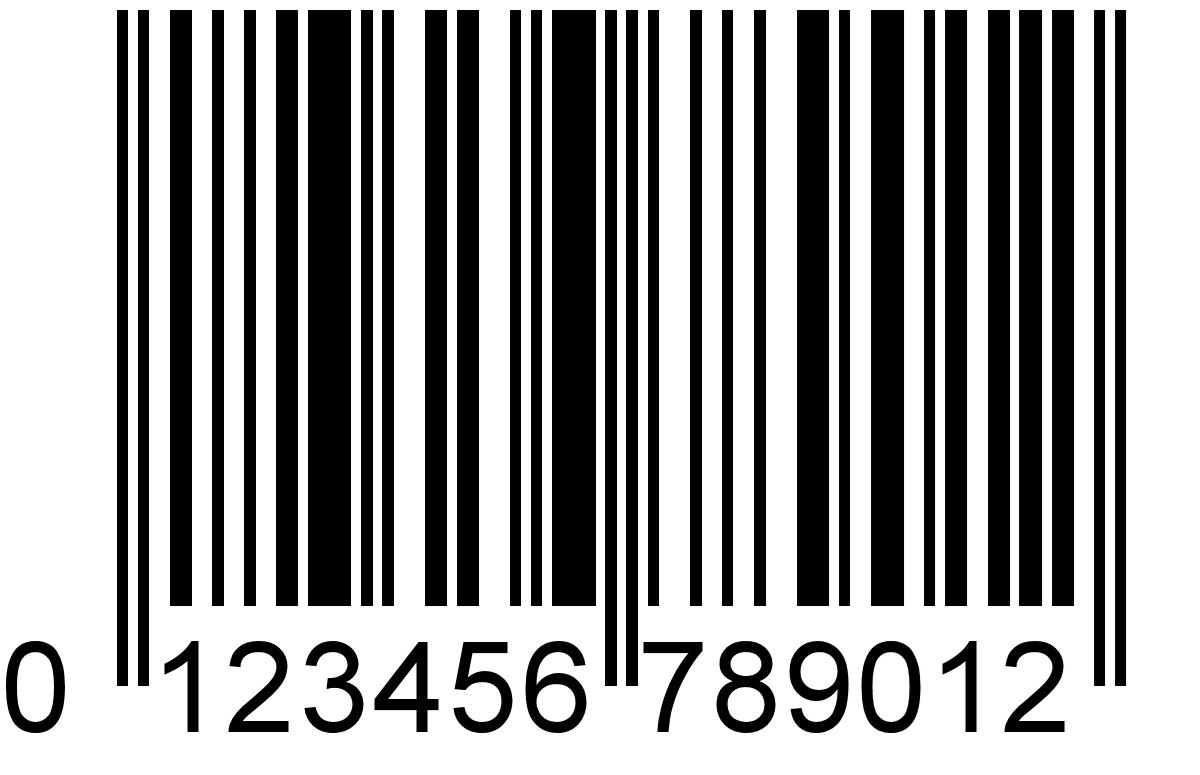 |
All goods circulating in the market need to have barcodes. Barcodes are like the "identity card" of goods, helping buyers quickly and accurately distinguish between different types of goods.
A product barcode consists of two parts: a product code for human identification; and a barcode for computers and scanners to read and input into a management system.
There are two common barcode standards: UPC-A and EAN.
The UPC-A standard is 100% American-made; this standard is specifically for the Canadian and US markets.
EAN standard: used for the European, Asian, and many other markets.
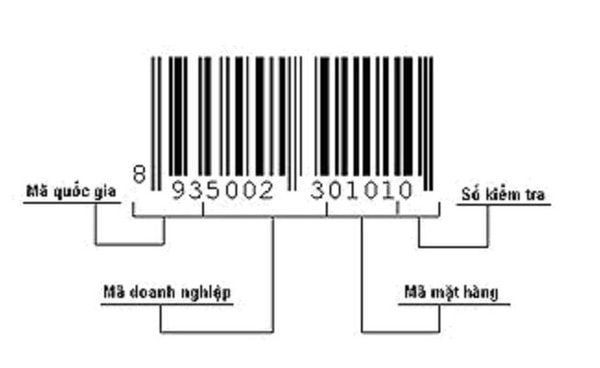
In Vietnam, most goods on the market use the EAN barcode standard of the International Article Numbering Organization (EAN International), with 13 digits divided into 4 groups:
Group 1: From left to right, the first three digits are the country (or territory) code.
Group 2: The following four digits are the business identification number.
Group 3: The following five digits are the product code.
Group 4: The last number (on the right) is the check digit.
Why can barcodes help verify and distinguish between genuine and counterfeit goods?
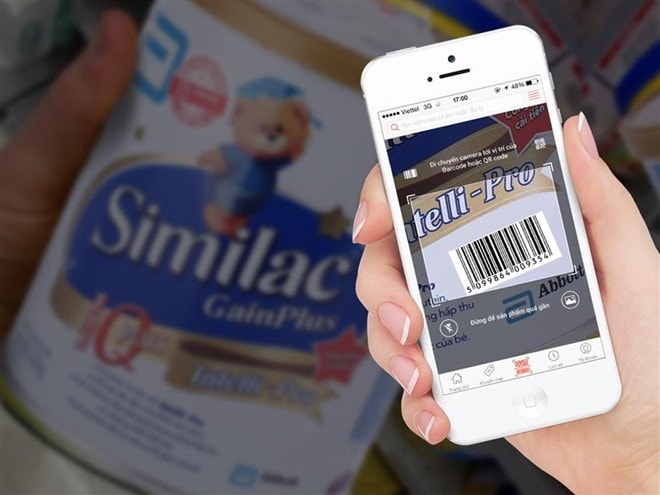
Barcodes are not something businesses can create themselves; they must be registered and licensed by the GS1 barcode organization. Businesses that do not register barcodes are engaging in non-transparent business practices.
Good barcode quality means that the barcode printed on the packaging is easily recognizable and quick to read. The barcode is a symbol of the product; a good product has good, complete labeling.- For a product to be considered trustworthy, its product information and company information must be complete and clear.
- How to calculate the check digit of an EAN-13 barcode.
- There are two types of barcodes: 8-digit and 13-digit codes, both of which are identified in the same way.
A simple mnemonic is "even numbers multiplied by three plus odd numbers," then add the last digit. If the sum ends in 0, it's genuine; if it's anything other than 0, it's fake.
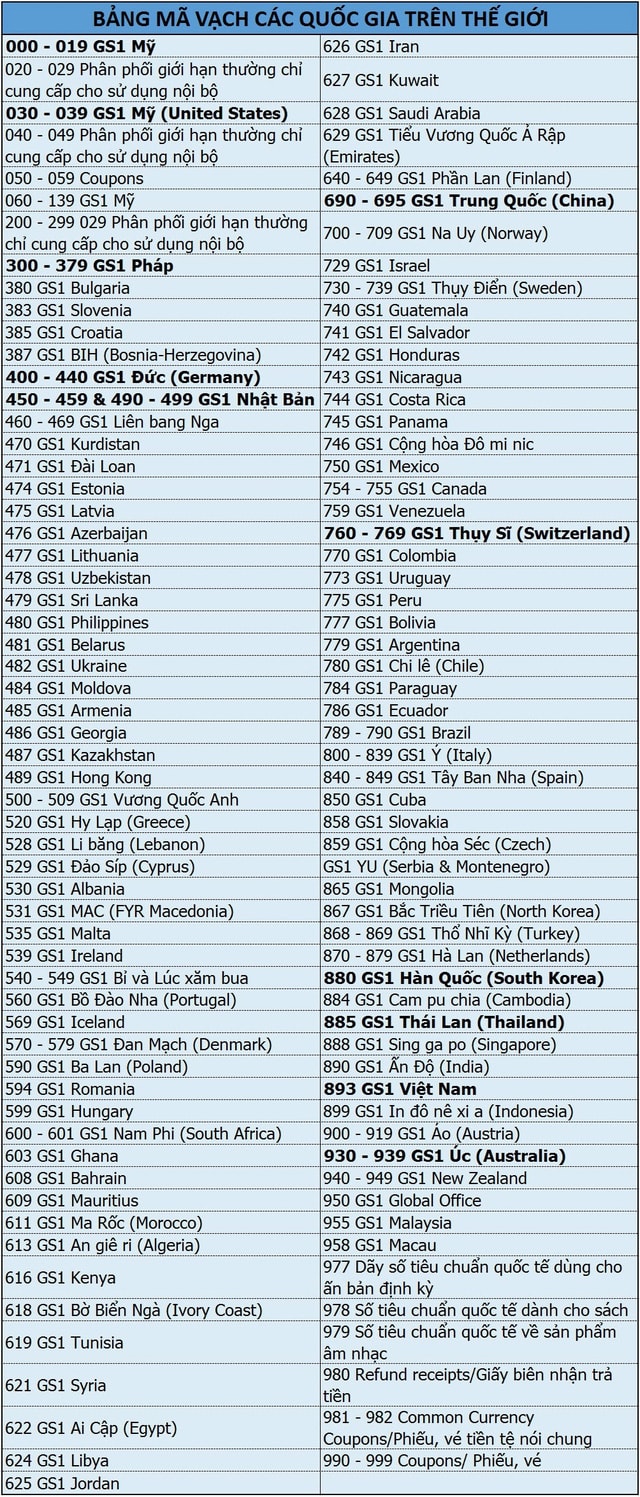
- First, to determine the origin of an item, simply look at the first three digits of the barcode. For example, if the first three digits are 893, this item was manufactured in Vietnam.If the barcode starts with 690, 691, 692, or 693, it's a Chinese product; 880 is for a Korean product; 885 is for a Thai product, and so on.
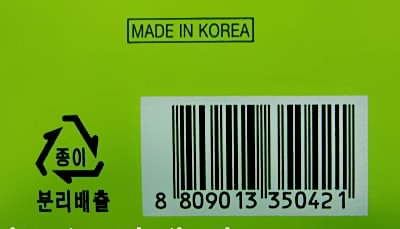
Next,Once you know the origin, to check for authenticity, take the sum of the even-numbered digits multiplied by 3 and add it to the sum of the odd-numbered digits (excluding the 13th digit - this is the check digit).
Example: How to calculate Korean barcodes (880)
Sum of the odd-numbered digits (excluding the last digit): A = 8 + 0 + 0 + 3 + 5 + 4 = 20
Sum of even-numbered digits: B = 8 + 9 + 1 + 3 + 0 + 2 = 23
We take: C = A + B*3 = 20 + 23*3 = 109
Then add this number to the 13th digit. If the last digit of the sum is 0, it's genuine; if the last digit of the sum is not 0, it's definitely fake.
D = C + 1 (the last digit) = 109 + 1 = 120. Since this number ends in 0, I can conclude that this is a genuine product.
Save the barcode numbers of different countries to your phone so you can easily check them when shopping.
 |
Some points to note:
Barcodes should be used to verify the accuracy of information printed on products when you are unsure. For products that do not state "Made in..., Made by..." or are labeled in an unreadable national language, using barcodes to verify the information is essential.
However, nothing is absolute. In reality, with increasingly sophisticated technology, many types of goods are counterfeited and imitated "from head to toe," without missing a single detail, and barcodes are no exception.
Therefore, in addition to barcodes, when inspecting goods, we need to pay attention to other factors such as checking invoices and documents, anti-counterfeiting stamps, supplementary labels in Vietnamese for imported goods, product appearance, gloss, beauty, sharp edges of borders, logos, packaging, content, layout, and product information must be detailed and clear.