

Tips for maximizing fuel efficiency in your car.
Gas costs are always a major headache for car owners. To minimize expenses, keep these tips in mind:
Ford has just revealed the results of a study on the link between driving skills and energy consumption and emissions during operation. The study showed that environmentally friendly driving skills can save up to 25% on fuel and reduce CO2 emissions compared to conventional driving methods. It's clear that even with just a few small changes in driving style, you can achieve a range of unexpected benefits.
Adam Smith, a leading expert on fuel efficiency at Ford in the Asia-Pacific region and currently the Director of Fuel Efficiency Engineering for the American automaker, shared that people often disregard the need to travel further to buy cheaper items, without realizing that the fuel wasted while driving is far more wasteful. Knowing how to drive smartly will help you save fuel, protect the environment, and ensure road safety.
Common habits can cost you a lot of money. Fuel efficiency in a car doesn't depend solely on the manufacturer, as many people think; driving style plays a significant role. Equip yourself with these tips to save fuel and be better for the environment.
1. Drive slowly.
|

Rapid acceleration and sudden braking are the main reasons for increased fuel consumption. Therefore, except in emergency situations, you should accelerate gently and brake smoothly from a distance. Additionally, avoiding lane changes unnecessarily will help reduce fuel consumption and even extend the lifespan of your tires and brakes.
2. Slow down.
Driving at high speeds consumes more fuel. Specifically, 10-15% of fuel can be saved by reducing your speed from 100 km/h to 90 km/h. Additionally, maintaining a steady speed while driving helps avoid wasting fuel injected into the engine when accelerating aggressively. On highways, a cruise control system is extremely useful for maintaining a stable speed and saving fuel.
3. Do not start the engine while waiting.
Modern engines no longer require a warm-up period, so you can start the car and drive immediately. Leaving the engine idling wastes fuel and produces more emissions. If the car is stopped for more than 30 seconds, you should turn off the engine.
4. Remove unnecessary items.
The lighter your car is, the less fuel it consumes. Therefore, remove unnecessary items from the trunk or in the car, keeping only essentials such as a first-aid kit, tools, jumper cables, or a small jack.
5. Reduce wind resistance
Car manufacturers are constantly striving to optimize designs to reduce wind resistance and save fuel. Therefore, while driving, you should arrange everything in the trunk or rear of the car, and avoid placing large items on the roof. Additionally, wind resistance can be reduced by closing the sunroof and side windows.
6. Turn on the air conditioner at the right time.
If the temperature isn't too high, slightly open the windows instead of wasting 15% on fuel by turning on the air conditioner. However, if you're traveling at speeds exceeding 90 km/h, closing the windows and turning on the air conditioner is a better option to improve aerodynamics, and the energy generated from the high engine RPM will power the air conditioner effectively.
7. Utilize the Cruise Control system to manage your journey.
This system not only assists you when driving at high speeds, but also enhances fuel efficiency by maintaining a stable speed and reducing fuel consumption during acceleration.
8. Combine multiple tasks at once.
|
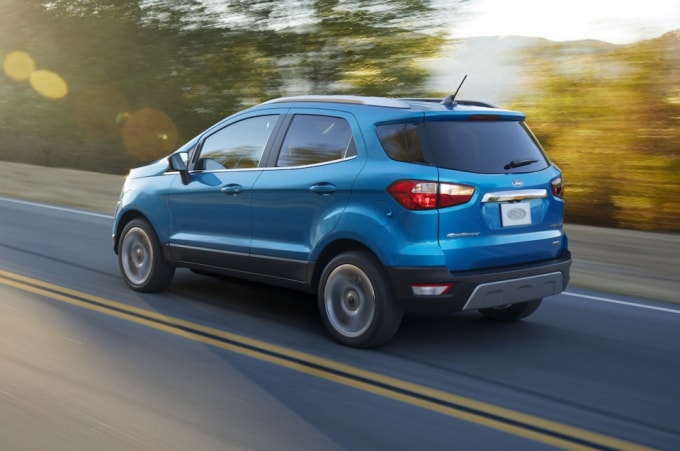
If possible, arrange your schedule so you can complete tasks together along a shared route. Long-distance travel is generally more economical than shorter trips.
9. Proper maintenance
Unsurprisingly, vehicle maintenance is directly related to fuel consumption, as optimally functioning vehicles consume the least amount of fuel. Additionally, wheel alignment, exhaust system repairs, and replacement of fuel filters and spark plugs are crucial. Proper maintenance combined with good driving habits can save you up to 25% on fuel costs.
10. Repair engine faults.
Thoroughly fixing any faults can reduce fuel consumption by 4%. Even simply replacing a faulty oxygen sensor can save you up to 40% on fuel.
11. Inflate tires to the correct standard pressure.
Proper tire pressure offers drivers many benefits, from increased safety and precise driving to improved durability and fuel efficiency. Conversely, over-pressure tires will affect traction and lifespan. Check the owner's manual, the driver's side door, the door pillar, or the glove compartment for the correct pressure.
12. Use the correct type of engine oil as recommended.
Manufacturers usually suggest the appropriate type of oil in the owner's manual. Using the wrong type will result in suboptimal lubrication and an additional 2% fuel consumption.