

New regulations on the origin of goods.
Goods are considered to be of pure origin or wholly produced within the territory of a country, group of countries, or territory if they meet certain conditions...
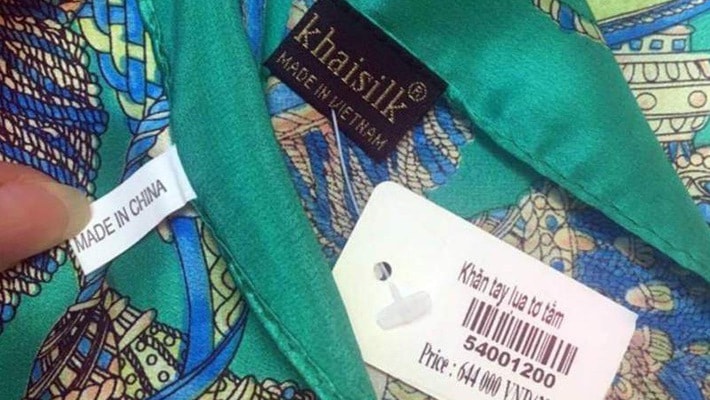 |
| Packaging and wrapping materials used for the transport and delivery of goods will not be taken into account when determining the origin of those goods. |
The government has just issued a Decree detailing the Law on Foreign Trade Management regarding the origin of goods.
Specifically, the decree stipulates that goods are considered to have originating status when they fall into one of the following categories: Goods of pure origin or wholly produced in a country, group of countries, or territory as prescribed; Goods of non-pure origin or not wholly produced in a country, group of countries, or territory, but meeting the prescribed requirements.
Goods are considered to be of pure origin or wholly produced within the territory of a country, group of countries, or territory in the following cases:
- Crops and crop products that are grown and harvested in that country, group of countries, or territory.
- Animals that live and are born and raised in that particular country, group of countries, or territory.
- Products from live animals as mentioned in point 2 above.
- Products obtained from hunting, trapping, fishing, farming, gathering, or harvesting in that country, group of countries, or territory.
- Minerals and naturally occurring substances, not listed in points 1 to 4, extracted or taken from the land, water, seabed or subsoil of a country, group of countries, or territory.
- Products derived from water, seabed, or subsoil outside the territorial waters of a country, group of countries, or territory, provided that such country, group of countries, or territory has the right to exploit the water, seabed, and subsoil under international law.
- Products caught and other seafood harvested from the high seas by vessels registered in that country, group of countries, or territory and permitted to fly the flag of that country, group of countries, or territory.
- Products processed or manufactured on board the vessel from the products referred to in point 7 are registered in that country, group of countries, or territory and are permitted to fly the flag of that country, group of countries, or territory.
- Items obtained during production or consumption in that country, group of countries, or territory that no longer perform their original function, cannot be repaired or restored, and can only be discarded, used as raw materials, or used for recycling purposes.
- Goods obtained or produced from the products listed in points 1 to 9 in that country, group of countries, or territory.
The decree stipulates that goods are considered to be of non-pure origin or not wholly produced within the territory of a country, group of countries, or territory if they meet the origin criteria specified in the List of Specific Rules for Goods prescribed by the Ministry of Industry and Trade.
The decree states that, in cases where goods are subject to the "change in tariff classification" criterion, packaging materials and containers used for retail sale, when classified together with the goods, are excluded from non-originating materials used in the production of the goods.
In cases where the "percentage of value" criterion applies, the value of packaging and wrapping materials containing goods intended for retail sale is considered an integral part of the goods and is taken into account when determining the origin of the goods.
Packaging and wrapping materials used for the transport and delivery of goods will not be taken into account when determining the origin of those goods.
Documents introducing and instructing on the use of goods; accessories, spare parts, and tools accompanying the goods, in appropriate types and quantities, are considered to have the same origin as the goods themselves.
Unassembled or disassembled goods imported in multiple shipments due to transport or production conditions preventing importation in a single shipment, if requested by the importer, shall have the origin of the goods in each shipment deemed to be the same as the origin of the goods in that shipment.
Traders applying for a certificate of origin for the first time must register their business profile with the agency or organization issuing the certificate of origin and will only be considered for the issuance of a certificate of origin after their business profile has been fully and validly registered.