

The man stands on "golden hands".
(Baonghean.vn) - Admiration and reverence are two words that many people in Hamlet 5, Boi Son Commune (Do Luong District) use to describe Mr. Nguyen Ba Tan (born in 1958). He is known as a man with "golden hands," both literally and figuratively.
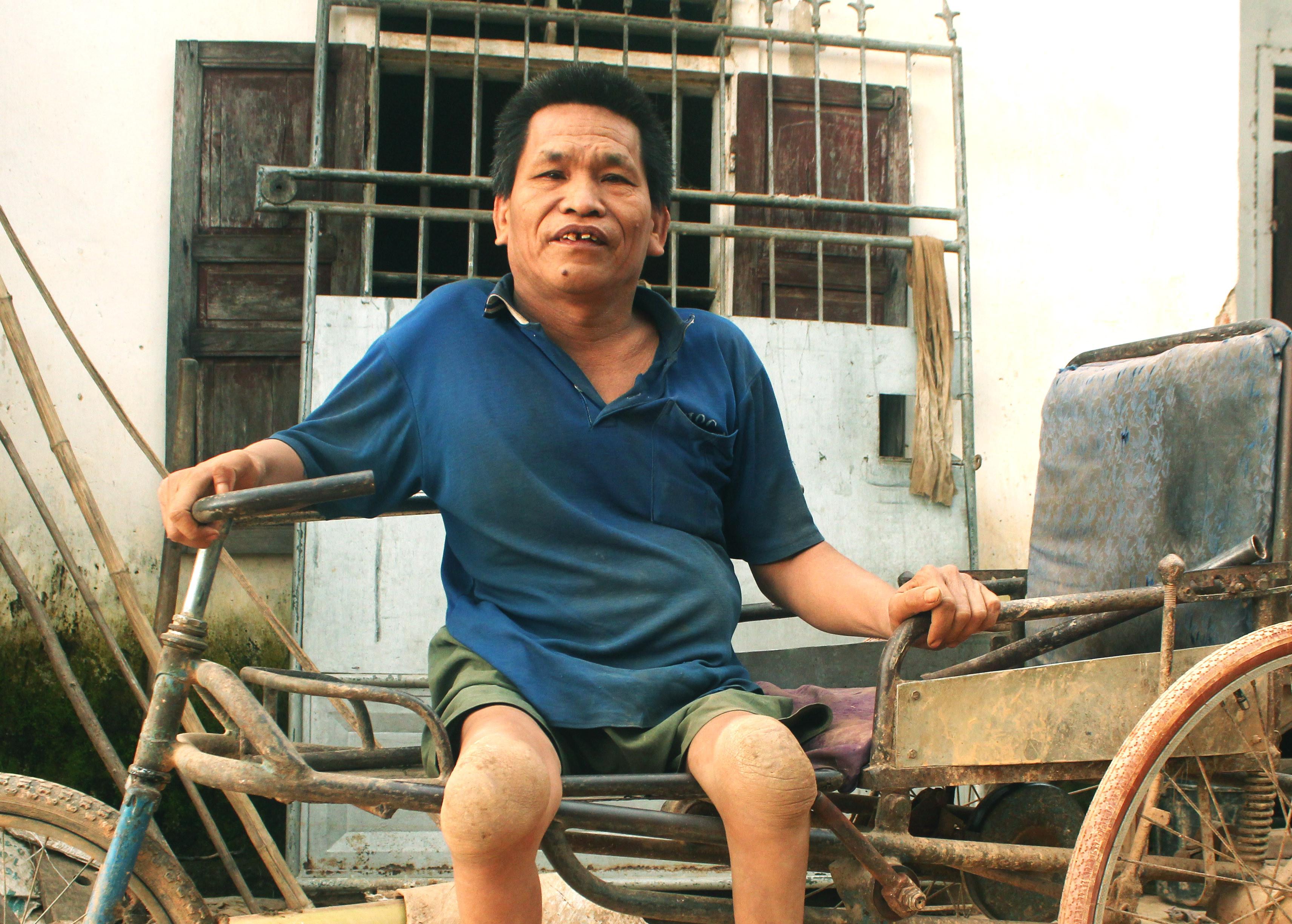 |
| The old wheelchair has been Mr. Tan's constant companion through countless hardships. Photo: Le Thao |
Learn to walk using your hands.
In a small, single-story house measuring only 15 square meters.2With damp ground and mud stains around the walls from the flood in the latter half of last year, the sound of the flour mill continued steadily, mingling with the whirring of the sewing machine.
Hearing the sound of visitors, Mr. Tan pushed open the creaky old wooden door and quickly slipped his hands into his yellowed, mud-colored rubber sandals. He put on the sandals with his hands. His legs were curled up, crossed in a V shape. He crawled step by step, using his hands to put on the sandals, "carrying the burden" for his paralyzed, calloused legs.
Pouring a bowl of warm green tea, Mr. Tan emotionally recounted his life of hardship since birth.
He was born in 1958. When he was just over a year old, taking his first steps, he developed a high fever that lasted for many days. Initially, his parents thought it was normal for children to have a fever, but after many days without improvement, his father panicked and rushed him to Bach Mai Hospital in Hanoi. On his old bicycle, his father frantically pedaled, carrying his young son for hundreds of kilometers, hoping for timely treatment. But it was all too late. Adding to their extreme poverty, relying on scraps of cassava and sweet potatoes for sustenance, where would they find the money for treatment? Everyone watched with tears in their eyes as their son's legs gradually withered and became paralyzed.
Back then, Tan was too young to understand what had happened and what would happen around him. Then Tan grew up and had to accept a life where he had legs but couldn't walk.
Despite being paralyzed, Tan always dreamed of going to school, and back then, a wheelchair was a luxury he couldn't afford. Therefore, his parents took turns carrying him to school every day. By the time he reached high school, the school was too far away, and the already difficult journey became even harder, so he reluctantly dropped out and stayed home.
Overcoming fate
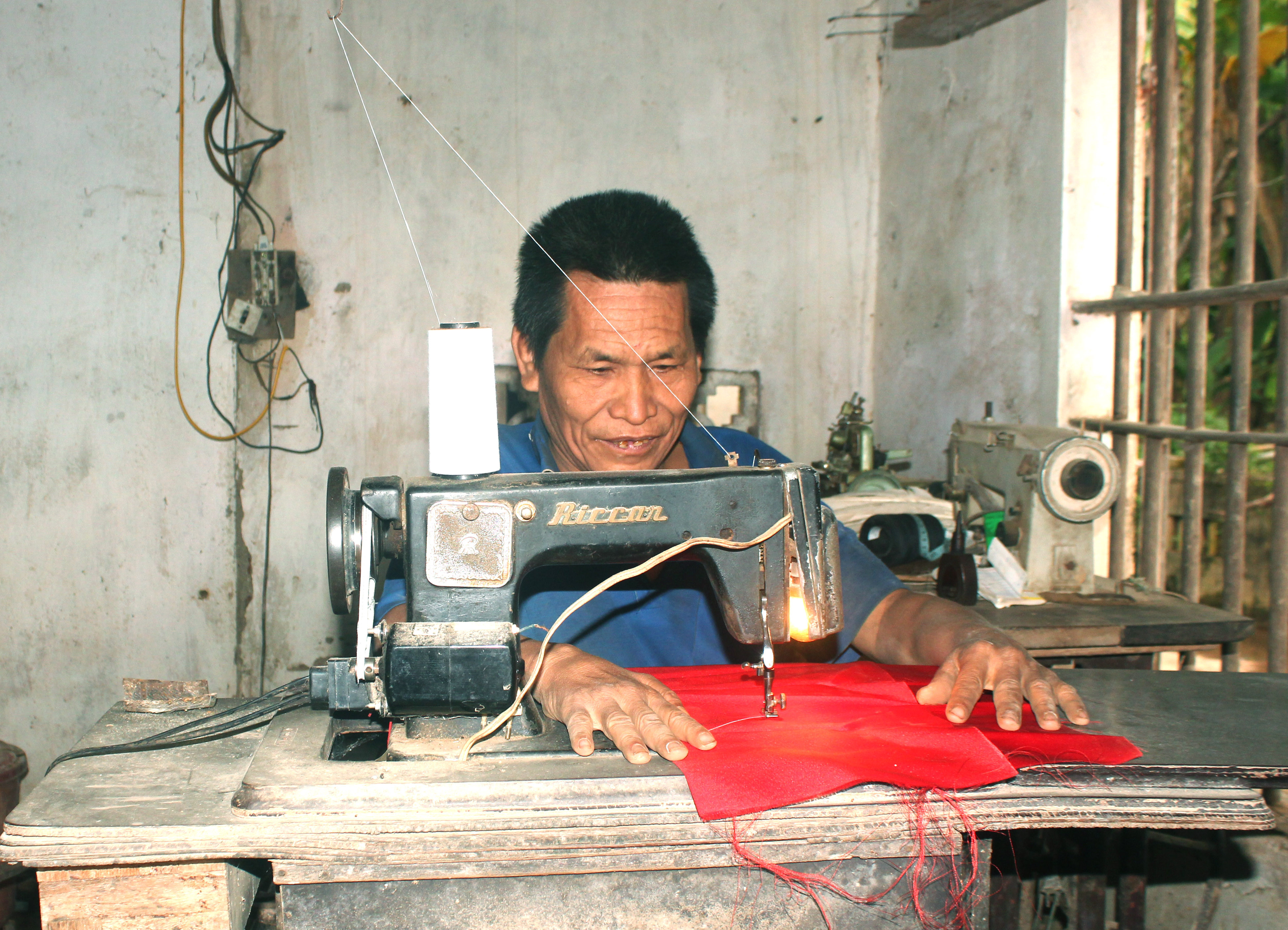 |
| Through self-study, Mr. Tan became a skilled tailor in the village. Photo: Le Thao |
Although he couldn't walk on two legs like normal people, Mr. Tan's spirit of learning and his determination to overcome difficulties never faded. At the age of eight, he taught himself how to weave. While crawling over to his neighbor's house to play, he saw them whittling bamboo sticks and splitting rattan fibers, so he went home and learned how to do it himself. Gradually, he wove baskets, trays, and other containers to sell at the market to help his parents.
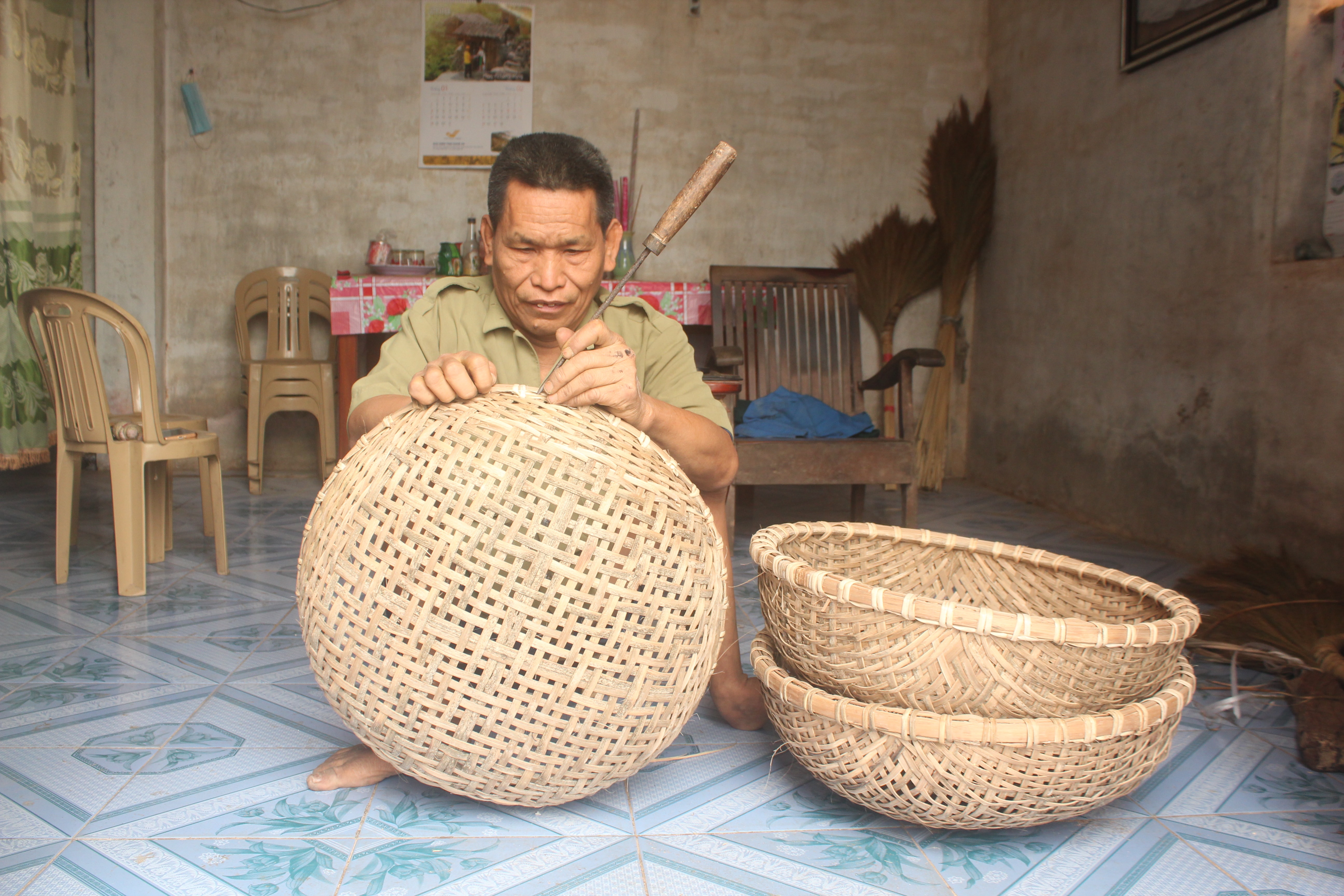 |
| Mr. Tan started learning the craft of weaving at the age of 8, and he still does it today when customers request it. Photo: Le Thao |
At the age of 25, he learned tailoring. Initially, he learned from tailors near his home, but they gradually drove him away for fear of losing their skills. He then resorted to weaving baskets and other containers to earn money to buy books and teach himself tailoring. At first, he did small tasks like attaching buttons and repairing zippers. On some days, when he ran out of tools to learn with, he would crawl on his hands and knees to tailor shops to beg for materials to practice with.
Seeing his passion for tailoring, his parents borrowed money from relatives to buy him a sewing machine, hoping he could learn a trade. Thanks to this, his skills improved steadily, and more and more people came to him to have shirts made or trousers altered. This gave him another reason to live happily.
In 1994, his younger brother, Nguyen Ba Nghia, bought him a hand-operated wheelchair. The wheelchair became like a supportive friend: “Since I got the wheelchair, I’ve been so happy, madam. I can go down to the district myself to get supplies for sewing instead of borrowing or begging from other shops. Now there are many types of wheelchairs, beautiful and convenient. Everyone tells me to throw away my old, rickety one, but I consider it a friend and can’t get rid of it. Buying a new wheelchair costs money, but I’ll use that money for my children to get an education,” Mr. Nguyen Ba Tan said with a contented smile.
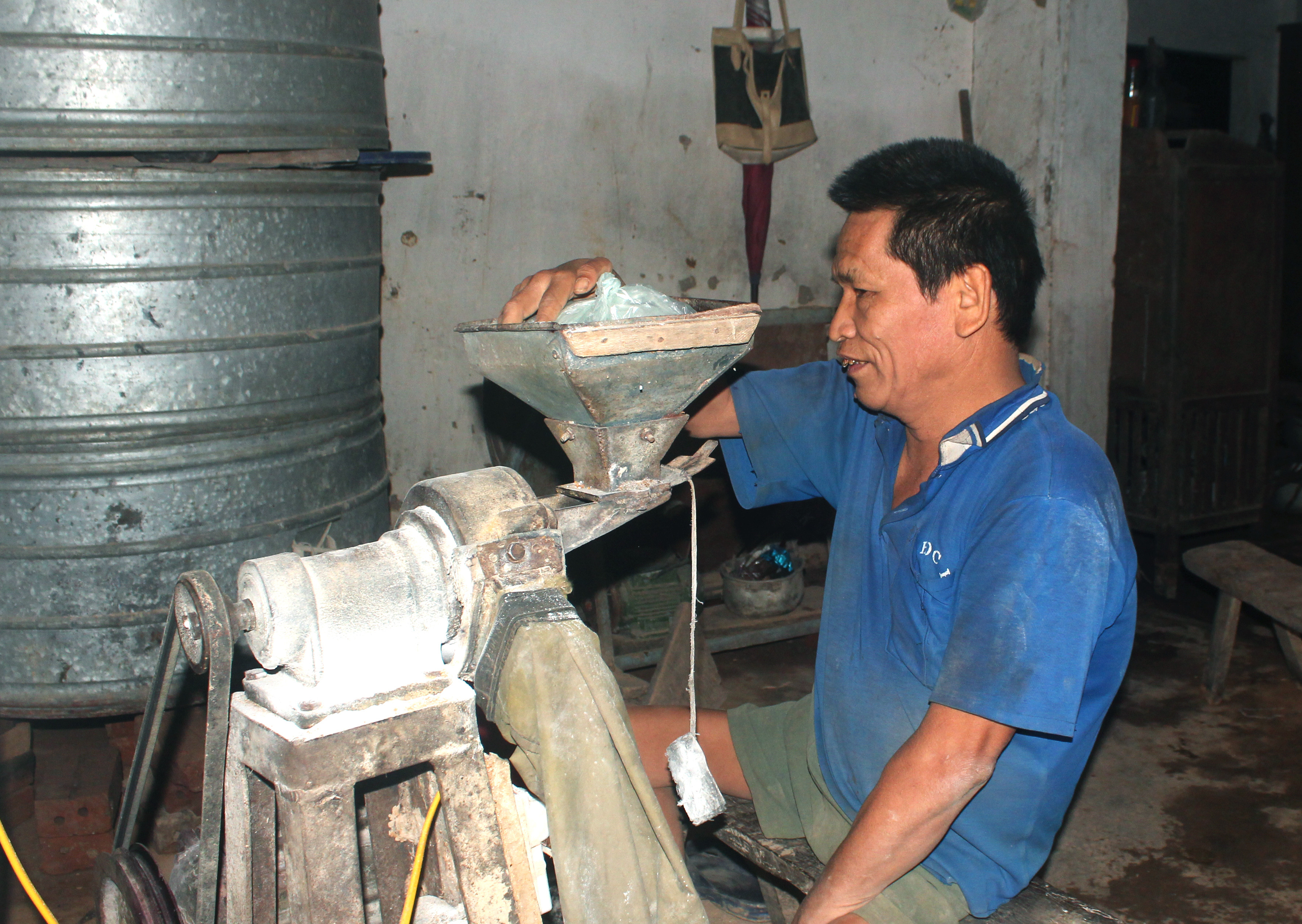 |
| The villagers call Mr. Tan a multi-talented man. He can sew, weave, make incense, and even started a rice milling business. Photo: Le Thao |
Having mastered sewing and acquired a vehicle in 1994, Mr. Tan began learning the trade of grinding dry flour. With his savings and a loan of 1.5 million dong from neighbors, he bought a flour mill. Villagers no longer had to travel far; they could simply go to Mr. Tan's house to get flour for their chickens, ducks, or for making cakes. If the flour wasn't sifted properly, he would carefully clean it before grinding. His customers were very satisfied.
Besides weaving, sewing, and grinding flour, he also makes incense. In 2000, after watching a friend make incense, he went home and bought books to teach himself. During holidays and festivals, people come to grind flour for cakes and conveniently buy incense. He focuses on choosing natural ingredients for his incense, so he is well-liked by the locals. "Making incense helps me recoup my investment, but it's an extra job and brings me joy. I do this work to help myself and also help my neighbors," Mr. Tan shared.
An exemplary husband and father.
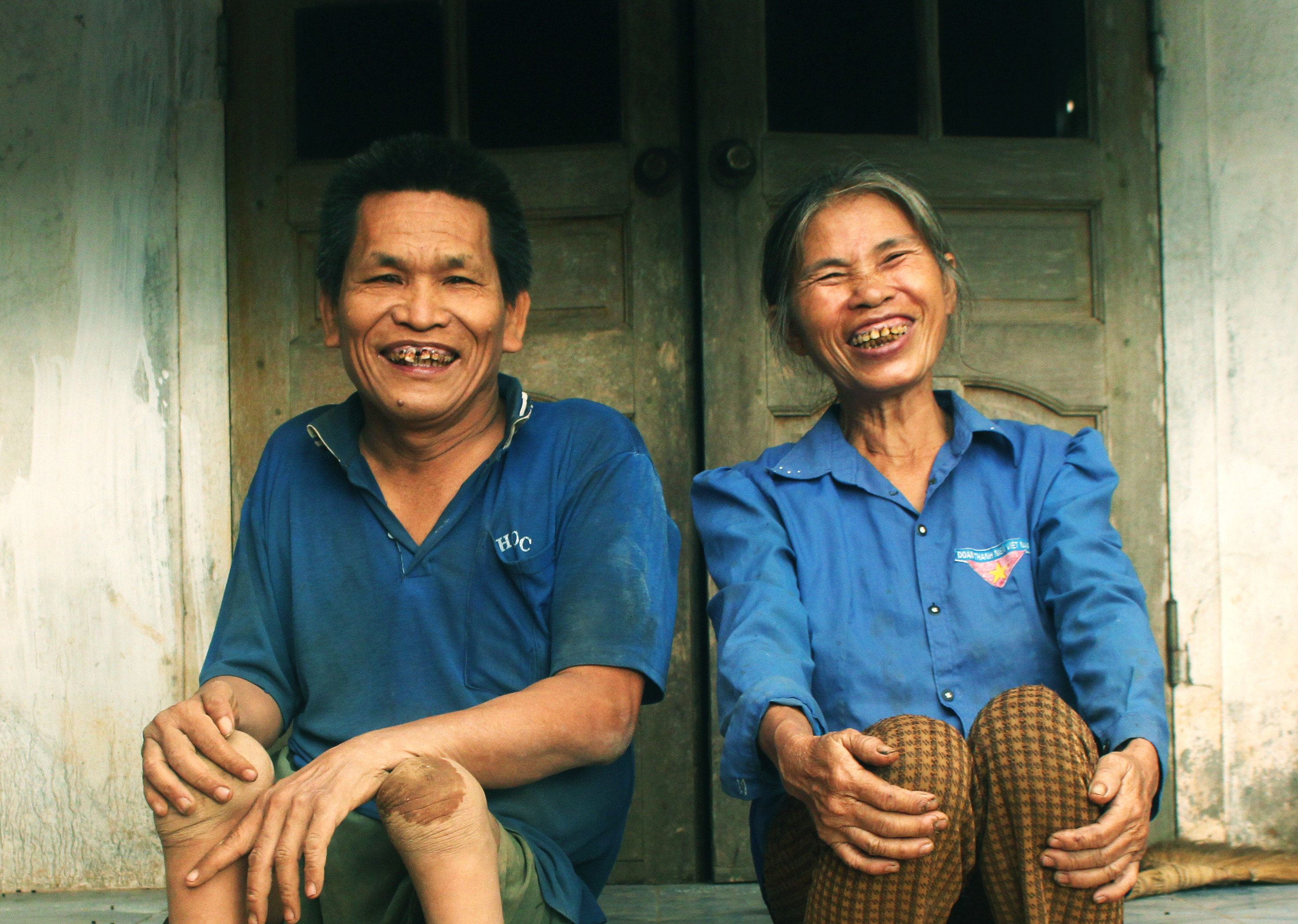 |
| A happy moment for Mr. Tan and his wife. Photo: Le Thao |
I met Mr. Tan's wife, Mrs. Luong Thi Tu (born in 1957), as she was returning home with a load of grass. The couple looked at each other with eyes and smiles full of happiness, making outsiders sense the great love between them.
In 1992, while visiting Mr. Tan's house to buy a basket for grass, Mrs. Tu saw the man, despite being paralyzed in both legs, skillfully weaving bamboo and rattan. She fell in love with him. But her love was forbidden by her family. "Back then, my brother told me that if I were to marry, I should marry a normal person, not a cripple," she recalled, wiping away a tear. But having fallen in love with this talented and determined man, Luong Thi Tu resolutely decided to take her own life. The wedding was without a celebratory meal or blessings; instead, it was met with the disapproval of her own children and siblings.
Since their marriage, understanding his wife's needs, Mr. Tan always strived to nurture their family. He helped her with tasks like tending chickens and pigs, and cooking meals. He even learned how to brew rice wine to help her. During harvest season, unable to carry rice to the fields, he would sit down next to the threshing machine, handing bundles of rice to his wife, relieving her of the need to bend down and further aching her back.
The result of that beautiful love is three daughters who are gentle, well-behaved, and excellent students, consistently achieving top grades for many years, receiving commendations from Nghe An province, and gaining admission to top universities nationwide.
“One day, Nguyen (my youngest daughter) came home from school and saw me cutting bananas for the chickens. She offered to do it, but I told her she was tired from school. I told her to rest and let me finish. I love her so much, and I'm happy to have my children,” the man said, his face brightening in the small house.
The day he received the news that his eldest daughter had been accepted into the College of Economics, he personally wheeled his rickety cart more than 10 kilometers to the district to complete the enrollment paperwork. It was raining, the roads were muddy, and he struggled to push the cart. His hands ached when he returned home that evening, but he was happy because his daughter was doing well in her studies and had grown into a successful person. Then his second daughter was accepted into the Academy of Finance, and his third daughter into Hanoi University of Pharmacy. Again, using the same old cart, he wheeled it more than 10 kilometers to complete the enrollment paperwork for them.
He was planning to have his youngest daughter learn electrical repair when she came home. He said that having another skill meant having a new life, and that with a trade, his wife and children could have a warmer, more comfortable life.
After saying goodbye to the simple meal of vegetable soup and pickled cucumbers with his family, I returned home carrying with me warmth and admiration for the man with the radiant smile, whose unwavering determination rested firmly on his own two hands.