

Facebook is considering charging users.
In the early hours of April 11th, the founder of Facebook had to answer to the US Congress regarding the scandal affecting the results of the 2017 election, along with many other challenging questions.
The hearing on "Privacy on Facebook, Social Media, and Data Use and Utilization" featured Republican Senate Judiciary Committee Chairman Chuck Grassley and Republican Senate Commerce, Science, and Transportation Committee Chairman John Thune.
This was the biggest and most stressful challenge of Mark Zuckerberg's life, according to a number of major news outlets before the Facebook CEO testified.
|
| CEO Mark Zuckerberg faced many tough questions from the US Senate. (Photo: [Image caption])AFP |
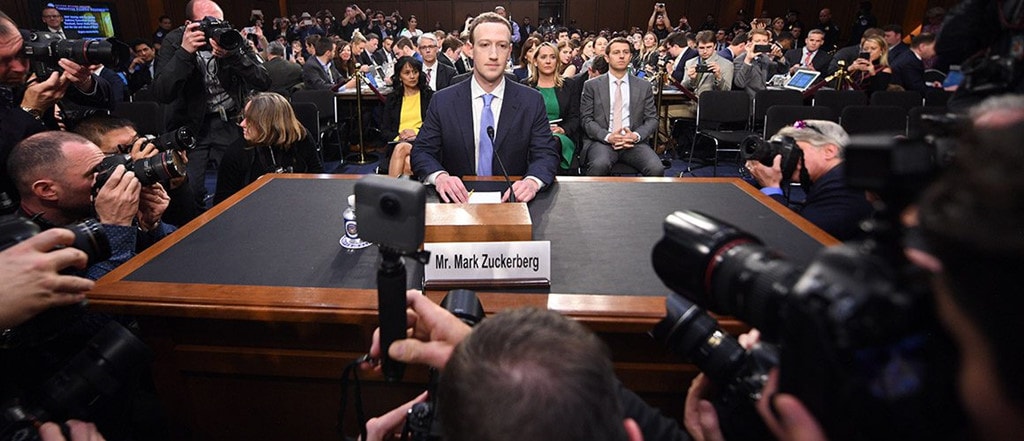
Here, the CEO of Facebook will have to honestly answer any questions about the leak of 87 million user data related to Cambridge Analytica. The head of the world's largest social network will also have to undergo another hearing at 10 PM tonight in the US House of Representatives.
"In an hour, I will be facing the Senate about how Facebook needs to take a broader view of our responsibilities – not just to build tools, but to ensure those tools are used effectively. I will do everything I can to make Facebook a place where people can be closer to those they care about, and to ensure it is a positive force in the world," the Facebook CEO wrote on his personal page before "entering the battle."
In fact, the hearing lasted nearly four hours, including a series of questions from Senators, both major and minor. Below are the most important parts of the Q&A:
Mark Zuckerberg:Facebookstore everythingIn response to a question from the Senate, Mark Zuckerberg stated that Facebook divides content into two categories: content that users voluntarily upload and share, and another category that they have complete control over. The "controlled" category includes data related to applications and advertising.
"How much data do you (Facebook) store? Do you store everything we click on? Is it stored anywhere else?" Senator Fischer pressed.
Mark Zuckerberg admitted: "Yes, we store data."
Senator Hassan stated that he had heard Mark and Facebook apologize too many times, but the same thing kept happening. He was concerned that Facebook had not made a serious investment in protecting this fragile data.
In response to the question, Mark stated that the incident had deeply hurt the company. The priority now is rebuilding people's trust in Facebook.
They sold the information even though they didn't read it clearly.Senator Richard Blumenthal presented a document containing a series of terms of service that Aleksandr Kogan, a Cambridge University researcher, used to spark the Facebook scandal. Among them was the detail that "Facebook was informed that Kogan might sell information obtained from Facebook."
"Have you read this agreement?" Richard Blumenthal questioned.
Facebook's CEO honestly admitted, "I didn't read it all." So, does Zuckerberg's statement of "not knowing" contradict Facebook's "terms of service"? - Richard Blumenthal further questioned.
The senator argued that Facebook had "deliberately turned a blind eye" when it saw that Kogan had violated its terms. "Mr. Zuckerberg and Facebook have profited from this very security issue," Richard Blumenthal asserted.
"We have created a system that is not good enough.""How is it that 87 million Facebook users had their personal information shared while only 300,000 accounts voluntarily shared their information?" asked Senator Jerry Moran.
Mark Zuckerberg responded: "Facebook's position is that we did not violate that agreement. The app only works based on what we designed; the problem is that we didn't make the system good enough."
"Facebook doesn't produce any content," the Facebook CEO replied to Senator Dan Sullivan's question about whether Facebook "is a technology company or a giant publisher."
Mark Zuckerberg asserted that the most important thing right now is to ensure that no force uses Facebook to interfere in the upcoming midterm elections.
Were users' images and information used?Senator Richard J. Durbin asked Mr. Zuckerberg, "Would you be comfortable sharing the name of the hotel you stayed at the night before, or would you be comfortable sharing the names of the people you've messaged this week?"
"No. I probably wouldn't choose to do that publicly here," Mr. Zuckerberg said.
Mr. Durbin said: "I think that's all that can be done. Your privacy. The limits of your privacy. And how much of modern American data—names, quotes, connections of people around the world—you've sold off."
|
| The hundred-page document that Mark Zuckerberg carried with him to "take the blows." Photo: AP. |
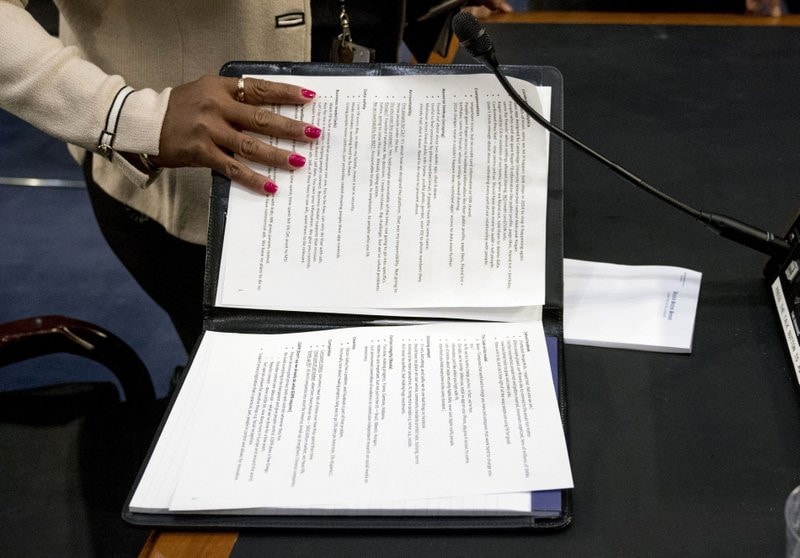
According to the photo fromAPIn a nearly hundred-page memo, Mark Zuckerberg admitted he had made mistakes and that Facebook was facing a "major challenge," but also that he would address it.
In this document, Mark Zuckerberg also provides answers to questions about privacy, election interference, and issues of "diversity," "competition," and European data privacy rules that will come into effect next month.
The document even mentions Tim Cook, Apple's CEO, who recently criticized Facebook. It emphasizes that "there are many stories about apps abusing Apple's data, but Apple never informs people about it."
Political advertisers are being forced to reveal their identities.Zuckerberg responded to a question from Senator Sheldon Whitehouse, a Democrat from Rhode Island, regarding "how a company can verify the true beneficiaries of a website that publishes political materials."
Mark Zuckerberg said that the company "doesn't necessarily need to know if someone sets up a business that runs politically motivated ads in the U.S."
However, Facebook will still find a way to manage this issue. "Facebook politicians" will have to publicly disclose their identities and physical addresses. Facebook will verify this by requiring government-issued identification and sending a special verification code to their homes.
This means that companies like Cambridge Analytica will have to disclose information more strictly to Facebook, and political advertisements will be subject to more careful review by Facebook in the future.
|
| Mark Zuckerberg has been practicing intensely for days to face US lawmakers. (Photo: [Image])Getty |
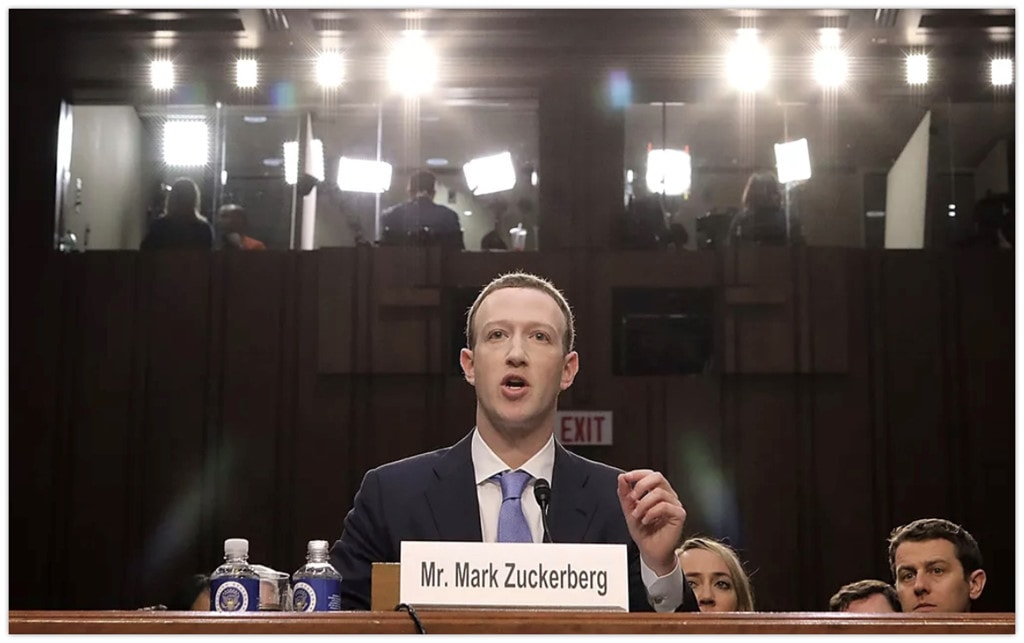
Senator Lindsey Graham questioned, "Who is your biggest competitor?" The Facebook CEO struggled to answer the question, naming Google, Apple, Amazon, and Microsoft as Facebook's biggest competitors in different ways.
"If I buy a Ford, and it doesn't work well, I don't like it, I can buy a Chevrolet. If I'm unhappy with Facebook, what equivalent product could I sign up for?" Graham asked.
"I'm not talking about types. I'm talking about the real competition you face. Because car companies face a lot of competition. They make a car that's faulty, the news spreads worldwide, people stop buying that car, they buy another one. So is there an alternative to Facebook?", Senator Lindsey Graham added.
Zuckerberg gave a lengthy response about how the "average American uses eight different apps" to connect with their friends, attempting to make Facebook one of those apps.
Shortly after, Graham interrupted and asked Zuckerberg what he would think if Facebook were considered a monopoly.
"I certainly don't feel that way," Zuckerberg replied. The entire hall erupted in laughter after Mark Zuckerberg's answer.
Many senators have asked Zuckerberg whether he could consider a paid, ad-free version of Facebook in the future. That is, users could pay to use Facebook and no longer be treated as "commodities" to generate profit for the platform.
Zuckerberg said he doesn't rule out the possibility of Facebook launching a paid version. The Facebook CEO assured Congressman Orrin Hatch that there will always be a free version of Facebook, and that the paid option is being considered by the social network.