

The price of a US military escalation in Syria.
(Baonghean) - The images dominating American news pages are nothing short of a nightmare. Children gasping for breath, their chests heaving with pain, foaming at the mouth… these images come from Douma, one of the last strongholds of the opposition rebels fighting against President Assad's government to reclaim Syrian territory.
 |
| President Donald Trump. Photo: Reuters |
And then, as if in chorus, heart-wrenching cries filled the mainstream American news channels, along with self-righteous rhetoric in lengthy articles, all calling for a new war in Syria under the guise of moral anger but with the ultimate goal of regime change.
On April 9th, just days after announcing the US withdrawal from the Syrian "stage," President Donald Trump criticized the Bashar al-Assad regime in Syria and its allies Russia and Iran, while promising a swift and forceful military response to the recent suspected chemical weapons attack.
At the same time, the office of Michael Cohen, Trump's personal lawyer, was raided by the Federal Bureau of Investigation (FBI). Meanwhile, Israeli planes attacked the T4 base of Syrian and Russian forces, while France and Britain seemed to be responding to calls for war.
According to AsiaTimes, it is precisely in moments like these, when the emotional fog is being relentlessly woven by powerful political and media forces seeking public consensus, that it is crucial to step back and analyze the narrative being pushed and to accurately assess the benefits for the United States of engaging in conflict again in the Middle East.
Looking into the future?
Clearly, the recent series of events is almost identical to previous attacks attributed to Assad in 2017 in Khan Shaykhun and even earlier in 2013 in Ghouta.
In every instance, Assad was immediately accused of guilt before any facts could be proven, and this actually contradicted any logical motives from his position.
Of course, this "judgment" was accompanied by a long monologue calling for immediate and large-scale military intervention to strip Assad of power.
However, despite considerable pressure on the White House to respond aggressively, both Barack Obama and Trump, in the two previous events, tried to prevent the US from becoming more deeply involved in the conflict.
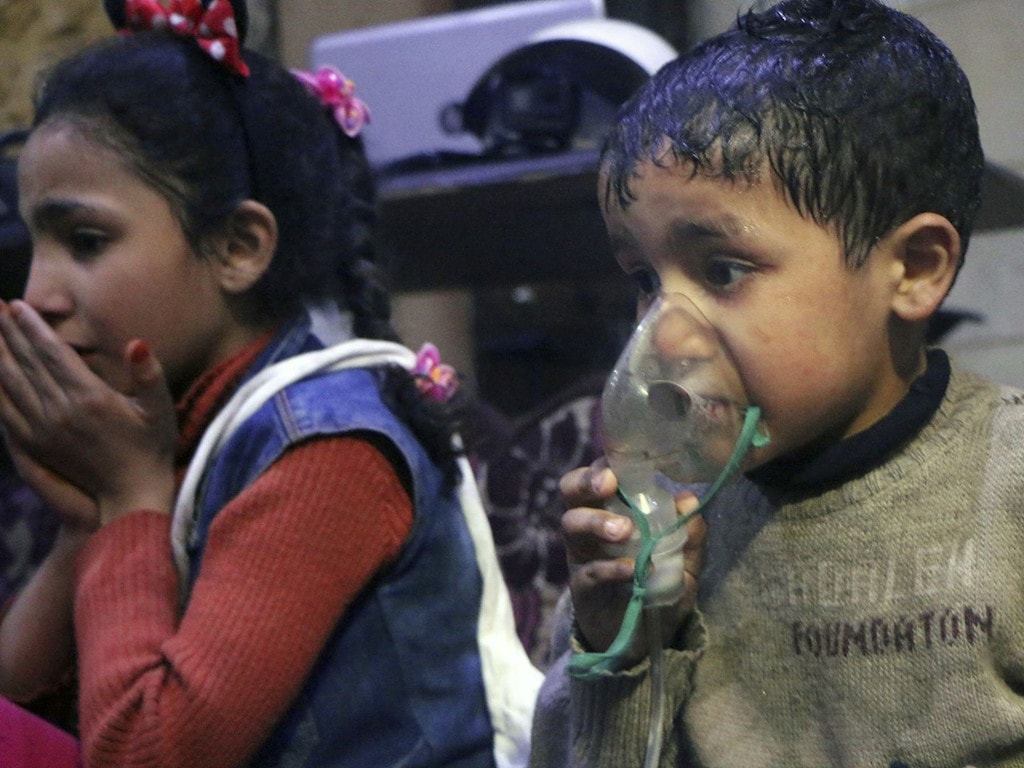 |
| A baby breathes through an oxygen mask after an attack in the city of Douma, near Damascus, Syria. Photo: AP |
Their actions were proven right a few months later, when the UN investigation teams in both incidents concluded that there was no evidence that Assad had deployed nuclear weapons, thus reinforcing accusations that the attacks were a "flag-waving" operation by rebel forces to garner Western military support.
The Assad regime and its Russian allies have made significant efforts in recent years to win the protracted civil war in Syria. In Douma, the opposition is besieged and putting up a weak last-ditch resistance before victory knocks on Syria's doorstep.
In that context, a chemical attack orchestrated by Assad would only pave the way for Western military retaliation and would be nothing short of political suicide, going against all logical motives.
The rhetoric that incites war completely ignores this simple logic, instead insisting on portraying Assad as the devil. However, even the devil wants to win, and a chemical attack orchestrated by Assad at this moment would only threaten his imminent victory.
Clearly, there was no compelling reason for Assad to resort to such a deadly weapon.
Now in Washington, people are facing an unprecedented situation: Trump – who as a presidential candidate criticized all forms of military intervention but now supports it – is facing an unprecedented challenge to his office from the very government agencies that he rightfully has the authority to run.
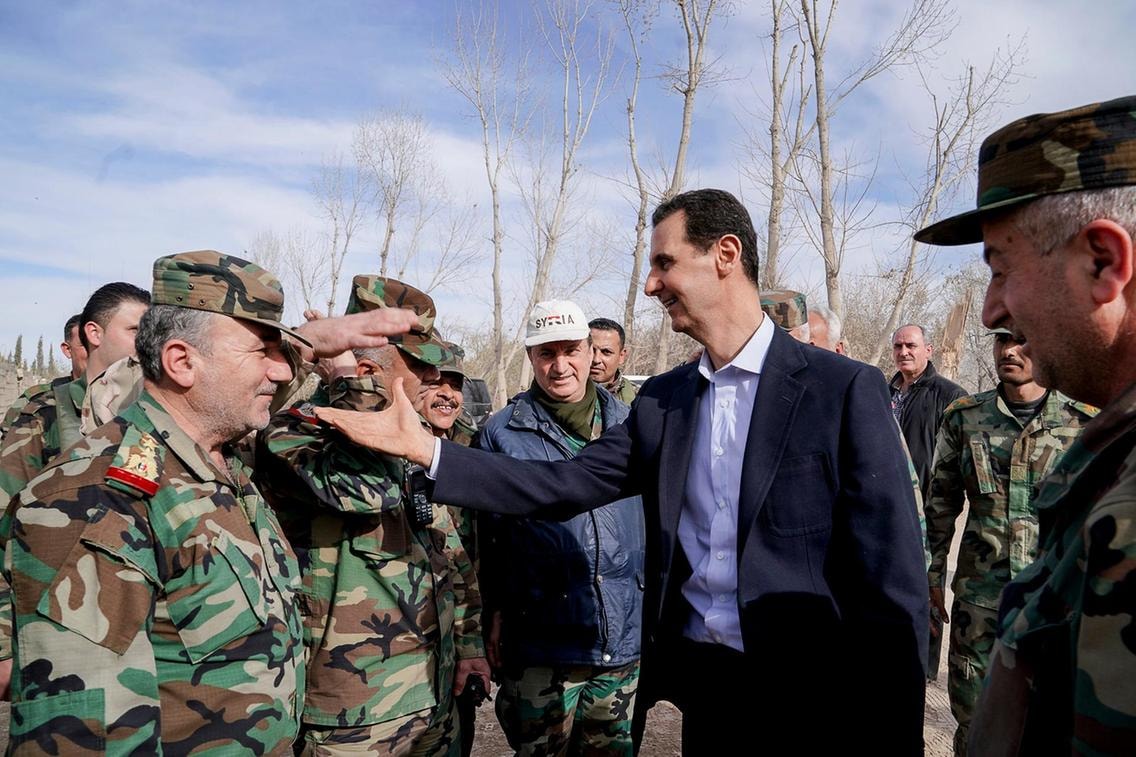 |
| Syrian President Assad visits and encourages soldiers in Eastern Ghouta. Photo: EPA |
Already weakened by a series of scandals involving allegations of collusion with Russia and details of his less-than-pleasant sexual past, the recent raid on Michael Cohen's office and violations of attorney-client privileges have opened the door to impeaching Trump.
These events also coincided with the appointment of John Bolton, a notorious hawk obsessed with endless conflicts, to the position of national security advisor. Therefore, it can be said that the groundwork was already laid for a long-term escalation of US military intervention in the Syrian battlefield.
The US did not benefit.
This is the time for every American to ask themselves, what exactly do they gain from the war in Syria? Will the security of the United States, or rather the security of the West, be improved by the military escalation in Syria?
Clearly, evidence from years ago, when the turmoil in Syria triggered a wave of migration to Europe on the orders of the German Chancellor, proves the opposite.
Recent history shows that war only creates more migrants, more chaos, more radicalism, and more opportunities for terrorism.
Would overthrowing the Assad regime improve peace in the region? Once again, the evidence suggests otherwise. Despite its shortcomings, the Assad regime is a secularist force in a region where religious extremism is rampant.
A Syria without Assad would be like a chaotic stage, where the self-proclaimed Islamic State (IS) and other extremists would fill the power vacuum, turning the country into a training ground for future terrorists – who could then come and haunt the US and Western countries.
In fact, we have witnessed this cyclical pattern countless times before, in Afghanistan, Iraq, and Libya, and now it is essential to avoid repeating the same mistakes.
Will the war in Syria increase American prosperity? Once again, the U.S. must remind itself that the $6 trillion it spent on the Iraq war may be one of the biggest geopolitical mistakes in modern history.
According to the 2017 US federal budget, spending on healthcare totaled $1.17 trillion, transportation $109 billion, education $85 billion, and science $32 billion. These figures pale in comparison to the spending on the Iraq War.
That amount of money could have been spent on universal health insurance, a national high-speed rail system, improvements to the education system, and significantly increased government support for scientific research.
The arrogance of an empire
With the U.S. national debt exceeding $21 trillion, the economy growing increasingly unstable amidst rising living standards, and unprecedented economic and social divisions posing challenges to American society, a Syrian war should not be on the country's list of priorities.
Another war in the Middle East, aimed at overthrowing another secular government to create a power vacuum for Islamic extremists, would not improve security for the American people; on the contrary, it would cause more harm.
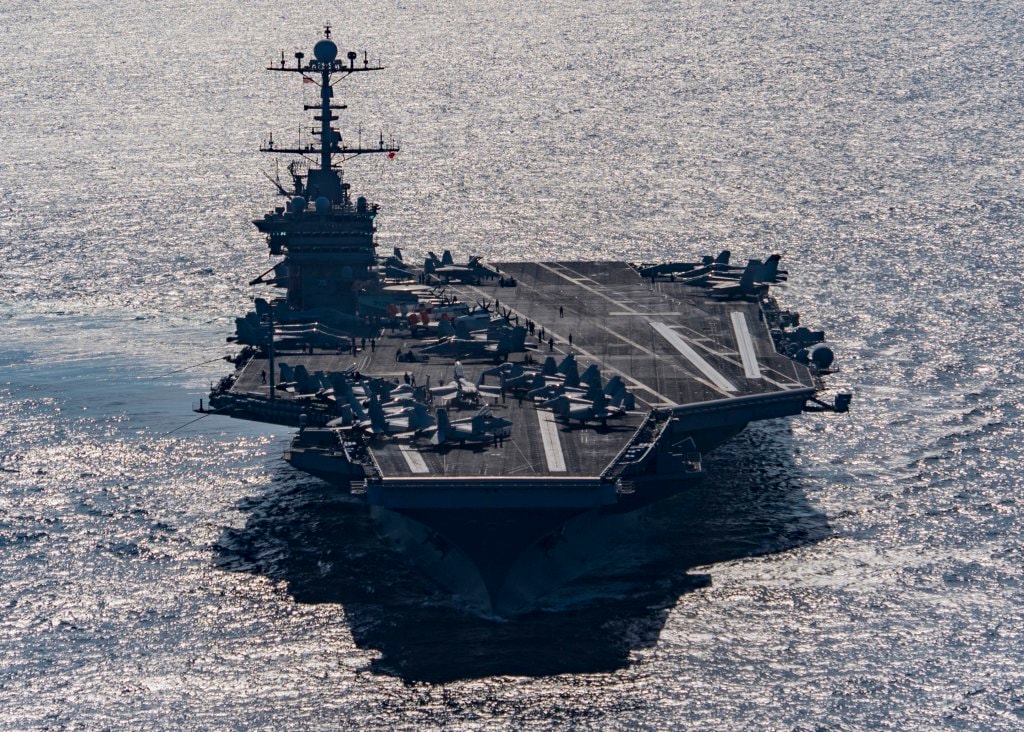 |
| The aircraft carrier USS Harry S. Truman has left its base in Norfolk, Virginia, and is en route to the Middle East. |
Another war in the Middle East would not increase America's prosperity but would only bring more losses. It would significantly increase America's public debt and reduce valuable resources invested in critical infrastructure essential for maintaining economic competitiveness.
Another Middle Eastern war would put the U.S. on the brink of conflict with Russia, a nuclear power. What would the U.S. gain? Would it allow it to play the role of arbiter and choose leaders in the never-ending geopolitical struggles between Iran, Saudi Arabia, and Israel, in a region thousands of kilometers away from the United States?
History proves that the more arrogant and haughty an empire is, the more likely it is to collapse. By expanding their power excessively and engaging in reckless risk-taking—often manipulated by elites through a veil of emotion and anger to incite public support for their ulterior motives—empires have embarked on a long journey to their downfall.
In today's information age, there is no excuse for ignorance. Nothing can justify a citizen supporting a national effort while jeopardizing their own interests.
The Syrian war clearly offers no benefit to the United States, and a major military escalation would only lead to catastrophic consequences.