

Tips for distinguishing between clean and contaminated pork.
(Baonghean.vn) - With the increasing prevalence of "dirty meat" and "toxic meat," consumers are understandably worried. So, how can consumers visually distinguish and purchase clean, hygienic, and safe pork for their families?
The following tips will help families choose pork that is free from diseases, growth hormones, lean meat enhancers, etc.
1. Pork carrying pathogens
Pork with rice:It is easy to see with the naked eye if a pig has tapeworm cysts; white worm cysts will be found in the muscle tissue. These white spots are oval-shaped, sometimes as large as a pea.
Pigs infected with typhoid fever:The skin surface has bruises or petechiae, the flesh is flabby, and the ears are purple.
Pigs infected with cholera:The petechiae are located under the skin or on the earlobe, appearing as tiny spots like mosquito bites.
Pigs infected with pasteurellosis:The meat has bruised patches and blood clots.
Pigs with the disease are marked with a seal:The skin surface has round, red or purplish spots, sometimes bruised purple; they vary in size, resembling stamps.
2. Identifying pigs fed growth hormones and lean meat enhancers.
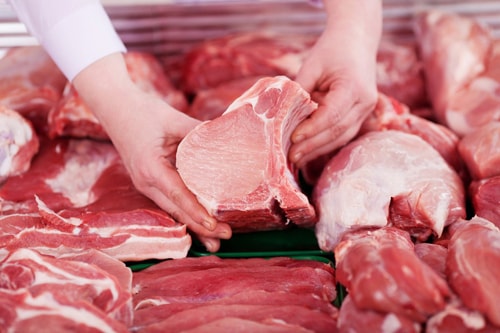 |
| If you see lean meat with an unusually dark red color, that thin layer of fat means the pig has been fed growth-enhancing substances. |
Taste:Extra-lean pork will have a stronger, fishier smell than regular pork.
Color:TClean pork has a bright pink color. Extra-lean pork often has an unusually deep red color, bright and shiny; the skin may have red spots.
Check the fat layer:Lean pork typically has a thin, loose layer of fat less than 1cm thick, with the lean meat clinging closely to the skin. "Clean pork," on the other hand, usually has a fat layer 1.5-2cm thick, translucent white or off-white in color.
Inspect the meat block:Clean pork has a firm, solid texture with high elasticity when pressed, even muscle fibers, and a dry surface when cut.
Pigs fed growth hormones or lean meat enhancers often have drier, harder, and less elastic meat; there is a feeling of water retention inside, the lean meat forms lumps, and when sliced, a yellowish fluid may ooze out.
Another simple test is to slice the meat into pieces 3-4 cm thick; if it can't stand upright, then it's likely meat from animals raised with growth hormones.
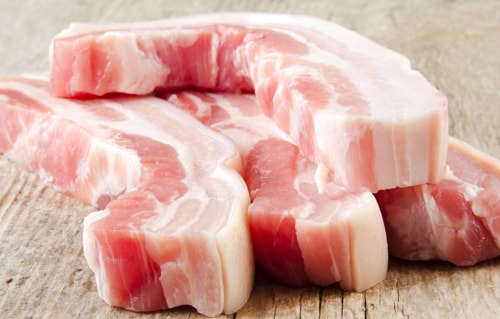 |
| Clean pork typically has a thick layer of fat and high elasticity. |
3. Check for preservatives.
Some vendors often "transform" spoiled meat into fresh-looking meat by marinating it with borax, sodium nitrite, etc., to deceive consumers' senses.
When marinated with these substances, the meat will look bright red, lose its natural stickiness and elasticity, and the muscle fibers will become tough and rigid.
When cut deep inside, the meat is quite soft, oozing fluid, slightly dark in color, and has an odor. When washed, this type of meat turns pale and has a very unpleasant fishy smell; the fat is yellow.
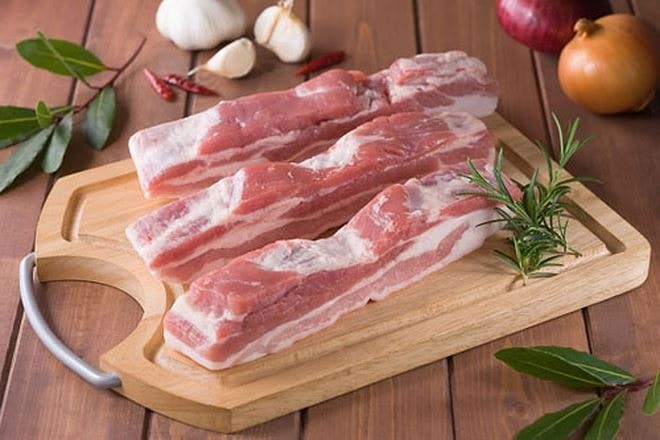 |
| Meat containing lean meat enhancers often releases a lot of water, and when cooked, it doesn't have the same natural aroma; it also feels dry when eaten. |
4. Inspection during processing
Clean pork, when boiled, produces clear broth without any scum; when stir-fried, the meat expands, doesn't release much water, and has a pleasant aroma.
Meat that is excessively lean or raised on growth-enhancing feed often produces a lot of scum when boiled, the broth has a foul odor, and when fried it releases a lot of water and tastes dry.
If pigs are fed growth-enhancing substances, the meat will emit a noticeable antibiotic smell when cooked.