

10 supermarket gimmicks that can easily lead you to overspend.
(Baonghean.vn) - Shopping at supermarkets often leads to overspending compared to going to the market or buying from stores, because supermarkets have special ways to attract customers. Below are some "tricks" used by the supermarket business to extract more money from customers.
1. Announce discounted items right at the entrance.
Supermarkets often display discounted items right at the entrance to easily attract customers looking for bargains. Furthermore, discounted and promotional items are always displayed in the most visible and accessible locations... Customers will find it easy to pick up items and put them in their shopping carts, even if they don't really need or won't use them immediately.
2. Place the item at eye level.
 |
Supermarkets study eye movements very carefully to identify them."Common point" where the eye will stop and focus.
Therefore, they place attractive, essential, slightly more expensive items at eye level to encourage customers to buy them.
3. Unit prices are always written in a way that is easily misleading.
For example, if 1 kg of apples costs 60,000 VND, they won't display that price. Instead, they'll list 15,000 VND for 250 grams. This way of labeling makes the buyer feel like the price is cheaper.
4. Popular because of the number 9.
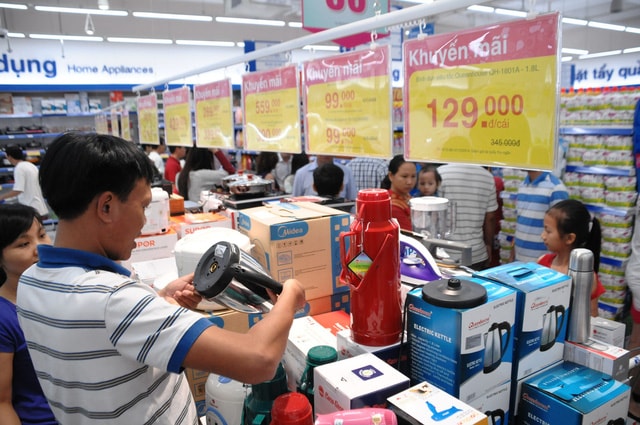 |
At supermarkets, you'll see many products with prices ending in the number 9. Does pricing like that actually help sell more? Almost everyone understands that there's no significant price difference between a product priced at 60,000 and one priced at 59,000.
According to studies conducted at the University of Chicago and MIT, pricing products with prices ending in the number 9 has helped supermarkets sell 24% more than products with round-number prices placed next to them.
5. Price Contrast Game
 |
When shopping at a supermarket, customers pay attention to the price tags; accordingly, discounted products are more attractive to them.
However, sometimes products with identical materials and appearance are labeled with two different price tags – one higher and one slightly cheaper. Naturally, customers will rush to buy the lower-priced product; they may not care about the product's value but will be happy to get a bargain.
6. The Rule of 100
This is a common method used by supermarkets. The rule is as follows: For low-priced products, discounts are offered as percentages to attract more customers. For example, a T-shirt priced at 100,000 VND would be more impressive with a 30% discount than a 27,000 VND discount, even though there is essentially no difference in value.
For high-priced products, discounts are often offered in the form of monetary amounts to make a stronger impression. For example, if an induction cooktop costs 10 million VND, a 2 million VND discount will be far more appealing than a 20% discount, even though both methods of discounting are essentially equivalent.
7. Tasting booths
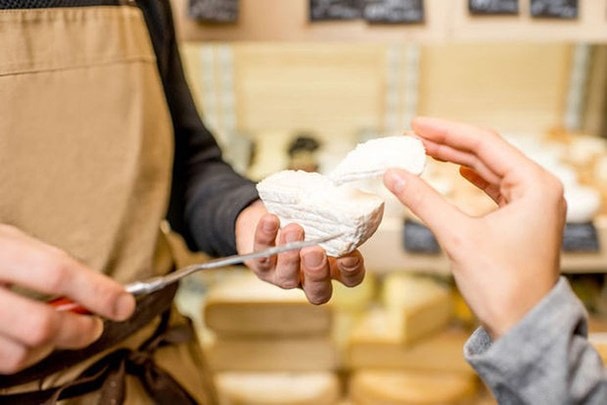 |
Almost all of us enjoy trying a little bit to see if it tastes good, or we have a tendency to eat or drink for free at tasting booths. And similarly, once we've tried it, we want to buy it...
This is often a marketing trick for new products that are unfamiliar to the public.
8. The "most beautiful" place is at the end of the walkway.
The space at the end of each aisle is the most "prime" spot in the supermarket, and suppliers usually pay more to secure this space. This area is typically used for displaying various beverages, packaged snacks, or alcoholic drinks.
The goal is to increase the customer's "impulse to buy".
9. Create a long, winding pathway.
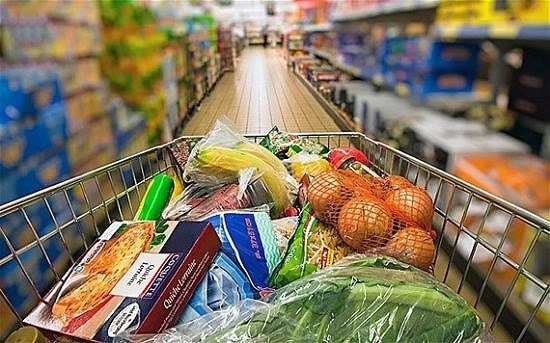 |
Almost every supermarket uses this "unique" aisle layout technique: parallel, straight aisles that stretch endlessly, forcing shoppers to walk the entire length of the aisle before turning around and continuing on, from one aisle to the next.
The goal is to "lure" customers into spending as much time as possible choosing items, and the longer they spend choosing, the easier it is to buy "wrong" items they don't need.
10. Discount cards are actually not very valuable.
 |
Discount cards, loyalty cards, gold cards, silver cards… none of these truly offer discounts if you only buy in normal quantities. Customers can only receive discounts if they buy a lot of goods. Therefore, supermarkets force you to buy in bulk, and any small discounts they offer become largely worthless.