

5 problems to watch out for regarding car airbags.
(Baonghean.vn) - A series of recent vehicle recalls related to airbag systems have raised concerns about this safety device – considered an effective tool for protecting vehicle occupants in the event of a collision.
Below are some potential incidents that can lead to accidents while using a car's airbag system.
1. The airbag warning light remains on continuously.
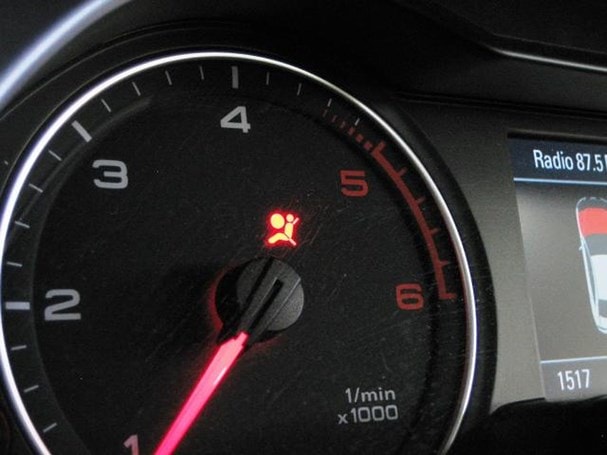 |
If the airbag warning light remains illuminated while the engine is running, it's a warning sign that the airbag system is malfunctioning. Common causes include oxidized or broken electrical connectors, a faulty steering wheel coil, and problems with the airbag sensor.
When this happens, the owner should take the car for repairs as soon as possible, or replace parts if they are severely damaged.
2. The sensor is not working.
Based on the operating principle of airbags, an electronic control unit receives signals from sensors to determine the vehicle's deceleration. When the control unit receives a sufficiently large deceleration signal or during a collision, it provides an electrical current to detonate the corresponding airbag.
However, in reality, improper use or maintenance can reduce the sensitivity of airbag sensors, causing the airbags to deploy more slowly or even fail to deploy in time during a collision. This is considered a major cause of avoidable accidents for drivers, even in cases of less serious collisions.
3. Self-deploying airbags
 |
The fact that airbags have expired can indirectly cause them to deploy spontaneously or explode unexpectedly in the vehicle's airbag system. Naturally, this also poses a significant danger to the driver's ability to control and observe the surroundings.
To resolve this issue, vehicle owners should also have their airbag systems inspected and serviced regularly.
4. Expired
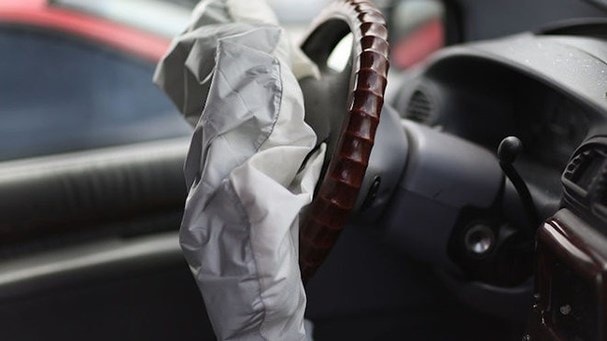 |
Airbag latches that have been malfunctioning for a long time, or airbags that were manufactured a long time ago but did not deploy during use simply because of driver safety concerns… are often the reasons why airbags fail to deploy in the event of an avoidable collision.
Therefore, even if not used for a long time, car owners should regularly check the airbag system when it's due for maintenance to ensure the airbags are always functioning properly in the event of an accident.
5. Explosive potential
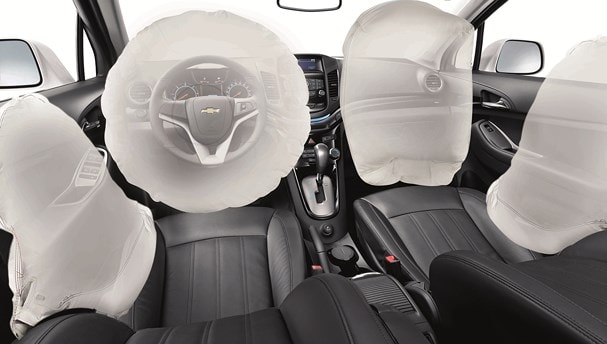 |
The most recent high-profile incident involving Takata airbags is believed by many experts to be due to the chemicals and materials used in their construction, combined with the ambient temperature and pressure, leading to explosions and injuries to the drivers.
Although this is a fault of the airbag manufacturers, for consumers, the most important thing is to know the "condition" of the airbag and to have it inspected and maintained effectively before an actual incident occurs.
* The operating principle of the airbag system
By standard, conventional cars are equipped with two airbags: one for the driver behind the wheel and one for the front passenger located on the dashboard.
When a collision occurs, the airbag sensors determine the severity of the impact based on the deceleration. If the impact exceeds a predetermined value, the central airbag control unit sends a signal to activate the gas generator, releasing a large amount of gas within 10-40 milliseconds to inflate the airbag, creating an air cushion between the occupant and the hard surfaces of the vehicle, thus absorbing most of the impact force.
Airbag deployment depends on many factors such as the angle of impact, direction of impact, and force of impact, not necessarily the vehicle's speed. Front airbags are deployed in the following situations:
The car crashed into the fixed concrete wall at a speed of 25 km/h.
- The frontal impact zone, measured from the center of the vehicle.
- The vehicle crashed directly into the curb (sidewalk), with the impact mark extending across the entire front of the vehicle where the main load-bearing beam is located.
- The car fell into a ditch and the front of the car hit the ledge further out.
- The car plunged headfirst into the ravine.