

Germany's "Iron Lady" has temporarily escaped a dire situation.
(Baonghean) - Germany's "Iron Lady," Angela Merkel, and the leader of the conservative party in Bavaria, Horst Seehofer, have reached an agreement on the migration policy of the country known as the "locomotive" of Europe.
For the time being, it can be confirmed that this move has put an end to the political deadlock that had lasted for days between Merkel and the Interior Minister, saving the ruling coalition from the brink of collapse.
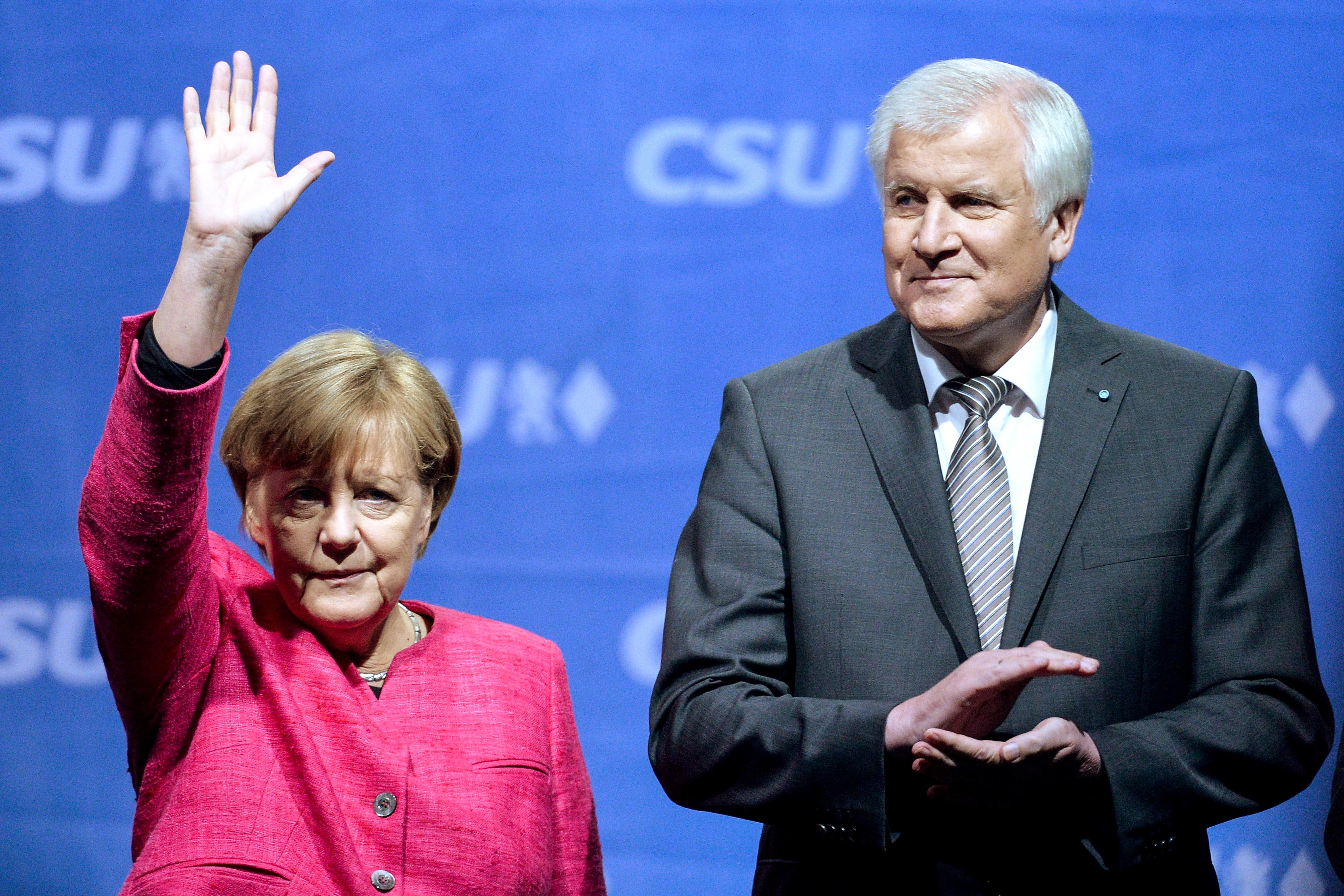 |
| German Chancellor Angela Merkel (left) and Interior Minister Horst Seehofer. Photo: Time |
A compromise move
Thus, after experiencing numerous political upheavals over the past few days and even weeks, German Chancellor Angela Merkel has finally reached an agreement to end the conflict between her conservative Christian Democratic Union (CDU) party and the Christian Social Union (CSU).
At the end of the meeting, held amidst a crisis that reached its peak on July 2nd, after Interior Minister and CSU party chairman Horst Seehofer threatened to resign on the evening of July 1st, the Bavarian figure and "Iron Lady" Merkel finally achieved a crucial breakthrough.
For her part, Merkel affirmed that Germany would have national “transit centers” to “arrange and redirect secondary migration”—a term used to describe the flow of migrants within the European Union (EU).
The agreement just reached will balance national and international approaches to how to control migration. “Thus, the spirit of partnership within the EU is preserved, and at the same time it is an important step toward addressing and controlling secondary migration. We have found a good compromise after tense negotiations and many difficult days.”
Meanwhile, Seehofer, who confirmed he would continue as interior minister, expressed that he was “very pleased” with the “clear agreement” reached by Germany’s two conservative parties to “prevent illegal immigration.”
The politician added that transit centers would help expedite the decision-making process for granting asylum, and in negative cases, would help speed up the deportation of migrants.
Sources from DW also confirm that the leaders of the two parties agreed that the recently reached agreement would reduce the flow of migrants to Germany and allow the country to quickly "turn around" those who do not have the opportunity to be granted asylum there.
Thus, up to this point, the agreement appears to have buried the contentious issue of whether Germany has the authority to “redirect” migrants at its national borders. This also means that the main point of contention between conservatives who had threatened to break up the long-standing CDU-CSU coalition in the German Parliament has now been satisfactorily resolved.
Conflict over immigration
As mentioned, the agreement reached earlier this week marks the end of a long-standing feud. Since late 2015, Seehofer had frequently and unhesitatingly criticized Merkel's open and welcoming policies towards migrants, especially after the Chancellor decided not to ask these groups to turn back at German borders.
By March of this year, when Seehofer became Germany's Interior Minister and concurrently chair of the CSU party, the situation became even more complicated, adding fuel to the fire. Further exacerbating the existing tensions was the fact that Bavaria – the CSU's home state – planned to hold regional elections in October.
In order to protect its absolute majority in this election, the CSU was restless and felt compelled to take a hardline stance on immigration, cutting off any competition from the far-right populist Alternative for Germany (AfD) party.
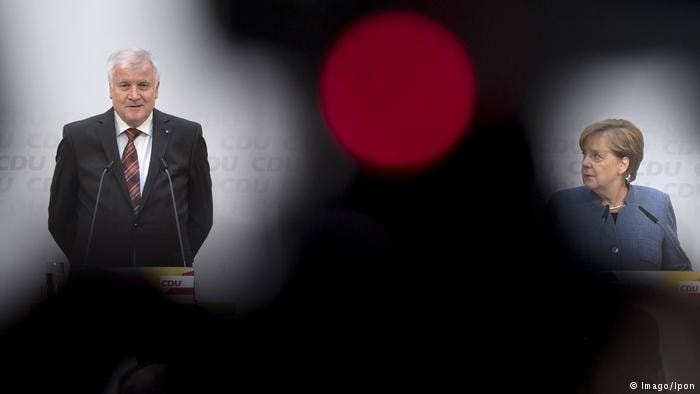 |
| German Chancellor Angela Merkel (right) and Interior Minister Horst Seehofer. Photo: Imago |
Upon assuming the Interior Minister's seat, Seehofer's tenure centered on a "master plan" on migration. However, he failed to secure Merkel's approval on one of the plan's 63 provisions, which called for Germany to reject migrants registered in other EU countries who then crossed its borders.
Chancellor Merkel has reiterated her priority of European solutions to migration issues on more than one occasion. Naturally, it was predictable that Seehofer was unwilling to accept any amendments and repeatedly delayed submitting the document.
Instead, he even threatened to use his interior minister powers to impose border controls despite Merkel's objections. This standoff, with neither side willing to back down, became the spark that ignited the crisis within the ruling coalition.
Third-party reactions
The "equation" in German politics also involves a third party: the Social Democratic Party (SPD). On July 2nd, while Merkel was meeting with her counterpart from the CSU, the SPD's chairwoman, Andrea Nahles, unexpectedly stated that the party would only follow the direction set by their coalition agreement with the CDU-CSU, and would not use Seehofer's grand plan as a guiding principle.
After negotiations that lasted until late Monday night (July 2nd), Merkel and Seehofer discussed arranging a coalition committee meeting with the SPD. These talks began on the afternoon of July 3rd (Vietnam time), with many issues reportedly needing clarification before the SPD can ratify the agreement.
The SPD leader also bluntly stated that they needed time to consider the matter before making a decision, and simultaneously released a five-point plan outlining what the party expects to happen regarding migration.
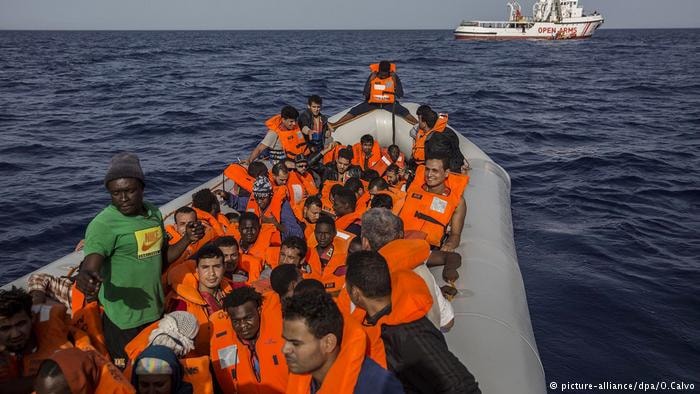 |
| Migrants crossing the sea to reach Europe. Photo: DPA |
Accordingly, Social Democrats called for more action to address the reasons why so many people leave their home countries; to refrain from any unilateral actions aimed at forcing them to turn back at national borders within the EU; to increase assistance to Italy and Greece – the two EU countries most frequently visited by migrants crossing the sea; to tighten controls on the EU's external borders; and to enact comprehensive German legislation regulating immigration and the local labor market.
Given the complexities of these issues, it's unlikely the SPD will provide an answer anytime soon. We'll have to wait and see whether the Social Democrats ultimately agree to the settlement offered by the CDU and CSU.
The most critical situation in Merkel's government has temporarily subsided, but only when the SPD gives a thumbs-up in support can the "Iron Lady" and her apparatus be considered to have completely resolved the dangers surrounding her.