

The State Bank of Vietnam has begun selling foreign currency.
In the last two trading sessions, the State Bank of Vietnam has begun selling foreign currency to meet demand and limit sharp fluctuations in the USD/VND exchange rate.
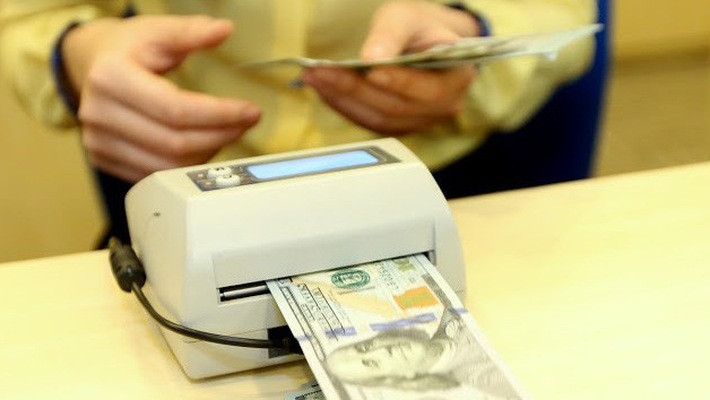 |
| The amount of foreign currency sold by the State Bank of Vietnam in the past two sessions was not large, but it marks an official intervention in the supply and demand of the market. |
Thus, nearly two weeks after the announcement of its readiness to sell foreign currency at prices lower than the ceiling of the exchange rate band, some commercial banks have begun registering to buy, and the State Bank of Vietnam has responded.
However, according to our findings, the volume of sales in the past two sessions was not large, but it marks an official intervention in the supply and demand of the market, after about a month of strong fluctuations in the USD/VND exchange rate.
According to the State Bank of Vietnam's exchange rate listing, the selling price of USD remains at 23,050 VND, meaning the central bank is acting as previously announced: selling at a price significantly lower than the ceiling price.
In the interbank market, the USD exchange rate has also been trading close to the aforementioned 23,050 VND mark in recent sessions.
According to the exchange rates listed by commercial banks, the selling price of USD fluctuates between 23,080 and 23,100 VND, while the difference between the selling and buying prices remains stable at 70-80 VND, similar to normal periods.
According to a representative of a major commercial bank, the State Bank of Vietnam's sale of foreign currency is a positive signal, demonstrating its role as the ultimate buyer and seller whenever the market needs regulation.
"This is also a normal business operation, involving both buying and selling. The main thing is that the market has a reliable supply source. The market here is the interbank market, within the entire system, while the free market is not mentioned because the transaction volume is very small," the representative said.
On another note, the State Bank's sale of foreign currency has a significant impact at this time. With the Vietnamese dong showing signs of surplus, selling foreign currency means absorbing some of the excess dong in a more streamlined manner, instead of primarily relying on short-term treasury bills to absorb it.